
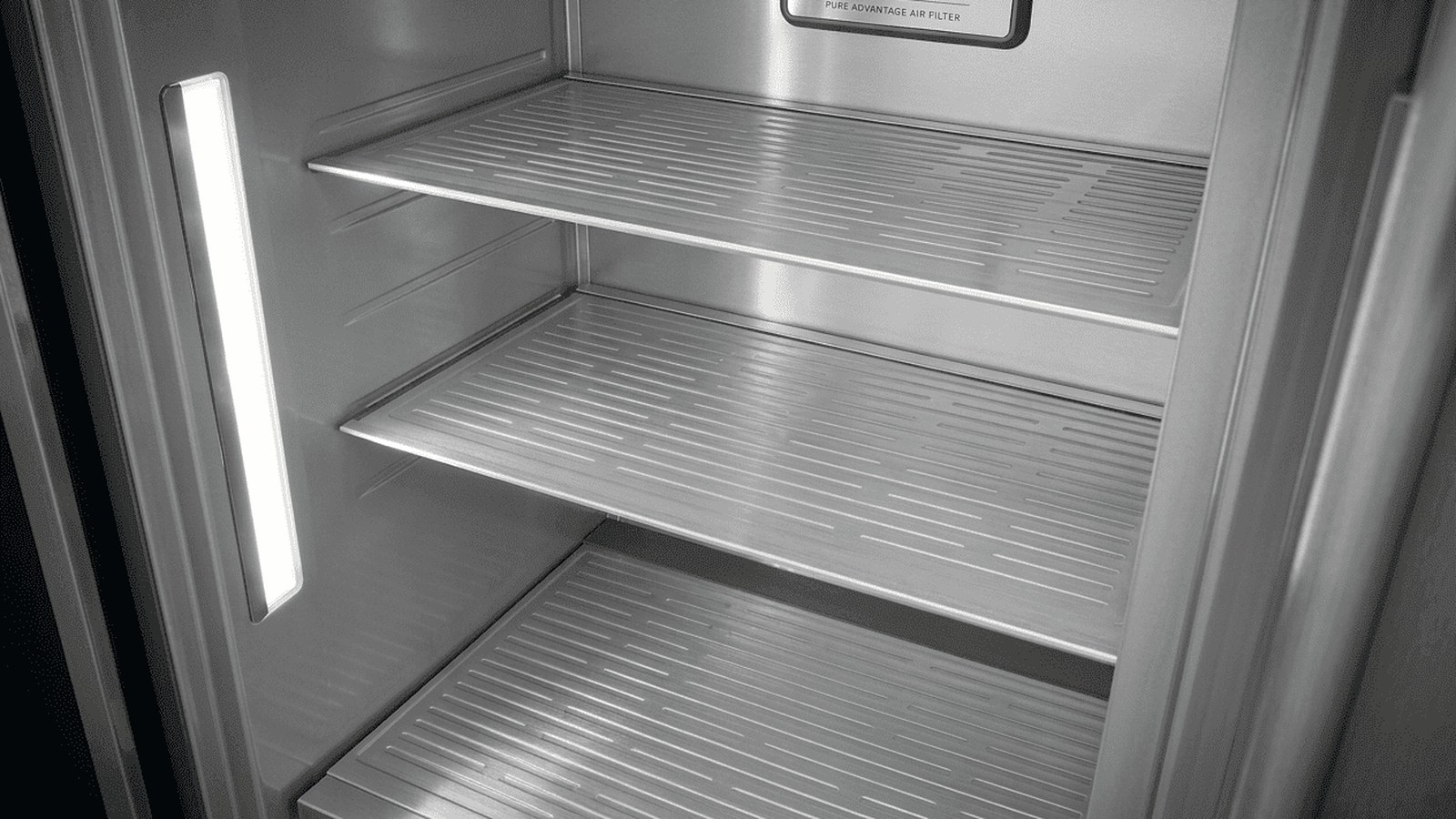
You pull out a pint of ice cream and it’s hard at the edges but soft in the middle. The chicken you froze on Sunday still gives a little when you press it. The frost on the walls looks patchy — thick in one corner, bare in another. If your Electrolux freezer is not freezing properly, that unevenness is the clue, and it’s one of those problems that’s easy to second-guess until something actually thaws.
It’s frustrating, but it’s usually fixable — whether you have a dedicated upright freezer or the freezer drawer of an Electrolux refrigerator.
When freezing falters, it’s often because cold air isn’t circulating right, warm air is getting in, or the cooling system is struggling. And unlike a freezer that’s simply warm, uneven freezing can happen while the display still reads cold — which is exactly how food quietly loses quality.
In this guide, we’ll walk you through the signs to watch for, the most likely causes, the Electrolux models this applies to, the checks you can safely run at home, and the deeper repairs that belong to a technician.
Freezer not holding a solid freeze right now? Don’t gamble with your stockpile. Our Electrolux freezer repair team offers same- or next-day visits across the Atlanta area.
Key Indicators of Freezing Problems
The first hint usually comes from the food, not the display. Catch these early and you can often prevent a full thaw:
- Inconsistent ice: cubes from the ice maker come out hollow or clumped together, or ice cream grows icy crystals on top. Electrolux’s own troubleshooting chart lists cubes freezing together, hollow cubes and a freezer control set too warm side by side. More on cube trouble in our guide to small or hollow ice cubes.
- Patchy or heavy frost: some walls stay bare while others build thick ice. That points to a circulation problem — or warm, humid air sneaking in.
- Food freezing slowly: fresh items take far too long to harden, or packages feel soft in the center.
- Unusual run patterns: the compressor runs almost constantly, yet the inside never feels solidly cold.
- Condensation inside packages: moisture beading on wrappers means the temperature keeps rising and falling.
- Alerts: a HIGH TEMP light, a flashing display, or a power-outage alert on the control panel.
These differ from a freezer that’s simply warm, because parts of the cabinet may still feel cold. It’s the inconsistency that damages food quality over time.
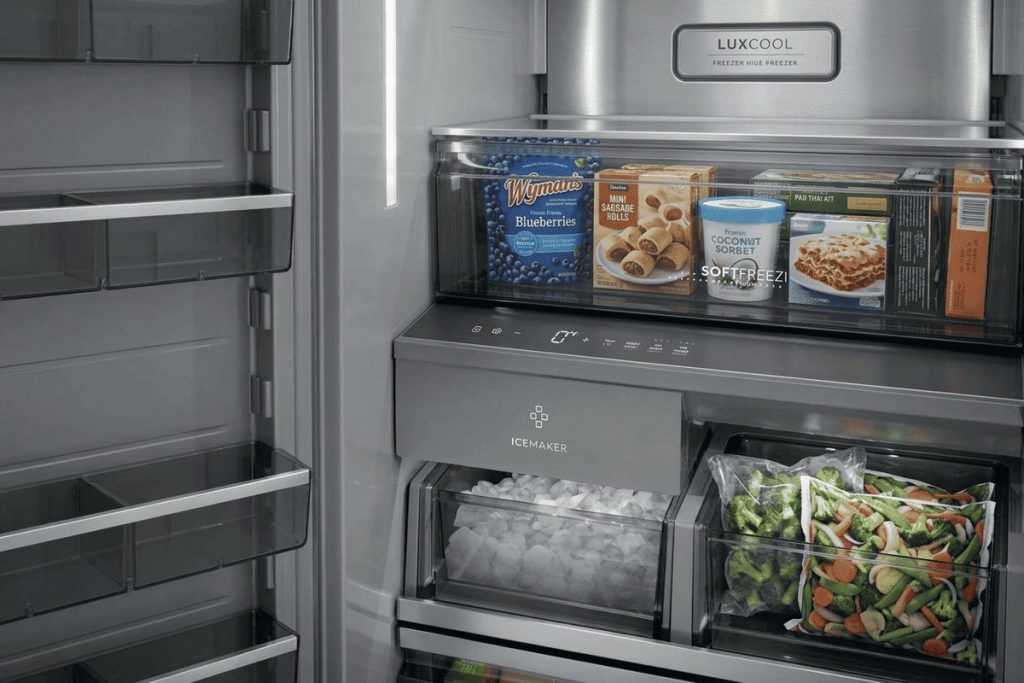
Primary Reasons Freezing Fails in Electrolux Models
When an Electrolux freezer stops freezing properly, the cooling chain breaks at one of several points — in upright freezers and in the freezer compartments of refrigerators alike:
- A setting or recent event. Electrolux’s guides list the obvious first: the control set too warm, the door opened too often or left slightly open, a big load of warm food, or a unit that was recently disconnected. Free to check, and surprisingly common.
- Blocked vents inside. Overpacked shelves or frost covering the air outlets stop cold air from moving. Electrolux warns that overcrowding reduces air circulation and causes uneven cooling.
- A damaged door seal. A torn, dirty or flattened gasket lets warm air in constantly. Electrolux adds that a unit that isn’t level can leave the door misaligned, so it doesn’t seal — causing cooling, frost or moisture problems.
- Evaporator fan motor issues. A sluggish or failed fan can’t push cold air around the compartment, leaving warm pockets while the compressor keeps running.
- Restricted airflow at the condenser. The condenser sheds the heat the freezer pulls out. Electrolux says not to block the lower front of the appliance, because sufficient air circulation is essential.
- Defrost problems. On a frost-free model, a defrost part that stops working lets frost build up over the coil until it chokes the airflow.
- Compressor or sealed-system problems. A weak compressor, a refrigerant leak or a restriction in the sealed system drops cooling capacity — often as a slow loss of freeze over weeks.
These faults often leave the unit running but never reaching the rock-hard cold it should.
Freezing off? Start with the free checks below. If they don’t fix it, we’ll take it from there.
Electrolux Models and What to Know About Each
Knowing your model and serial number helps the technician arrive prepared — Electrolux’s guides show where the serial plate is. These are models you’ll still find in plenty of Atlanta-area homes:
| Model | Type | What to know |
|---|---|---|
| EW28BS85KS8 | Bottom-freezer refrigerator (Wave-Touch controls) | Its guide says to keep the freezer at 0°F or lower, not to block the toe grille, and not to install it where the room drops below 55°F (13°C) or rises above 110°F (43°C). A high-temperature condition shows HI on the display. |
| EI33AF80WS | Upright all-freezer | Its 2020 guide asks for at least 8 hours of running with the door closed before loading food, and warns not to block the lower front. A HIGH TEMP light and alarm signal a temperature above the safe range. |
| EI32AF80QSA | Upright all-freezer (IQ-Touch controls) | Adjustable from −10°F (−23°C) to 10°F (−12°C). The HIGH TEMP alarm sounds an hour after the cabinet passes 23°F (−5°C). “E8” or “E9” alternating with −10°F on the display signals a temperature-sensor problem. |
Two models often listed with these are a different story: the FGHS2631PF is a Frigidaire-brand side-by-side, so the Frigidaire manual applies, and the EI33AR80WS is an all-refrigerator with no freezer.
These units are reliable overall, but daily use, power flickers and our humid summers bring these problems out faster.
At-Home Diagnostics for Better Freezing
Safety first: only attempt the checks below. Don’t remove panels or covers, touch wiring, or reach into a grille or fan area — beyond these checks, it’s a technician’s job. On a refrigerator with an ice maker or water dispenser, don’t touch the water line or its fittings; they stay under house pressure even when the unit is off. Burning smell, smoke, or water near the outlet? Skip the checks and call.
Before scheduling a visit, run through these in order. They’re safe, need no tools, and the first ones are free.
- Check the real temperature. Set a freezer thermometer between frozen packages in the middle of the compartment, close the door and read it after several hours. Electrolux’s refrigerator guide says to keep the freezer at 0°F or lower. Reading warmer? Set the control one step colder — Electrolux says to allow 24 hours for the temperature to stabilize, so don’t keep turning it every hour.
- Make sure cooling is actually on. On some Electrolux refrigerators, cooling can be switched off from the controls while the lights stay on. The guide lists “cooling system is turned off” as a cause of a compressor that doesn’t run — if that’s you, turn it back on as your guide describes.
- Inspect and clear the vents. Look for frost or food covering the air outlets inside and rearrange packages to let air move. Don’t overcrowd the shelves.
- Check the door seal and the level. Close a strip of paper in the door at several points around the gasket. If it pulls out easily anywhere, warm air is getting in. Clean the gasket with warm soapy water and test again; a worn or cracked gasket should be replaced, which is a job for a technician. A door that doesn’t close by itself may mean the unit isn’t level — leveling is also best left to a technician or installer.
- Give it room to breathe. Keep the lower front grille clear and keep the unit away from the range, the dishwasher and direct sun. Garage freezer? Check its guide for the room temperatures it’s rated for — Electrolux’s 2020 upright guide says 0°F (−18°C) to 110°F (43°C).
- Listen for the fan. Close the door and listen for the fan’s steady whir inside. On many freezers the fan pauses while the door is open, so listen right after you close it. Silence for long stretches, or a scraping sound, often means fan trouble.
- Try one reset. If the controls seem stuck after a power flicker, switch the unit’s breaker off for a few minutes and back on. It clears temporary glitches; it won’t fix a worn part.
If freezing improves after these, give it a full day — Electrolux allows up to 24 hours for a unit to cool down completely. Persistent problems usually mean a component like the fan, the defrost system or the sealed system needs professional attention.
One check to skip: you’ll find advice online to defrost the whole unit to free a frosted temperature sensor. Electrolux’s guides give owners no such step. Heavy frost on a frost-free freezer is a symptom — usually of a defrost problem or a leaking door seal — and it will come back until the cause is fixed.
Professional Interventions for Stubborn Freezing Issues
When the home checks don’t bring back a solid freeze, the fault usually lies deeper in the cooling system. Here’s what a technician looks at on Electrolux models:
- Control board faults. A glitchy board can interrupt compressor or fan commands and cause erratic freeze cycles. On some models, Electrolux’s guide says flashing temperature displays mean the control has detected a performance problem that a service technician needs to interpret.
- Evaporator fan motor. If the motor is seized or weak, the cold stays trapped at the coil. Replacing it restores proper distribution.
- Sealed-system repairs. Low refrigerant from a leak means the system can’t reach a deep freeze. Our EPA 608 certified technicians locate the leak, repair it and recharge the system.
- Sensor or thermistor. Faulty readings trick the board into running too little or too long. Testing the sensor shows whether it’s the culprit.
- Defrost components. A failed heater, sensor or control lets frost build up and block the airflow; restoring automatic defrost brings back steady performance.
Worth checking before any sealed-system repair: Electrolux’s 2020 freezer guide gives a one-year limited warranty on the whole appliance, and a separate limited warranty on the cabinet liner and the sealed refrigeration system (compressor, condenser, evaporator, dryer and tubing) that runs from the second year through the fifth. Food loss isn’t covered. Your own warranty document has the exact terms.
Not freezing right? Count on our Electrolux freezer repair team — 15+ years of keeping freezers solidly cold, with genuine OEM parts.
Why Homeowners Call Us
PRO Appliance Repair is a family-owned, insured team with 15+ years in appliance repair, including years of hands-on work on Electrolux freezers and refrigerators.
- EPA 608 certified, background-checked technicians — experienced people at your door.
- Genuine OEM parts for your Electrolux model.
- Our warranty covers parts and labor for up to six months.
- Same- or next-day service across the Atlanta area, most days.
And if a part doesn’t actually need replacing, we’ll tell you.
Conclusion
An Electrolux freezer that’s not freezing properly — soft spots, uneven frost, slow hardening — doesn’t have to stay that way. In most cases the problem traces back to a setting, blocked airflow, a tired door seal, a fan, or a deeper cooling-system fault.
Start with the checks we outlined; they often point you in the right direction and take only a few minutes. When they don’t bring back a solid, even freeze, it’s time for a technician with the right tools and parts.
Don’t let uneven freezing chip away at your food stock — the sooner the cause is found, the more food you keep.
Frequently Asked Questions
1. My freezer display shows 0°F but food isn’t freezing hard — what’s wrong?
First, trust a thermometer over the display: put one between frozen packages and read it after a few hours. If the air really is warmer, the usual suspects are blocked vents, a leaking door seal, a struggling evaporator fan or a temperature sensor. Some Electrolux upright freezers flag a sensor problem on their own — the display alternates “E8” or “E9” with −10°F, and the control switches to a backup mode that holds the preset temperature.
2. Why does freezing get worse in summer on my EW28BS85KS8?
Heat and humidity work against it. Every door opening on a humid day brings in moist air that turns into frost, and a hot kitchen or garage leaves the cooling system less margin. Electrolux’s guide for this refrigerator says not to install it where the room drops below 55°F or rises above 110°F, and not to block the toe grille.
3. How long should I wait after changing the temperature setting?
A full day. Electrolux’s guide says to set the control one step colder and allow 24 hours for the temperature to stabilize. Change it one step, wait the day, and check with a thermometer before changing it again.
4. How quickly should new food freeze solid in an EI33AF80WS upright?
It depends on how much you add and how warm it is. Small items usually firm up within hours; a big load of warm food raises the cabinet temperature, and Electrolux says to wait until the freezer gets back to its selected temperature. Still soft after a day? Check the vents and the door seal first.
5. Will cleaning the condenser coils fix inconsistent freezing?
Don’t count on it. Electrolux’s freezer guides give owners no coil-cleaning step — what they ask is that you keep the lower front clear for air circulation. If the freezer still isn’t freezing evenly, the fan, the defrost system, the sensor or the controls need a technician’s check.
6. How soon can you come fix my Electrolux freezer in Atlanta?
Usually same- or next-day across the Atlanta area. Have the model and serial numbers ready, and tell us what you’re seeing and what the thermometer says — it helps our EPA 608 certified, background-checked technician go straight to the likely cause.
Disclaimer: PRO Appliance Repair is an independent repair company and is not affiliated with or endorsed by Electrolux AB. All trademarks belong to their respective owners.