
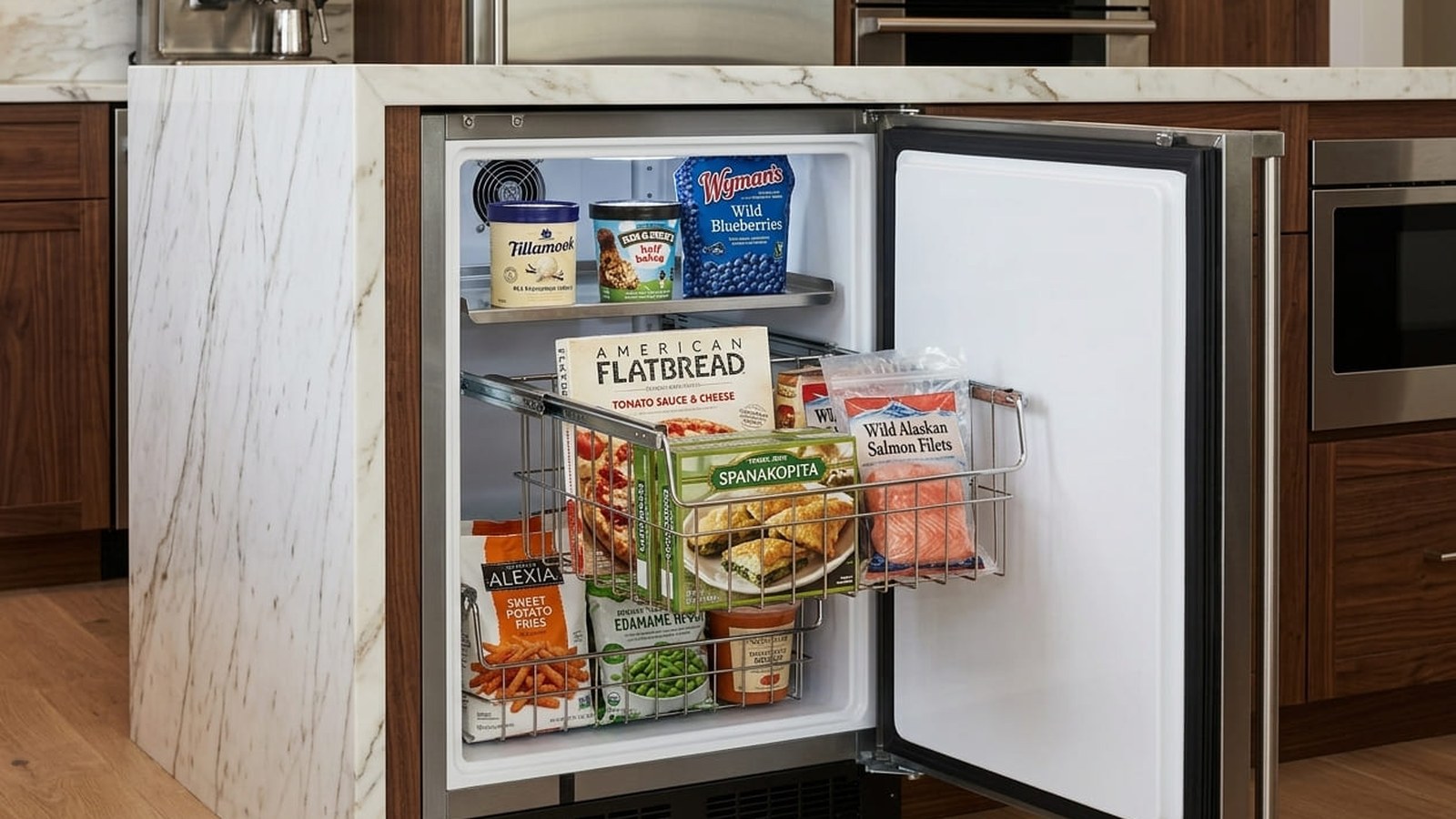
Slip a sheet of paper into the door of your Marvel freezer and pull. If it slides out without any resistance, your door seal has already lost its grip — and your freezer has probably been working overtime to make up for it longer than you realize.
It’s a small thing that quietly causes big trouble: warm air gets in, frost builds up, the compressor runs nonstop, and whatever you’re storing slowly loses its cold. The good news? Most door problems come down to a handful of causes, and several of them you can check in minutes.
There are two distinct problems that bring people to this page. The first is a door that closes but doesn’t form an airtight seal — cold air escapes slowly, warm air creeps in, and the unit works harder than it should. The second is a door that won’t close all the way, stopped by something inside, a hinge problem, or a leveling issue.
Both problems share overlapping causes, and both can end with the door alert sounding — the beep most owners notice before they figure out what’s actually wrong. This guide covers both, from cause to repair.
Door won’t seal and you’d rather not guess? Our Marvel freezer repair team will find the cause and get it sealing tight again.
The Science Behind the Seal on Marvel Freezer Doors
Marvel’s door sealing system relies on a flexible gasket around the door, with a magnetic strip built in along its edge. When the door closes, the magnet draws the gasket flush against the cabinet frame, forming a continuous airtight barrier. No gaps, no airflow, no temperature loss.
The door also has a switch that tells the control whether the door is open or closed. Marvel’s guides describe a rocker switch on some freezer models and a magnetic reed switch on others. When the control thinks the door has been open too long, it sounds the door alert — on the MLFZ224 freezer, Marvel’s guide says that happens when the door is left open for more than 30 minutes: a tone sounds for several seconds every minute, a symbol appears on the display, and closing the door silences the alert and resets it.
A few mechanical factors decide how well this system holds up over time:
- Gasket condition — the magnet only works if the gasket is still soft and undamaged. Cracked or stiff gaskets can’t conform to the frame.
- Hinge alignment — even a slight misalignment pulls the door out of line with the cabinet opening, leaving a gap the gasket can’t bridge.
- Unit leveling — Marvel’s installation section says the legs should be set so the unit sits firmly on the floor and level from side to side and front to back. A unit that rocks or leans can pull the door out of line.
| Correct seal behavior | Problem signs | |
|---|---|---|
| Gasket feel | Slight resistance when pulling the door open | Door opens with no resistance |
| Paper test | Paper held firmly when the door is closed | Paper slides out easily |
| Interior temperature | Holds at the set point | Gradually rising |
| Door alert | Doesn’t sound in normal use | Sounds repeatedly with the door shut |
| Frost | Minimal | Frost on inside surfaces, along the door frame or bottom edge |
Why Marvel Freezer Doors Stop Sealing — Five Root Causes
Cause 1: Worn, Cracked, or Damaged Door Gasket
The gasket is the most common culprit, and the paper test is the fastest way to check it. Close the door on a sheet of paper. Try to pull it out. On a good seal, you should feel real resistance — the paper shouldn’t slide. If it glides out cleanly, the gasket has lost its grip. (Keep your fingers out of the gap on the hinge side while you do this.)
Look around the full edge of the closed door. Pay attention to the corners — gasket material tends to crack or harden there first. A gasket that looks intact but feels stiff or brittle is failing even without visible tears. Look for a corner that has popped out of its channel, a flattened section, crumbs, or ice.
Before assuming replacement, try cleaning. Gaskets collect grease, food residue, and mold that can block a clean seal even when the material is fine. Marvel’s care section recommends periodically inspecting and cleaning under gaskets with a soft cloth, warm water, and a gentle detergent — and it pairs cleaning with soap and water with disconnecting power first, so follow your guide on that. Dry it and re-test. If the paper test still fails after cleaning, the gasket needs replacing.
Marvel gaskets sit in a channel around the door, and on at least one Marvel model the guide warns not to remove the entire gasket during installation steps. Replacing one the wrong way can damage the door. Gasket replacement is a job for a technician.
Cause 2: Misaligned Hinges
A Marvel freezer door won’t close correctly when the hinges are out of alignment, even slightly. You’ll usually see an uneven gap between the door and the cabinet — wider at the top or bottom depending on which hinge has shifted.
Hinges can bend over time, too. Marvel’s guide warns owners to avoid leaning on the door, because you may bend the hinges or tip the appliance. Bent or worn hinge hardware won’t hold an adjustment — it needs replacing, and that means taking the door off and realigning it. Leave hinge work to a technician.
Cause 3: Incorrect Leveling
You’ll find advice online saying the front of a Marvel should sit a quarter inch higher than the back so the door swings shut on its own. That’s not what Marvel’s guides say. Marvel’s installation instructions call for a unit that sits firmly on the floor and is level from side to side and front to back.
When a unit rocks or leans, the door can sit crooked against the frame and fail to seal. Marvel adjusts height with the leveling legs at the front and rear corners — turning a leg out (counterclockwise) raises it, and turning it in (clockwise) lowers it — and the guide describes tilting the unit back and then forward, with a second person, to reach them. Because it means tipping a heavy built-in appliance, we leave leveling to a technician or installer.
What you can check: look at the unit from the front and side — does it rock when you gently press a top corner, or lean visibly? Note it for the technician.
Cause 4: Obstructions Inside the Unit
This one gets overlooked because people aren’t looking inside the freezer when they’re focused on the door. A shelf pushed slightly forward, a container sticking out, or frost along the bottom door edge can all keep the door from closing fully. Marvel’s own energy tips say to make sure door closing isn’t obstructed by the contents.
Before calling a technician, run through these five interior checks:
- Are any containers sticking out past the door opening?
- Are shelves or baskets fully seated, not tilting or sticking out?
- Is there ice along the bottom door edge or near the door?
- Are any items touching the door gasket directly?
- Is the unit overpacked — items pressing against the door from inside?
Ice along the door edge is worth noting: it’s usually a symptom of a failing seal rather than the first cause — Marvel’s troubleshooting table links frost on inside surfaces to a door that isn’t closing and sealing properly. But that ice can then become a physical obstruction that makes the seal worse. If you find ice there, inspect the gasket right away.
Cause 5: Understanding the Door Alert
The door alert is the most visible signal of a door problem, and it’s why many people start searching. On the MLFZ224, Marvel’s guide describes it this way: after the door has been open more than 30 minutes, a tone sounds for several seconds every minute and a symbol appears on the display. Close the door, and the alert stops and resets.
Here’s what the alert really tells you: the door switch has registered the door as open for a long time. That can mean the door is literally standing open — or that it’s closed but the switch isn’t detecting it.
The alert is an indicator, not a cause. If it keeps sounding while the door looks firmly closed, the door switch or the control is likely the problem — a technician’s job.
Three DIY Tests to Confirm Whether Your Marvel Door Seal Is Failing
Test 1: The Paper Pull Test
Close the door on a sheet of paper, then try to pull it free. Do this in at least four spots — both side midpoints, the top center, and the bottom center. A good seal holds the paper firmly at all four. If it pulls free anywhere, that section of the gasket isn’t sealing. This is a simple check of our own, not a Marvel procedure.
Test 2: The Visual Check
Look at the closed door from a few angles in good light. Is the gap between the door and the cabinet even all the way around? Does the gasket sit flat against the frame, or is a corner curled or out of its channel? An uneven gap usually points to hinges or leveling; a curled section points to the gasket.
Test 3: The Frost and Condensation Check
Open the door and look at the inside of the door frame and the front of the cabinet. Frost or a line of ice along the door edge means warm, humid air is getting in — Marvel ties frost on inside surfaces to a door that isn’t closing and sealing properly. Moisture on the outside of the cabinet is different: Marvel says that comes from excessive humidity and goes away as humidity drops. This check is slower than the paper test, but it catches leaks that happen overnight when nobody’s opening the door.
What You Can Fix Yourself — and What You Should Leave to a Pro
Safety first: don’t remove the gasket, hinges, or any panel, and don’t tip or move the unit. The owner checks below need no tools.
| Repair task | DIY? | Notes |
|---|---|---|
| Cleaning a dirty gasket | Yes | Warm water and gentle detergent; follow your guide on disconnecting power first |
| Removing door obstructions | Yes | Reorganize contents, check that shelves are seated |
| Paper, visual, and frost checks | Yes | Look and test, nothing more |
| Leveling the unit | No — Pro or installer | Means tilting a heavy unit with a second person |
| Gasket replacement | No — Pro | Sits in a channel; wrong technique damages the door |
| Hinge adjustment or replacement | No — Pro | Needs door removal and realignment |
| Door switch diagnosis or replacement | No — Pro | Testing means reaching wiring |
| Control check for a persistent door alert | No — Pro | The cause has to be confirmed first |
The gasket question comes up most often. Prying a gasket out without knowing how it’s held in can damage the door, turning a simple gasket job into a much bigger door repair.
Not sure whether it’s a quick fix or a replacement? Our Marvel freezer technicians handle door seal repair across Atlanta and Georgia — same- or next-day service is available most days.
A Technician’s Approach to Marvel Freezer Door Problems: What to Expect
When our technician arrives to diagnose a Marvel freezer door problem in Atlanta, the inspection follows a specific order — not just a quick look.
- Step 1: Gasket inspection. Checking for tears, hardening, or deformation along the full edge. Corners and the bottom section get extra attention, since those wear fastest.
- Step 2: Door alignment. Checking that the door sits even with the cabinet. Even a small tilt can make the gasket press on one side and gap on the other.
- Step 3: Hinge inspection and adjustment. Checking hinge screws for looseness and the hinge hardware for bends. A bent hinge — often from leaning on the door — can’t be adjusted back into shape.
- Step 4: Door switch test. Checking whether the switch registers the door correctly. A door can be closed and sealed while the switch still tells the control it’s open — so the alert keeps sounding.
- Step 5: Leveling and control check. Re-leveling the unit if needed, and checking the control if the switch tests fine but the alert keeps returning. If a refrigerant issue turns up along the way, our technicians are EPA 608 certified for that work.
Professional repair takes out the guesswork. A door that seems to seal fine but keeps setting off the alert almost always has a switch or control issue that no amount of gasket cleaning will fix.
Keep Your Marvel Door Sealing Right: A Maintenance Checklist
The most common reason door seals fail early is neglect, not age. A few minutes of routine care extends gasket life and keeps the door alert from becoming a regular thing.
Monthly:
- Wipe the gasket with a soft, damp cloth to remove grease, food residue, and any mold starting in the corners.
- Do a quick paper test at the top and bottom of the door.
- Notice how the door closes — it should close smoothly and seat with a slight magnetic pull.
Every few months:
- Check whether the unit still sits steady and level — note any rocking for a technician.
- Look at the hinge area for debris, and avoid leaning on the open door.
- Check the door edge for ice that could signal a slow seal failure.
Year-round:
- Don’t overfill the unit — items packed against the door opening keep it from sealing.
- Treat the door alert as an early warning, not a nuisance. If it sounds when the door looks closed, that’s the sign to investigate.
Temperature problems often start at the door. If your Marvel is running warm and you’ve ruled out the door, the next suspects are airflow at the front grille and the cooling system itself.
Marvel freezer door still not sealing? Don’t let a faulty seal cost you your food or your compressor. Book Marvel freezer repair with our Atlanta team.
Conclusion
A Marvel freezer door that won’t seal and one that won’t close are two symptoms of the same family of problems — and both are fixable once you’ve found the specific cause.
The order of diagnosis matters. Start with the simplest checks: interior obstructions, a gasket wipe-down, and a look at whether the unit sits level. Move to the paper and frost checks to confirm whether the gasket is the issue. Call a technician for leveling, hinge damage, gasket replacement, a door switch fault, or a door alert that keeps sounding with the door closed.
Letting either problem go has real consequences. A door that doesn’t seal keeps the compressor running almost nonstop against warm air coming in. Over months, that sustained strain wears down one of the most important parts in the unit. What starts as a gasket job can turn into a compressor repair.
For anything beyond cleaning the gasket and clearing obstructions, getting a technician in quickly is the smart call. Our EPA 608 certified, background-checked technicians bring 15+ years in the field and genuine OEM parts, and our repairs carry a warranty of up to six months. We’re an independent repair company, not affiliated with Marvel.
Frequently Asked Questions
My Marvel freezer passes the paper test but the door alert still sounds — what’s going on?
The door alert comes from a door switch, not the gasket. Your door may be closed and sealing fine, but if the switch isn’t registering it, the control still thinks the door is open. That’s a switch or control fault — not a gasket problem — and it takes a technician to diagnose and fix. Cleaning or adjusting the gasket won’t change it.
How long can the door be open before my Marvel freezer beeps?
On the MLFZ224, Marvel’s guide says the door alert starts when the door has been open for more than 30 minutes: a tone every minute and a symbol on the display. Closing the door silences it and resets it. Other models may differ, so check your own guide.
Can I replace a Marvel freezer door gasket myself, or is it a job for a professional?
We recommend a technician. Marvel gaskets sit in a channel around the door, and removing one the wrong way can damage the door — a bigger problem than the original seal. A technician will match the right gasket to your model and seat it properly.
My Marvel freezer door has started to sag and no longer lines up with the frame — is this a hinge problem or a leveling problem?
Both can cause it, but they look different. If the whole unit rocks or leans, the door may sit off-center against the frame — that points to leveling. If the door hangs lower on the hinge side, with an uneven gap at the top corner, that points to the hinge hardware itself. Marvel calls for a unit that’s level side to side and front to back, and leveling means tilting the unit, so either way, it’s a job for a technician.
There’s ice building up along the bottom edge of my Marvel freezer door — is this connected to the sealing problem?
Yes. Marvel’s troubleshooting table links frost on inside surfaces to a door that isn’t closing and sealing properly. Warm, humid air leaking in freezes near the door opening — and that ice then becomes an obstruction that makes the seal worse. Never chip it with a sharp tool: Marvel warns against sharp objects when defrosting. Have the gasket and door alignment checked.
Will ignoring a poorly sealing Marvel freezer door eventually damage the compressor?
It can. When the seal fails, the compressor runs almost continuously trying to hold the set temperature against warm air coming in. Long periods of nonstop running mean more heat and more wear. A gasket repair today can prevent a much bigger compressor repair down the road.