

Your Sub-Zero Designer Series isn’t cooling. The display says 38°F, but you’re touching warm milk. Or the IT-36 was fine yesterday, and today everything in the crisper drawer is limp. Annoying? Very. Hopeless? Not even close — a built-in Sub-Zero leaves clues, and you can read most of them without a single tool.
We get calls about this all the time here in Atlanta. DEC3650 columns in Buckhead, IC-30s in Brookhaven, panel-ready units in Virginia-Highland — same story: the integrated refrigerator stops cooling, and nobody knows where to start. Rather hand it off now? Our Sub-Zero refrigerator repair team works on both Designer generations.
This guide covers the four problems we see most often: temperature sensor faults, ventilation blockages, sealed-system faults, and control board issues. If your IT-30, IC-24, IC-36, or any DEC or DET model is running warm, start there.
A quick map from Sub-Zero’s model number key. DET and DEC are the current Designer line (tall units and columns), made since 2022. IT, IC, ID, IW are Legacy Designer, formerly Integrated; the tall and column models were built from 2014 to 2022. The digits are the width (1850 is 18-inch, 3650 is 36-inch); the letters after them are the type: C combination, R all refrigerator, F all freezer, W wine storage.
Some fixes take ten minutes. Others need a technician with manifold gauges and a multimeter. We’ll cover both.
Refrigerator above 45°F right now? Don’t wait — Sub-Zero says food stored above 45°F isn’t safe. Move the perishables to a cooler, then keep reading.
Why Integrated Models Behave Differently
Your panel-ready Sub-Zero isn’t just a refrigerator with a fancy door. A DEC2450FI or an IC-30 is set flush with the cabinetry, and that changes how it cools and how it fails.
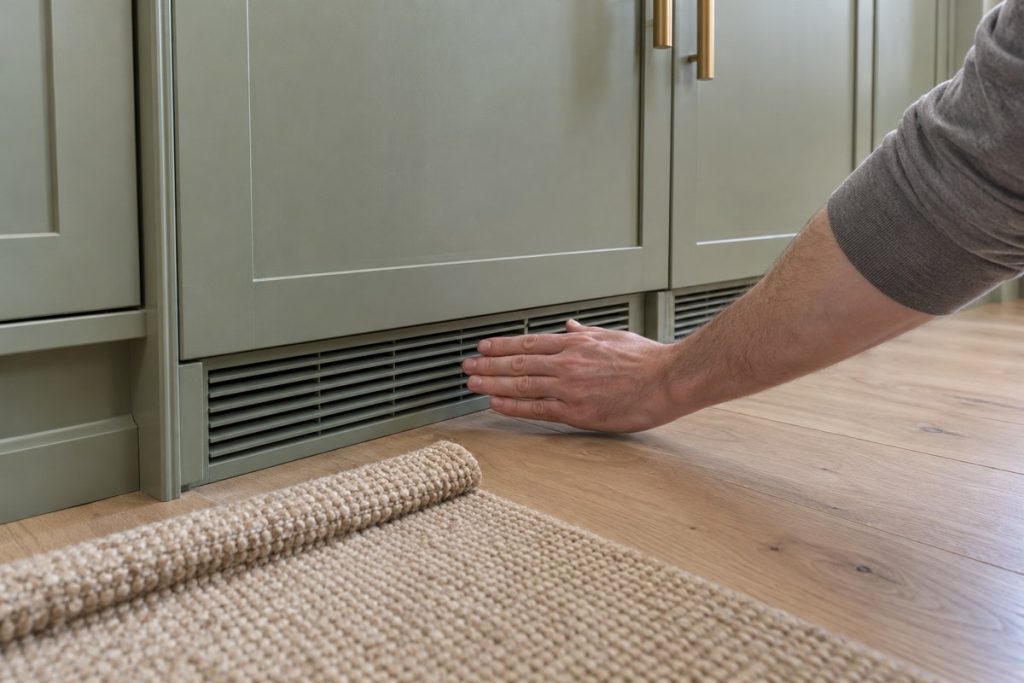
Standard refrigerators have space around them. Air moves. Heat escapes. Designer units are boxed in. Sub-Zero puts the condenser at the bottom, behind the kickplate — the louvered strip at floor level — and the condenser fan pulls room air through that one narrow opening. Block it on a DEC3050, and the whole system works harder and wears faster.
One thing that is not behind your custom panel: the temperature sensors. The panel is decoration on the outside of the door; the thermistors sit inside the compartments.
This installation creates three problems you won’t see in freestanding units:
- Heat buildup is hidden. A DET3650 cooling failure might start with dust on the condenser, out of sight behind the kickplate. Sub-Zero warns that a dirty condenser can cause temperature loss or mechanical failure.
- A wrong reading looks like a dead refrigerator. The control board decides when to cool based on the thermistor, so a failed one in an IT-36 lets the interior climb while the display looks fine.
- Airflow is critical. The 30-inch Designer problem we see most often? A kitchen remodel, and new flooring or trim crowding the kickplate. That’s enough to starve the condenser of air.
Pro Tip: Before diagnosing anything else, hold your hand near the kickplate while the compressor runs — the condenser fan runs with it, so you should feel air moving. Weak airflow? You’ve found your starting point.
Important safety note: Turn the unit off at the control panel before you take the kickplate off, and wear gloves — condenser fins are sharp. Never reach into the machinery area while it’s running, and don’t touch the compressor, tubing, or wiring. Designer units are anchored to the cabinetry with an anti-tip bracket, so never try to pull one out. Burning smell? Turn off the breaker, then call.

Temperature Sensor Problems: The Invisible Failure
Sensor problems don’t announce themselves. No noise. No warning. Your IC-30 just stops holding temperature, and you find out when you reach for cold creamer and it’s lukewarm.
The Designer Series uses thermistors — temperature sensors — to tell the control board what’s happening inside. When one fails, your refrigerator makes decisions based on false information. The board thinks it’s 35°F inside when it’s really 52°F. Or it reads 28°F and shuts off cooling to prevent freezing that isn’t happening.
That’s the pattern behind many “display says fine, food is warm” calls on a DEC2450FI or an IC-36. Homeowners assume the compressor died. Often it’s a sensor. One more thing to rule out: Sub-Zero’s guide says a display showing 38° and 0° on a unit that isn’t cooling may mean Showroom Mode — a call to Sub-Zero’s customer care, not a part.
How to Spot a Sensor Failure
Put a separate thermometer on a middle shelf for 24 hours — Sub-Zero says settings and fresh groceries need that long to settle — then compare it with the display. Sub-Zero calls swings of about ±5°F normal. Still more than 5 degrees apart? The sensor may be lying.
Temperature swings are the other sign. An IT-30 that goes from 38°F to 48°F to 42°F over a few hours, with no door openings, has a control getting erratic signals.
What the display tells you:
- DET and DEC: faults show up as three-number codes. Code 10 1 11, for example, is a short in the Zone 1 evaporator thermistor.
- IT and IC: a flashing “Service” indicator.
- Combination models: two zones — the icon under the degree symbol tells you which one you’re reading (more in the FAQ).
The Quick Test
Skip the button combinations you’ll find online — Sub-Zero’s owner guide has no sequence for forcing the compressor, and that isn’t a homeowner job.
The safe test: write down any code, then switch the unit’s breaker off for 30 seconds and back on — Sub-Zero’s first step for DET and DEC codes. Code gone, and the thermometer agrees with the display the next day? Done. Code back, or the cabinet cools and then drifts warm again? The refrigeration system may be fine — the brain just can’t tell what’s happening. That needs a technician.
What Kills Temperature Sensors
Age, moisture, and connections: thermistors drift as they get older, and connectors loosen or corrode.
Panel-ready installations add a door factor. For DET and DEC models, Sub-Zero caps custom panel weight — 45 to 75 lb on a column door, 50 to 60 lb on a tall unit’s door. An overweight panel or hinges out of adjustment can keep the door from closing square, and the sensor then reports what is really a door problem.
Pro Tip: Don’t replace a sensor on a hunch. A good technician compares its reading with a reference thermometer and tests the sensor before ordering a part.
The defrost system can affect cooling, too. A fault that keeps the unit defrosting means the compressor never runs long enough; a fault that stops defrosting lets ice build up and block airflow. On DET and DEC models, code 15 4 00 means a defrost relay stuck open.
Different symptom, same root cause: a failed part giving the control board bad information.
Ventilation Issues: The Slow Killer
Go look at your kickplate right now. No tools — just a flashlight and the louvers at floor level. A dust blanket on the condenser? You may have found why your DEC3050 is struggling. It’s one of the most common problems we fix, and most homeowners never check it.
Every Designer — IC-30, IT-36, DEC2450R, DET3650 — breathes at the bottom, not on top and not on the sides. Block that opening and the compressor runs hot.
The Three Ventilation Failures
- Blocked kickplate. Rugs pushed against it. Trim installed too close. New flooring thicker than the old — Sub-Zero’s installation guide says the floor can’t interfere with removing the kickplate, so a raised floor can block both the air and the service access.
- Add-ons over the louvers. Built-ins are meant to sit tight: the opening is the unit’s own width, so side gaps aren’t the issue. What hurts is what gets added later. On DET and DEC models, Sub-Zero allows a decorative kickplate over the louvers only when the door panel sits at least 4 inches above the finished floor.
- Dirty condenser coils. Atlanta’s dusty. The coils collect pet hair, airborne cooking grease, construction dust. Sub-Zero says to clean them every six to twelve months.
What You Can Check
Look at the condenser through the louvers. The coils should look like clean metal fins. Fuzzy, or you can’t see through them? They need cleaning. (No need to check above the unit.)
Fine in winter, struggling in summer? Sub-Zero designs these units for a 60–90°F room, and the warmer the room, the longer they run.
Feel the face frame around the door opening while the unit runs. Warm is normal, Sub-Zero says. Too hot to touch? Clean the condenser; still hot, call.
Pro Tip: In Atlanta, clean the condenser every spring before the heat hits — and again in the fall if you have pets.
The Installation Problem
Some integrated refrigerator calls involve units installed wrong from day one. They worked for a year or two because the system was new and strong; then normal wear plus poor airflow equals failure. A 36-inch DEC3650 or IC-36 behind a blocked kickplate will cook itself.
On every Designer call, we check the kickplate, the toe kick, and the trim. Too many DEC2450FI problems come from installations that looked perfect but crowded the airflow by an inch here, half an inch there.
Fix ventilation early. A compressor that’s been running hot for months won’t last as long as one that’s been running cool.
Integrated System Faults: When It’s More Than Sensors
Sometimes the problem isn’t a sensor or dust. The sealed refrigeration system has issues, and this is where repairs get bigger.
Check the age first. Sub-Zero’s residential warranty covers the whole unit for 2 years, the sealed system (compressor, condenser, evaporator, drier, tubing) for 5 years parts and labor, and sealed-system parts for 12. Every DET and DEC refrigerator dates from 2022 or later — many are still inside that five-year window, so call Sub-Zero first.
The Warning Signs
- Compressor runs constantly, but nothing cools. A steady hum from the bottom, yet the cabinet sits at 55°F: refrigerant leaked out, or the compressor isn’t building pressure. Caveat: combination units have two compressors, and Sub-Zero notes both can run at once — non-stop sound can be normal. Judge by the temperatures, and clean the condenser first.
- Frost in weird places. Ice on the back wall of the fresh food section means a door or gasket is letting air in, the defrost system failed, or refrigerant is flowing wrong.
- Clicking every few minutes, plus rising temperatures. Sub-Zero counts clicking among normal sounds. Clicking that repeats while the cabinet warms means the compressor may be trying to start and failing. Our Sub-Zero compressor noise guide covers which sounds matter.
- Silent and warm. Display on, no hum. The control board might not be sending power, or the compressor is locked up.
What Goes Wrong
Control boards can fail, and you get intermittent cooling — works Tuesday, doesn’t work Wednesday, works again Thursday.
Refrigerant leaks are rare but serious. They develop slowly, usually at a joint that vibrates: 42°F today, 45°F next week, 50°F a month later.
Compressor failure is the big one; some Integrated-era freezers (IC-18FI, IC-24FI, IT-30FI, IC-36FI) use variable-speed compressors, per Sub-Zero. Once a compressor is gone, you’re weighing repair against replacement.
DIY Checks Before Calling Professionals
- Reset the controls. Code written down? Breaker off for 30 seconds, then back on. Don’t hunt for the plug — it’s behind a unit that’s anchored in place.
- Listen at the kickplate after someone closes the door. If the cabinet needs cooling, the compressor should kick on within a few minutes. Nothing? Electrical problem or a failed compressor — a technician’s job.
Models With Known Patterns
DET and DEC (2022 and newer). The DEC1850FI, DEC2450FI, and the rest of the current line haven’t been around long enough for any “fails at year five” pattern. Warm? Check the warranty first.
Combination units (IT-30CI, IT-36CI, IC-24CI, DET3050CI, DET3650CI). Two compressors, two separate systems (here’s how dual refrigeration works). One evaporator fan fails, and half the unit stays warm while the other half holds.
Columns (IC-24R, IC-30FI, DEC2450R, DEC3650FI and the like). One compressor per column, so a warm column tells you exactly where to look.
When to Repair vs. Replace
Unit under 7 years old? Repair almost always makes sense, unless the compressor failed from refrigerant contamination, which damages other components too.
Older IT or IC with a major sealed-system failure? Run the math: Sub-Zero designs its refrigerators to last about 20 years on average, and the oldest IT and IC units date from 2014. Sometimes the honest answer is replacement, and we’ll say so.
Pro Tip: Get a second opinion on major repairs. If a sealed-system quote feels high, have the diagnosis checked before you commit.
Quick Diagnostic Steps
Work through these in order. About 20 minutes, and it narrows down most problems.
First 5 Minutes
| Check | What to Look For | What It Means |
|---|---|---|
| Display panel | Codes, “Service,” temperature reading | A code means the unit detected a fault |
| Compressor | Steady hum from the bottom | Running means it’s probably not a dead compressor |
| Interior fans | Listen with the door open, then closed | You should hear a fan once the door closes |
| Door seal | Close the door on a strip of paper, pull it out | You should feel resistance all the way around |
Next 10 Minutes
- Look through the kickplate louvers for dust on the coils.
- Measure the actual temperature with a separate thermometer.
- Check the kickplate area for rugs, trim, or a new floor.
- Listen for clicking that repeats while temperatures rise.
If It’s Still Warm After the Checks
Give it 24 hours after cleaning or a setting change — Sub-Zero’s recovery window. Above 48°F at a 38°F setting? Sub-Zero says cleaning alone is unlikely to fix that. Now it takes manifold gauges and a multimeter — call a professional.
Model-Specific Problems
Size and configuration shape the patterns. Remember, the digits are the width: the DEC1850FI is an 18-inch column, the DEC2450 models are 24-inch. Units ending in W, like the DEC1850W, are wine columns.
18- and 24-Inch Columns (IC-18FI, IC-24R, IC-24FI, DEC1850FI, DEC2450R, DEC2450FI)
Sensor faults and temperature swings (a small cabinet loses more of its cold with each door opening), tight kickplate spaces, frequent cycling.
30-Inch Models (IC-30, IT-30, DEC3050, DET3050)
Control boards, evaporator fan motors, sealed-system leaks. The IT-30CI and DET3050CI are combination units: both systems must work, or one zone warms.
36-Inch Models (IC-36, IT-36, DEC3650, DET3650)
Compressor and sealed-system failures, control board faults, and ventilation problems, which hit these bigger units faster.
What You Can Fix Yourself
Limited options with Designer Series, but these are safe:
Condenser cleaning. Sub-Zero’s guide walks owners through it: power off at the control panel, gloves on, two kickplate screws out (on a column, open the door first). Soft-bristle brush and vacuum, no chemical cleaners, and go gently — bent fins reduce efficiency. Not comfortable with a screwdriver near the machinery? Leave it for a maintenance visit.
Controls reset. Breaker off for 30 seconds. Zero risk, occasionally works.
Ventilation improvement. Move rugs and clutter away from the kickplate. Don’t pull the unit forward: it’s secured with an anti-tip bracket and screws in the side trim.
Door seal cleaning. Wipe the gaskets with mild soap and water on a soft cloth. Torn or cracked? Sub-Zero recommends a technician replace it.
What NOT to touch:
- Refrigerant lines (EPA rules apply, and current Designer models use a flammable refrigerant, per Sub-Zero’s guide)
- Electrical components beyond the breaker (shock hazard)
- The compressor or sealed system
- Custom panels and hinges (an installer’s or technician’s job)
Prevention That Works
Every 6–12 months: clean the condenser (spring is a good time), check door seals for cracks, make sure nothing new crowds the kickplate.
Every 3 months: wipe down the door seals, keep the interior vents clear, check the display against a thermometer.
After any kitchen work: recheck the kickplate and trim, clean the condenser if there was construction dust, watch cooling for a week.
Pro Tip: Keep 1–2 inches between your kickplate and any rug or flooring transition. Mark it with tape if you need to.
When to Call for Service
Call Right Away
- Refrigerator above 45°F and climbing
- Display on, cabinet warm, no compressor hum
- Burning smell (breaker off first)
- Frost building up in the fresh food section
- A code that returns after a breaker reset
Schedule Within 24–48 Hours
- Gradual warming over several days
- Swings well beyond Sub-Zero’s normal ±5°F
- Compressor cycling every few minutes while temperatures rise
- Weak airflow from the vents inside the cabinet
Can Probably Wait a Few Days
- Minor drift (40°F to 43°F)
- Display one degree off from your thermometer
- Normal operation, but you want maintenance
We cover Buckhead, Brookhaven, Virginia-Highland, Decatur, Sandy Springs, and the surrounding areas, and most days we can be there same- or next-day.
The Bottom Line
A Designer that’s not cooling usually fits one of four categories: a failed temperature sensor, blocked ventilation, a control board issue, or a sealed-system fault. The symptoms look alike; the fixes don’t. Check ventilation first — it’s free. Compare the display with a thermometer second. Beyond that, you need professional tools.
We fix these refrigerators every week, from IC-30s to DEC3650s, and most are repairable. We’re family-owned and insured; our EPA 608 certified, background-checked technicians use genuine OEM parts, and Sub-Zero repairs carry our workmanship warranty — up to 12 months.
Don’t let a warm Designer sit for days — the longer it runs wrong, the more stress on parts that still work. Ready to get it cold again? Book Sub-Zero refrigerator repair with PRO Appliance Repair.
FAQ
Why is my integrated fridge warm even though the display shows the correct temperature?
Usually a temperature sensor is feeding the control board false readings. The display shows what the board thinks, not the actual temperature. Leave a thermometer on a middle shelf for 24 hours; more than 5 degrees off the display points to the sensor. Exactly 38° and 0° while nothing cools? Ask about Showroom Mode.
Can I fix a Designer refrigerator that’s not cooling myself?
Partly. You can clean the condenser the way Sub-Zero’s guide describes, keep the kickplate clear, check the door seals, and reset the controls at the breaker. Sensors, control boards, and sealed-system repairs need professional tools. Never attempt refrigerant work — it requires EPA 608 certification.
How often should I service my Designer Series to prevent temperature issues?
Clean the condenser every six to twelve months, as Sub-Zero recommends — in Atlanta, every spring before the heat. Have the seals, fans, and kickplate area checked yearly, and look at the door seals quarterly.
Is it worth repairing a 10-year-old IT-30 or IC-24?
Usually, yes. Sub-Zero designs its refrigerators to last about 20 years on average, and IT and IC models were built from 2014 to 2022. A sensor, fan, or control board repair is an easy call. A failed compressor means running the math; on a well-maintained unit with no earlier major repairs, fixing it usually makes sense.
Why is only the freezer warm on my Designer combination unit?
Combination models like the IT-36CI and DET3650CI have two compressors and two separate systems. A warm freezer next to a cold refrigerator points to the freezer’s own side: its evaporator fan, a sensor, frost, or its sealed system.
What does the little “battery” icon on my Designer display mean?
It isn’t a battery. On Designer and Classic (CL) units, the icon under the degree symbol shows which zone the temperature belongs to: left for the lower zone (freezer), right for the upper zone (refrigerator). Check which zone you’re reading before deciding one is too warm.
PRO Appliance Repair is an independent repair company and is not affiliated with, sponsored by, or endorsed by Sub-Zero Group, Inc. Brand and model names are used only to identify the appliances this page is about and remain the trademarks of their respective owners.