
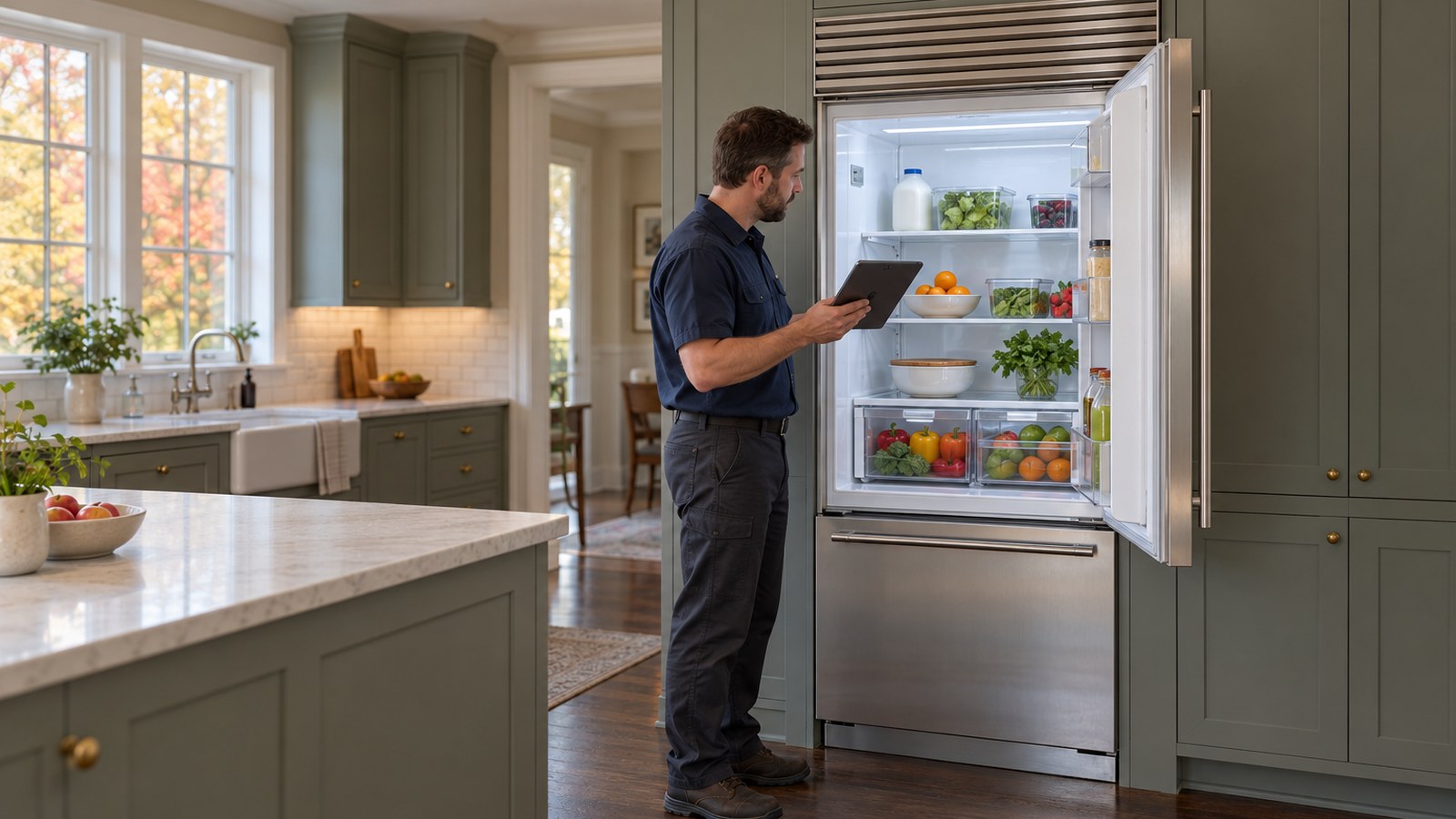
Your Sub-Zero is running warm, the ice bin is filling slower than it should — and before you even wonder what broke, one question jumps the line: is this covered? It’s the first thing we hear on Sub-Zero calls around Atlanta. Fair question. Nobody wants to pay for a repair the warranty would have handled.
Sub-Zero warranty coverage is strong, but it’s not a single blanket policy. It changes over time and depends on whether the failure involves the sealed system or standard parts such as fans, sensors, electronics, and accessories. One thing up front: PRO Appliance Repair is an independent Sub-Zero refrigerator repair team. Covered warranty repairs go through Sub-Zero’s own service network — we help you figure out which side of the line your problem falls on, and fix what the warranty won’t.
In this guide, we’ll walk you through:
- how long warranty coverage lasts,
- what the warranty includes,
- what it doesn’t cover,
- how parts and labor coverage changes over time,
- checking warranty status for your unit,
- and the Sub-Zero warranty claim process.
Start Here: How to Tell Whether Your Problem Is Covered
When a Sub-Zero isn’t cooling properly or a key component fails, this order prevents delays and reduces the risk of a denied claim:
- confirm the warranty period by checking the installation date
- identify whether the issue is sealed system vs. parts
- check for common exclusions such as installation errors, maintenance neglect, or external damage
- write down the model and serial number
Do these before anyone orders a part or opens the system.
Warranty Information: How Long Is Warranty Coverage on Sub-Zero?
Sub-Zero’s residential warranty runs in three tiers, each counted from the date of original installation:
- 2-year warranty: full coverage — parts and labor — for defects in materials or workmanship
- 5-year sealed system warranty: parts and labor for sealed system defects
- 12-year warranty: limited coverage — sealed system parts only
This 2/5/12 structure applies to units in normal residential use in the U.S., D.C., and Canada. Outdoor models, non-residential installations, and display units carry separate, shorter terms — see Sub-Zero’s warranty page.
What Does Warranty Cover?
The honest answer depends on two things: how old the unit is and which part failed. Tier by tier:
2-Year Warranty: Parts and Labor for Most Components
The first two years are the most comprehensive: parts and labor for defect-based failures across most functional components.
The 2-year period often covers:
- electronic control boards and modules (defect-related)
- temperature sensors and thermostats
- condenser and evaporator fan motors (when defect-related)
- wiring, switches, and connectors installed by the manufacturer
- some ice maker component failures when defect-based
- mechanical component defects under normal residential use
This is when the warranty works most like full-service coverage. What that means for you: Sub-Zero’s terms route this service through its own network. Unit under two years old? Call Sub-Zero first. We’d rather tell you that than send a truck for a repair that’s already paid for.
5-Year Sealed System Warranty: Cooling System Protection
The 5-year sealed system warranty covers the highest-cost refrigeration repairs — parts and labor for sealed system defects.
Sealed system components include:
- compressor
- condenser
- evaporator
- filter drier
- sealed refrigerant tubing and heat exchange components
Sealed system repairs take specialized labor, which makes this tier one of the most valuable. Loud compressor? Not automatically a failing one — Sub-Zero lists buzzing, clicking, and humming from that area as normal. See our Sub-Zero compressor noise guide.
12-Year Warranty: Limited Sealed System Parts Coverage
The 12-year warranty is the most misunderstood. It supplies sealed system parts for defect-based failures — but not labor or service costs.
In years six through twelve:
- sealed system parts are provided under warranty
- diagnostics, labor, and refrigerant-related service are billed to you
- with a technician outside Sub-Zero’s network, you request the part from Sub-Zero yourself — Sub-Zero won’t reimburse parts bought elsewhere
That’s why owners sometimes get an invoice on a unit that’s still “under warranty.” Avoid the surprise: get the cause confirmed before you approve a sealed system repair. It may be a fan, sensor, or board instead.
Sealed System Warranty vs Parts: The Coverage Difference That Matters
The biggest misunderstanding? Assuming “not cooling” always means a sealed system failure. Many cooling symptoms come from parts that aren’t sealed system components.
Sealed system (covered under sealed system tiers)
- compressor
- evaporator
- condenser
- filter drier
- sealed refrigerant tubing and heat exchange components
Standard parts (not sealed system)
- condenser fan motor
- evaporator fan motor
- control boards and electronics
- sensors and switches
- lighting assemblies
- ice maker systems and dispenser components
- drawers, bins, shelves, and accessories
Sub-Zero is explicit: fan motors and other electrical parts aren’t part of the sealed system. A refrigerator can stop cooling because the compressor failed — or because a fan motor quit and airflow stopped. Symptoms look alike. Coverage doesn’t.
Will Sub-Zero Warranty Cover This Repair?
These scenarios reflect what we see most on Sub-Zero calls around Atlanta.
More likely covered (defect-based)
These are more likely to qualify within the right tier and with no exclusion involved:
- compressor not operating (sealed system)
- sealed system refrigerant leak due to a manufacturing defect
- evaporator or condenser failure caused by defect
- control board failure during the 2-year period
- sensor or thermostat failure during the 2-year period
Often not covered
These often fall under exclusions — even when the unit is still within a warranty period:
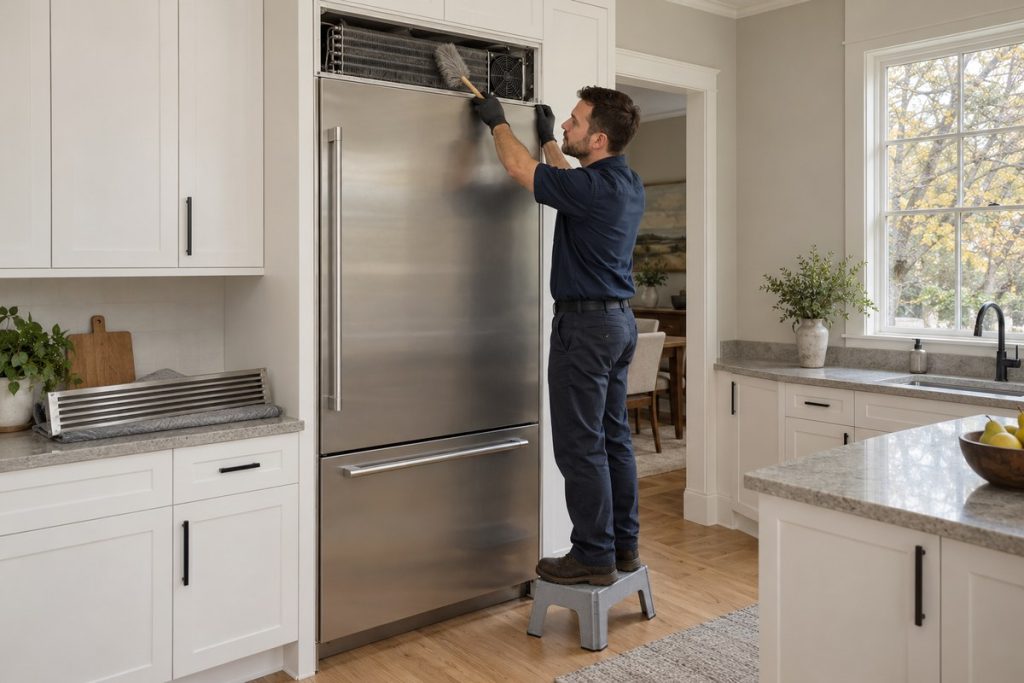
- poor cooling due to dirty condenser coils
- airflow restriction from blocked vents or dust buildup
- water leaks traced to improper water line installation
- door seal issues caused by the unit not being level
- electrical failure caused by power surge damage
- corrosion from environmental exposure or harsh cleaners
- flood damage, pest damage, or physical impact
Two of these hit Georgia homes hard: spring pollen loads up condenser coils fast, and summer thunderstorms bring power surges. Neither counts as a defect. Own an older Classic BI-30 or BI-36? See our breakdown of common problems on those models.
Warranty What Is Not Covered: Common Exclusions
The warranty is defect-based, not a blanket service contract. Its terms exclude defects caused by negligence, accident, or improper use, maintenance, installation, service, or repair. These show up most in denied claims:
- Installation errors: ventilation restrictions, improper electrical supply, incorrect water line installation, leveling issues
- Maintenance neglect: dirty condenser coils, restricted airflow, long-term seal failure. Sub-Zero recommends cleaning the condenser every six to twelve months.
- Cosmetic wear and consumables: dents, scratches, worn bulbs, replacement water filters and air purification cartridges. Stainless steel cosmetic defects are covered for 60 days only.
- External damage: surges, flooding, fire, pests, corrosion
- Improper service or repair: including any relocation or alteration of sealed system components, which voids sealed system coverage
- Indoor models installed outdoors: no warranty at all
Registering Warranty: What We Advise Homeowners
Coverage is tied to the installation date and serial number, and Sub-Zero says registering activates the product warranty — online, by phone, or with the card that came with the unit. To reduce friction later:
- register soon after installation
- keep proof of purchase and installation records
- store model and serial information securely
Sub-Zero’s one-year, parts-only warranty on replacement parts also requires a registered serial number.

Checking Warranty Status for Your Sub-Zero Refrigerator
Before scheduling service, checking warranty status is the easiest way to avoid unnecessary costs. You’ll need:
- model number
- serial number
- original installation date (or documentation confirming it)
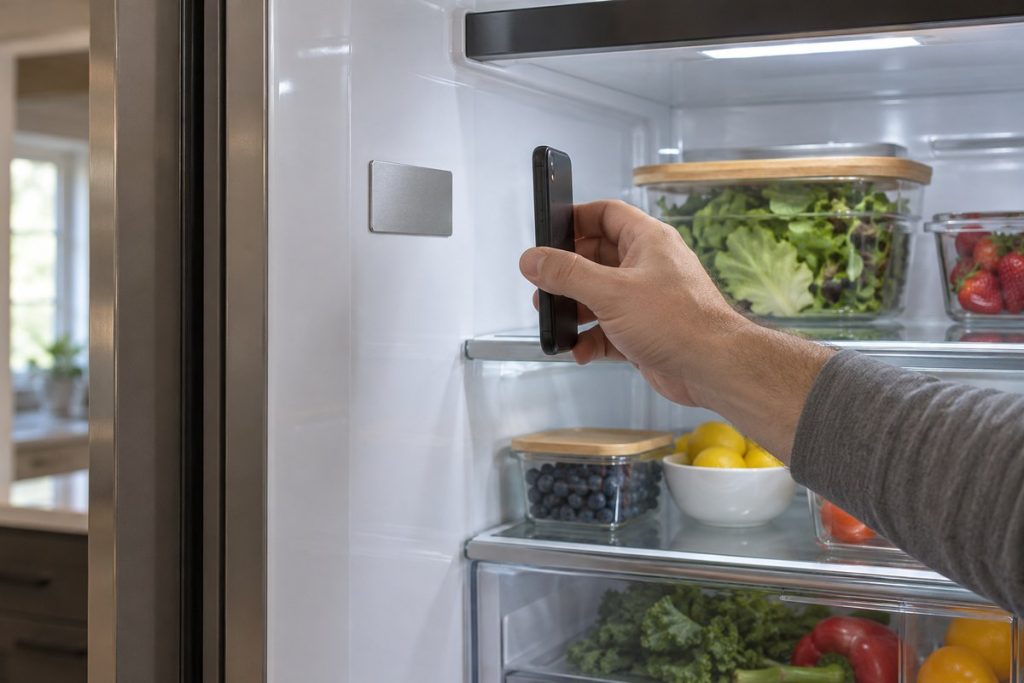
Where to look: the rating plate. On most full-size models, it’s inside the door near the top hinge — the refrigerator door on over-and-under units, the freezer door on side-by-sides. On drawer columns, check inside the middle drawer.
Safety note: open a door or drawer — nothing more. Don’t remove grilles or panels; live wiring and fans sit behind them. Anything beyond the steps in your owner’s guide is a job for a qualified appliance technician.
Warranty Claim Process: How It Works
A smooth Sub-Zero warranty claim usually follows this workflow:
- confirm model and serial number
- confirm installation date and warranty tier
- classify the issue as sealed system vs. parts
- contact Sub-Zero for the nearest provider in its service network
- that provider completes diagnosis and proceeds with repair under the appropriate tier
Most delays happen when a failure is assumed to be sealed-system-related, but diagnosis shows a non-sealed failure or an excluded condition such as maintenance neglect. Where do we fit? Past year two, when the question is “sealed system or not?” — and once the warranty ends or the problem falls outside it.
Why You May Still Pay Under Warranty
Charges can apply even within a warranty period — especially during the 12-year period, since coverage is limited to parts.
You may still pay if:
- labor isn’t covered under that tier
- diagnostics and service calls are billed separately
- refrigerant evacuation and recharge are required — the refrigerant gas itself isn’t covered by the sealed system parts warranty
- the failure falls under exclusions such as installation or maintenance issues
- the cause is external damage (surge, water, corrosion, pests)
Extended Warranty Options: When Additional Coverage Has Value
Coverage narrows after year two, so many owners consider extended options. Worth knowing: Sub-Zero doesn’t sell extended product warranty plans. An extended service contract is available at purchase with certain appliances, and dealers often offer options at the time of sale.
In our experience, extended coverage delivers the most value when it covers:
- labor beyond year five
- electronics and control systems
- fan motors and sensors
- service call fees and diagnostics
- non-sealed system repairs beyond year two
Parts-only plans offer limited benefit — labor often exceeds parts cost in premium refrigeration service.
Bottom Line
Sub-Zero warranty coverage is among the strongest in premium refrigeration, but it isn’t uniform across twelve years:
- The 2-year warranty provides broad parts and labor coverage for defect-based failures.
- The 5-year sealed system warranty covers sealed components with parts and labor.
- The 12-year warranty covers sealed system parts, but not labor or service charges.
Accurate diagnosis — sealed system vs. parts — should come before any warranty claim.
Past year two, or facing something the warranty won’t touch? Book a Sub-Zero repair with us:
- 15+ years of experience with high-end built-ins
- EPA 608 certified, background-checked technicians; insured work
- genuine OEM parts
- our own repair warranty: up to 12 months on parts and labor for Sub-Zero repairs
- same- or next-day service across most of the Atlanta area, from a family-owned team
And if a part doesn’t need replacing, we’ll tell you.
FAQ
How long is warranty coverage on a Sub-Zero refrigerator?
Three tiers from the original installation date: a 2-year warranty on parts and labor for defects, a 5-year sealed system warranty on parts and labor, and a limited 12-year warranty that supplies sealed system parts only.
What is included in the sealed system warranty?
The compressor, evaporator, condenser, filter drier, and the sealed refrigerant tubing and heat exchange components. Fan motors and other electrical parts are not sealed system components — a defect-based fan failure may be covered only during the 2-year warranty.
What is the most common reason a Sub-Zero warranty claim is denied?
The problem isn’t a defect. Usual causes: maintenance neglect (dirty condenser coils), installation problems (restricted ventilation), external damage (surges or water), or improper service. Relocating sealed system components voids sealed system coverage.
How do I check warranty status for my Sub-Zero?
Get the model number, serial number, and installation date. Both numbers are on the rating plate — on most full-size models, inside the door near the top hinge.
My Sub-Zero is under warranty. Should I call you or Sub-Zero?
Under two years old, or a sealed system problem within five years? Call Sub-Zero first — that service runs through its own network. Past that, or when the problem is excluded, call us: we’ll diagnose it, explain it, and fix it.
Are extended warranty options worth it for Sub-Zero refrigerators?
They can be — when they include labor and cover non-sealed parts such as fan motors and electronics beyond year two.
Disclaimer: PRO Appliance Repair is an independent repair company and not affiliated with or endorsed by Sub-Zero Group, Inc. All trademarks belong to their respective owners.