
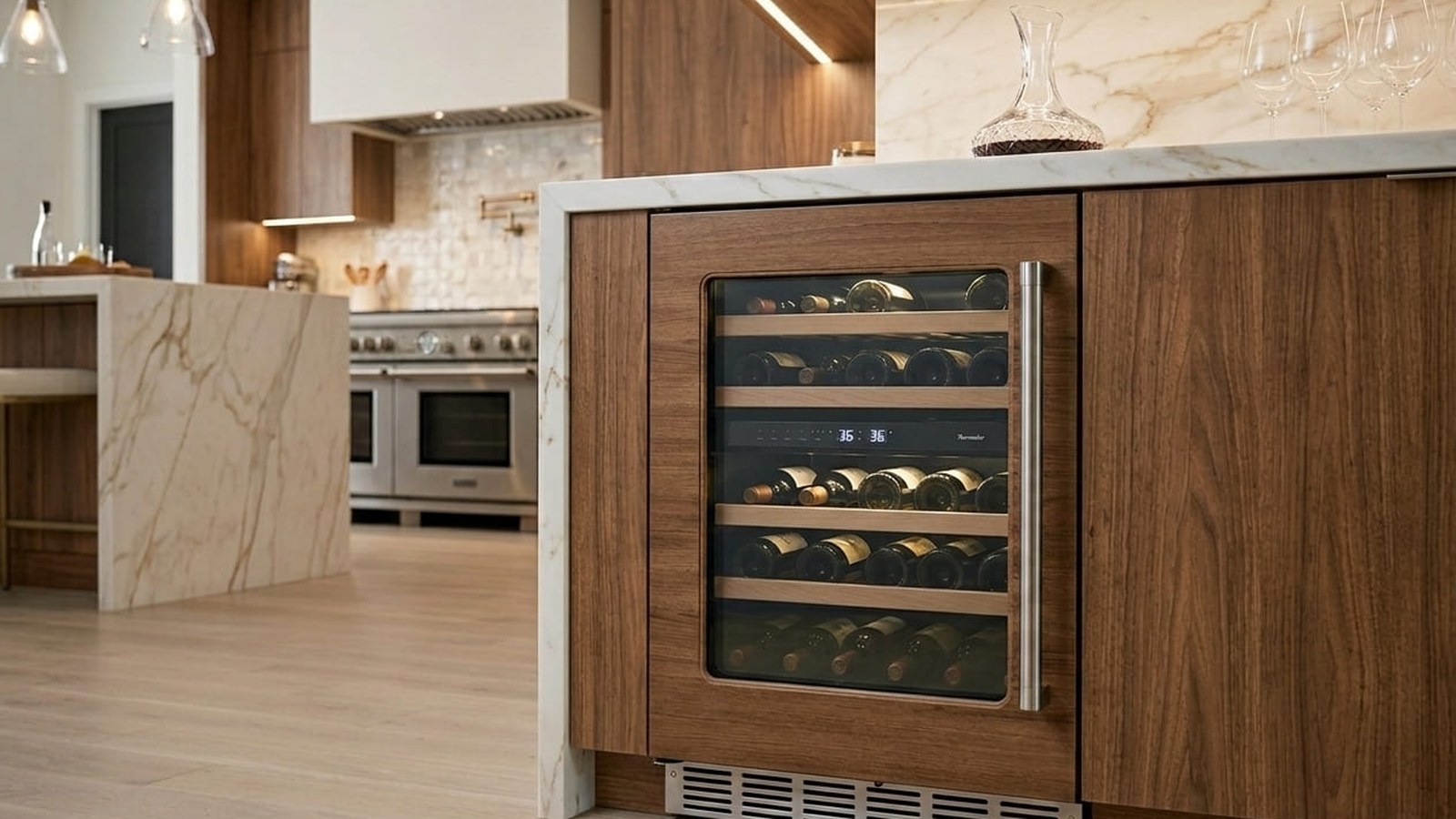
It’s late, the kitchen is quiet — and your Thermador wine cooler is making a sound it never used to make. A rattle. A beep. A hum that won’t quit. Because these units are so quiet to begin with, any new noise jumps out right away.
Whether it’s a fully integrated column or an under-counter unit, these machines are engineered for stable, precise temperature management — and for running quietly enough that you barely notice them. That’s part of the appeal. When a Thermador wine cooler starts making noise that feels out of place, owners notice right away, because the baseline is so low.
The integrated columns (like the T18IW905SP and T24IW905SP) and the under-counter Glass Door Wine Reserve units (like the T24UW820RS) share a common design goal: consistent cooling, minimal vibration, and a refined finish that fits into high-end kitchens. So when something starts sounding off, it’s worth paying attention.
This guide walks through what’s normal, what isn’t, what causes noise problems in Thermador wine coolers, and what you can actually do about it — whether that’s a quick self-check or a call to a technician.
Hearing something new and not sure it’s normal? Our Thermador wine cooler repair team will tell you straight what it is — and what it isn’t.
How Quiet Are Thermador Wine Coolers Supposed to Be?
Short answer: very quiet. In practice, you might hear a soft hum when the cooling cycle is active, a faint click when a part switches on or off, and occasional airflow sounds as the fans move air through the cabinet.
Thermador’s own Use & Care Guides list three groups of normal noises, in nearly the same words for the under-counter units and the columns:
- Droning: motors are running — the refrigeration unit or a fan.
- Bubbling, humming, buzzing, or gurgling: refrigerant is flowing through the tubing.
- Clicking: a motor, switch, or solenoid valve is switching on or off.
A few more things worth knowing:
- The fans run during cooling cycles. A soft, steady airflow sound is expected.
- In open-plan kitchens, even normal operating sounds can seem louder simply because there’s less background noise to mask them.
The key distinction: consistent, low-level sound is normal. Sudden changes in sound — new rattles, louder hums, beeping, or metallic knocking — are not.
Which Thermador Wine Cooler Models Are We Talking About?
Thermador calls these units “Glass Door Wine Reserve” and “wine storage units”; “wine cooler” is our everyday word for them. The two Use & Care Guides this article draws on cover these models:
| Model | Type | Guide |
|---|---|---|
| T24UW800LP, T24UW800RP | Under-counter, glass door | Glass Door Wine Reserve |
| T24UW810LS, T24UW810RS | Under-counter, glass door | Glass Door Wine Reserve |
| T24UW820LS, T24UW820RS | Under-counter, glass door | Glass Door Wine Reserve |
| T18IW905SP, T24IW905SP | Integrated column | Wine storage unit |
Your model number is on the rating label inside the cabinet.
Normal Sounds vs. Warning Sounds: A Practical Guide
Not every noise means something is wrong. Here’s a straightforward breakdown:
| Sound | What It Usually Means | Normal? | When to Call a Tech |
|---|---|---|---|
| Soft, steady hum or drone | Compressor or fan running | Yes | Only if it never stops |
| Brief click | A motor, switch, or valve switching on/off | Yes | If clicking becomes rapid or constant |
| Gentle airflow sound | Fan moving air | Yes | If it becomes a whine or grinding |
| Bubbling or gurgling | Refrigerant moving through the tubing | Yes | If it comes with temperature problems |
| Rattling or buzzing | Bottles touching, loose part, vibration against the cabinet | Maybe | If it persists after the checks below |
| Beeping | Door left open, or a temperature alert | Usually a signal | If it doesn’t stop after the door is closed |
| “HI” on the display with an alarm | Cabinet too warm (under-counter units) | No | If it returns with the door shut |
On the under-counter Wine Reserve, Thermador’s troubleshooting table explains “HI” with the alarm sounding: it’s too warm inside because the door has been left open for too long. The guide’s answer is to press the alarm button once to silence it, close the door, and let the unit cool. If HI keeps coming back with the door closed, that’s no longer a door problem — it’s a cooling problem worth a technician’s look.
About That Beeping
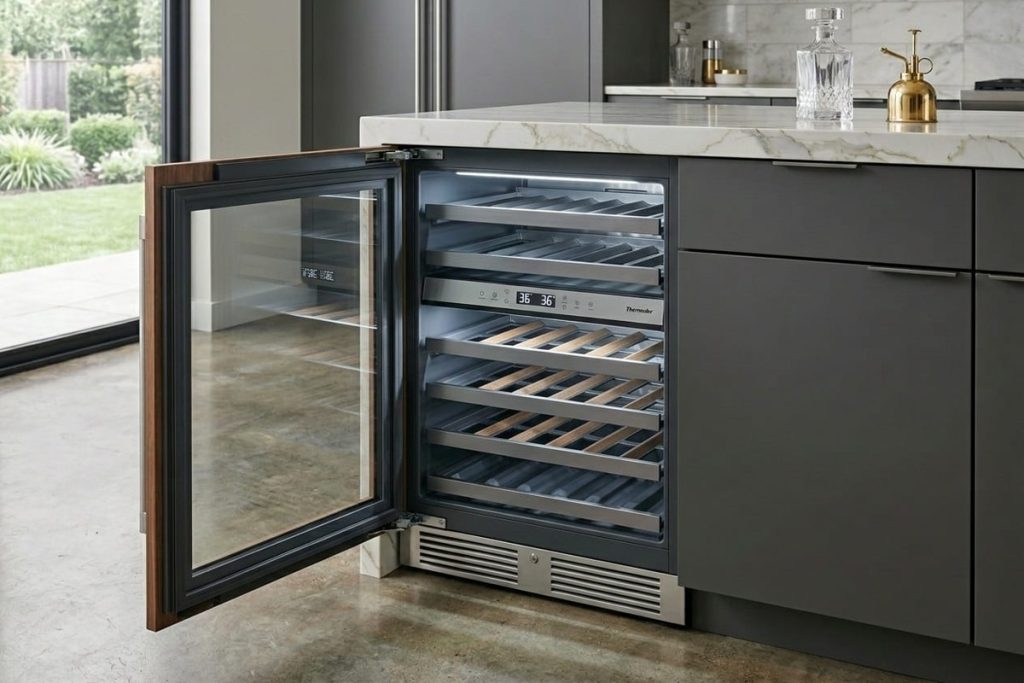
On the under-counter units, Thermador says the door alarm sounds when the door has been open for 3 minutes or longer, along with a flashing blue light above the ALARM button. Pressing the button once silences it for now; closing the door ends it. The column guide describes the same idea: leave the door open a long time, and a continuous signal switches on until you close it.
So before you worry: check the door. A bottle neck sticking out, a shelf pulled slightly forward, or a misaligned door can all keep it from closing completely.
Why a Thermador Wine Cooler Starts Making Unusual Noise
Most noise problems have a root cause. Here are the most common ones we see in the field:
- Poor leveling or surface contact. If the unit isn’t perfectly level, the compressor and fans vibrate unevenly. Both Thermador guides put leveling first when it comes to preventing noise. In built-in installations, even slight contact between the unit’s frame and the cabinetry can turn a minor vibration into a noticeable rattle.
- Bottles touching each other. It sounds too simple — but both guides list it. Bottles that touch can clink and buzz every time the compressor runs. Moving them slightly apart often ends the noise.
- Blocked ventilation. On the under-counter Wine Reserve, Thermador says the refrigeration unit breathes only through the toe-kick at the base — and that area must never be covered. When it’s blocked by a rug, a mat, or a stored item, the cooling system works harder and the fans run longer.
- Overstocked cabinet. Too many bottles can block airflow between shelves. The fans compensate, the compressor carries more load, and the unit runs more than usual. The column guide also says to always leave space between the bottles and the back panel. It’s one of the most overlooked causes.
- Damaged door seal. A damaged gasket lets cold air escape, so the unit runs more often and the temperature inside starts to rise. Thermador’s troubleshooting table lists a gasket that isn’t sealing among the reasons the compressor runs too much.
Already ruled out the simple stuff? Our Thermador wine cooler technicians handle noise repair across Atlanta and Georgia — same- or next-day service is available most days.
Real-Life Noise Scenarios and What They Usually Point To
Scenario 1: It runs loudly all the time and never seems to stop
This usually means the unit is struggling to hold temperature. Thermador’s tables link constant running to a door opened often, covered ventilation openings, a big load of bottles (especially warm ones), a hot room, leveling legs that aren’t extended, or a gasket that isn’t sealing. The system never reaches its target, so it never cycles off.
Scenario 2: It starts beeping and the display shows a warning
On the under-counter units, an alarm with “HI” on the display means it’s too warm inside. Thermador’s guide says HI shows up when the door has been left open for an excessive amount of time, and the fix it gives is simple: close the door and allow the unit to cool. Check the door first. If it’s closed properly and the alarm keeps returning, the unit isn’t cooling properly — that’s a technician’s diagnosis.
Scenario 3: It vibrates noticeably when the compressor kicks on
Thermador’s first fix for noise is leveling: align the unit with a spirit level using the height-adjustable feet. If it still vibrates after that, have a technician look.
Scenario 4: It gets louder in summer
Georgia summers are no joke. When the room gets warmer, the condenser has to work harder to shed heat. The fans run longer, the compressor cycles more often, and the unit is simply busier. Thermador lists an excessively warm environment as a reason for longer running. If the noise rises with the heat and the unit still cools properly, it may be within normal range — but if it’s dramatically louder or can’t hold temperature, it’s worth a service call.
Scenario 5: The noise started after loading more bottles
Overloading is a surprisingly common trigger. Bottles packed tightly block airflow through the shelves, and bottles that touch can rattle. Rearranging the load — leaving space between bottles and away from the back panel — often quiets things noticeably.
Scenario 6: It hums normally, then suddenly starts rattling
Rattling that comes and goes is often a loose part — a shelf, a bin, or a panel vibrating along with the compressor. The column guide specifically mentions shelves or compartments that wobble and need to be re-inserted. These are usually straightforward fixes, but they don’t go away on their own.
Scenario 7: Noise appeared right after installation or flooring work
New installations sometimes need fine-tuning. If the unit isn’t perfectly level, or the floor changed (new tile, hardwood), vibration patterns shift.
What You Can Safely Check Yourself Before Calling a Tech
Safety first: don’t remove the toe-kick or any panel, don’t reach into the ventilation openings, and don’t touch wiring. Thermador specifically warns not to remove the electrical box cover behind the toe-kick — risk of electric shock.
A few things any homeowner can do without risk:
- Check the level. Thermador says to align the appliance with a spirit level using the height-adjustable feet; on built-in units, that’s often a job for an installer or technician.
- Inspect the door seal. Look around the closed door for cracks, tears, or spots where the gasket has pulled away from the frame. A damaged seal is easy to spot.
- Clear the vents. Make sure nothing is in front of the toe-kick or blocking the ventilation openings. Even a towel or a mat nearby can restrict airflow.
- Rearrange the bottles. If the unit is packed full, remove a few and leave space between them — and between the bottles and the back panel.
- Check the shelves. Make sure each shelf or bin is seated properly and doesn’t wobble. The column guide says bins or shelves that wobble or stick should be taken out and re-inserted.
- Check that the door is fully closed. A bottle neck or a shelf slightly out of place can keep the door from sealing.
What not to attempt yourself: anything involving the refrigerant system, the compressor, internal wiring, or the control board. These require specialized tools — and refrigerant work legally requires EPA certification.
When It’s Still Safe to Use — and When to Stop
Not every noise means you need to stop using the unit. Here’s a practical guide:
Generally fine to keep using (while you keep an eye on it):
- Mild vibration that doesn’t affect temperature
- Occasional rattling from a loose shelf or bottles touching
- Slightly longer fan running in hot weather, if temperature holds steady
Stop and call a tech:
- The alarm keeps returning even with the door closed
- The display shows “HI” again and again
- The temperature inside is rising and your wine is no longer kept where it should be
- The compressor is making a hard knocking or grinding sound
- The unit smells like burning or hot plastic
The risk of running a genuinely overheating unit isn’t just about the wine — it’s about the compressor. Sustained heat stress shortens its life, and a compressor replacement is one of the bigger repairs on any wine cooler.
Why DIY Repair Can End Up Costing More
It’s tempting to look up a part number, order it online, and fix it yourself. We get it. But with Thermador wine coolers, there are a few ways that goes sideways:
- Panel and trim damage. Thermador’s built-in units have integrated trim and custom panels that are expensive to replace. Taking them apart the wrong way can crack trim, strip screws, or knock the door out of alignment — turning a small repair into a much bigger one.
- Refrigerant system risk. If the noise is coming from the compressor or refrigerant lines, opening those components without proper equipment is dangerous — and illegal without EPA certification. Our technicians are EPA 608 certified. This isn’t something to improvise.
- Safety. Thermador’s guides note that improper installation and repairs may put the user at considerable risk.
The bottom line: a professional diagnosis costs less than two rounds of guessing.
Why Homeowners Call Us
When a Thermador wine cooler starts making noise, the diagnosis matters as much as the repair. These aren’t generic appliances — each line has its own cooling layout, controls, and installation setup that affect how problems show up.
Here’s what we bring to the job:
- Model-aware troubleshooting — we work on Thermador wine storage regularly and know the common failure patterns
- Same- or next-day scheduling across the Atlanta metro and surrounding Georgia
- A warranty of up to six months on our repairs — if the repair doesn’t hold, we come back
- EPA 608 certified, background-checked technicians and genuine OEM parts
- 15+ years in the field and an honest diagnosis — if it’s something you can fix yourself, we’ll tell you
We’re not here to upsell. We’re here to fix it right and make sure it doesn’t come back. We’re an independent repair company, not affiliated with Thermador.
How to Prevent Future Noise Problems
A little routine attention goes a long way with Thermador wine coolers:
Airflow and placement
- Keep the toe-kick area at the base clear at all times — Thermador says never to cover it or place anything in front of it.
- Don’t pack bottles so tightly that air can’t move between them.
Loading habits
- Avoid constantly overstocking the unit — leave room for air to circulate.
- Leave space between the bottles and the back panel, and keep bottles from touching each other.
Cleaning
- Clean the unit the way your Use & Care Guide describes — Thermador says to switch the appliance off before cleaning.
- Wipe the door seals with clear water only, then dry them thoroughly — that’s how Thermador’s guide says to clean them.
Leveling
- Have leveling checked after flooring work, a move, or if the unit gets bumped.
Seasonal awareness
- In Georgia, summer heat puts extra load on the cooling system. During peak months, avoid opening the door more than necessary and make sure the room has decent ventilation.
Frequently Asked Questions
Why is my Thermador wine cooler beeping in the middle of the night?
Most often, it’s the door alarm or a temperature alert — the door didn’t close fully, or the cabinet warmed up. On the under-counter units, the door alarm sounds after the door has been open 3 minutes or more. Check the door and the display. If the alarm comes back with the door firmly closed, it’s time to call a tech.
What does “HI” on the display mean?
On the under-counter Glass Door Wine Reserve, “HI” with the alarm means it’s too warm inside — Thermador’s table links it to a door left open too long. Close the door and let the unit cool. If HI keeps returning with the door shut, the unit isn’t cooling properly — don’t ignore it, especially in summer.
The noise started after I added more bottles — is that related?
Very likely, yes. More bottles change the load and can block airflow, and bottles that touch can rattle — both Thermador guides mention it. Space the bottles out and keep them off the back panel. If the noise stays, there may be an underlying issue the extra load made more noticeable.
Is it normal for my Thermador wine cooler to be louder in summer?
Somewhat. In Georgia’s heat, the condenser works harder and the fans run more often. A modest increase is within normal range — as long as the unit holds temperature. If it struggles to cool or runs constantly, that’s beyond seasonal.
Can I keep using the wine cooler if it’s louder than usual but still cooling?
It depends on the noise. A mild rattle from bottles or a loose shelf? Probably fine short-term. A hard knock from the compressor area, or an alarm that keeps returning? Stop and get a diagnosis. Running a stressed compressor to failure costs far more than a service call.
How do I tell if the noise is coming from the fan or the compressor?
Thermador’s guides don’t give owners a way to tell them apart by sound. They list droning from a running motor — the refrigeration unit or a fan — as normal. A new knock, grinding, or a noise that comes with rising temperatures is a technician’s diagnosis.
Conclusion
Thermador wine coolers are genuinely quiet machines — that’s part of what you’re paying for. When one starts making noise that feels new or out of place, it’s usually flagging something that deserves attention, even if it isn’t urgent yet.
Some sounds are completely normal: the drone of the compressor, the click of a switch, the gurgle of refrigerant, the gentle movement of air. Others — an alarm that keeps returning, a metal clunk, vibration that gets worse, or “HI” on the display — are signals worth acting on before a minor issue becomes a major repair.
Your Thermador sounding different? If you’re in Atlanta or anywhere in Georgia, book Thermador wine cooler repair with our team. Same- or next-day service, an honest diagnosis, and work we stand behind.