
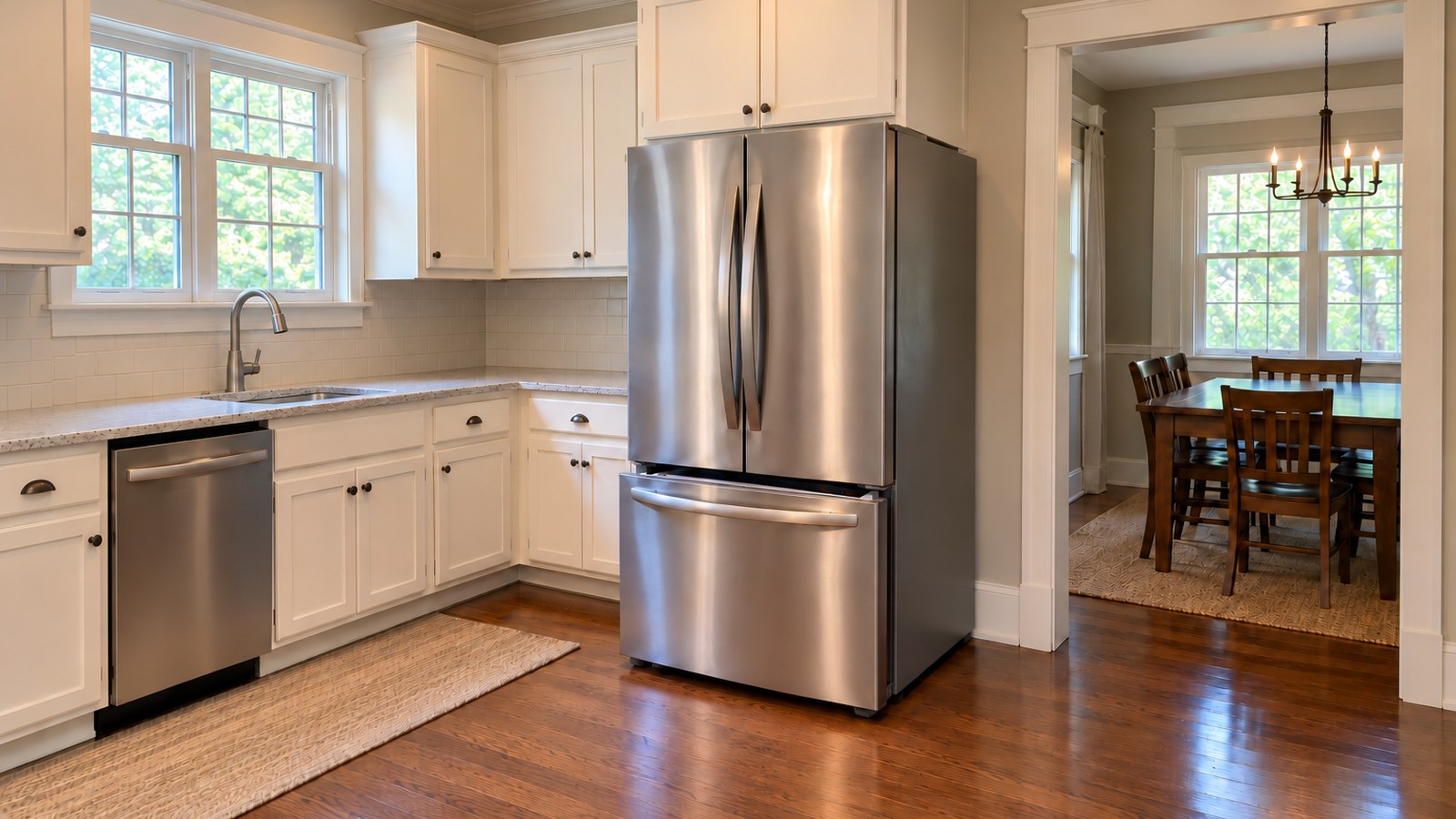
You push the freezer door shut, turn around — and hear it ease back open. Or you find it cracked an inch the next morning, with frost on the frozen peas and the compressor humming away. A GE freezer door that won’t seal isn’t just annoying. It quietly wastes energy, overworks the compressor, and slowly thaws your groceries.
The good news? We see this every week across Atlanta, and in most cases it’s fixable — often with checks you can do yourself before anyone touches a screwdriver.
GE freezers — the bottom drawer of a French-door refrigerator, a tall Monogram built-in, or a standalone upright in the garage — are built to last. But daily use, humidity, and Atlanta’s sticky summers put real stress on the door system. In this guide, we’ll break down why your door fights to close, the models that struggle most, the checks you can do yourself, and when it’s time to call a technician.
Door popping open? If you’d rather skip the guesswork, our GE freezer repair team will find the cause and get it sealing tight again.
The Culprits: Why Your GE Freezer Door Is Fighting You
That stubborn GE freezer door refusing to latch? On our daily repair runs across Atlanta, the cause almost always comes down to one of five offenders.
- Something in the way. It’s the first thing GE itself tells owners to check: a pizza box sticking out a half inch, a bin that isn’t fully closed, a heavy item on the door that tips forward as it swings shut, or a single stray ice cube in the door’s path.
- A worn-out or out-of-place door gasket. The soft magnetic seal is your freezer’s first line of defense. On GE French-door models it slides into a groove on the door, and if a corner pops out, the seal is broken. Over years of slamming, gaskets also harden, twist, or tear — and even a small gap lets warm air in.
- A sagging door from hinge wear. Tall, heavy doors put constant stress on the hinges. On Monogram built-in side-by-sides like the ZIS420NM or ZISS420NN, wear can let a door drop out of alignment — it scrapes, doesn’t sit flush, and needs a firm shove to catch. A truly broken hinge is a repair, not a DIY job.
- A frosty barricade. In humid Georgia air, ice buildup is a frequent guest. A thick ridge of frost along the liner or gasket physically blocks the door. You might even hear a “crunch” as it tries to seal.
- Lost self-close. GE refrigerators are set up so the doors swing shut on their own when opened less than 90 degrees — and that depends on leveling. GE’s spec: the front sits 1/4 inch higher than the rear. If the cabinet is level or tilted forward, the door stops short.
What Makes It Worse?
Atlanta’s high humidity speeds up frost along the seal, while frequent opening in busy kitchens wears hinges faster. Skipping cleaning lets sticky spills glue the gasket. And garage placement adds hot summer days, cool nights, and the humidity that comes with both.
Models That Struggle with Door Closure
GE freezers hold up well, but certain models show up on our schedule more often with doors that won’t stay shut. Here’s the lineup we see most:
- Monogram built-in side-by-sides (ZIS420NM, ZISS420NN). Tall, heavy doors strain the hinges. Over time, wear lets the freezer door sag just enough to miss a clean seal and drift back open.
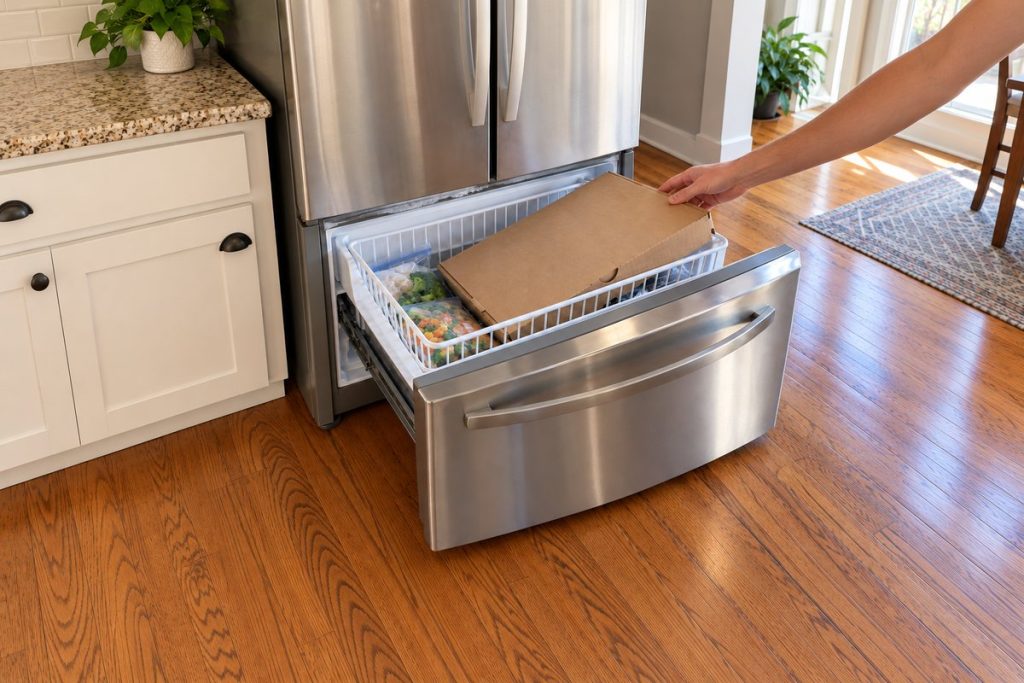
- GFE28GYNFS / GNE27JYMFS — GE French-door refrigerators with a bottom freezer drawer. That drawer gets yanked open constantly, and the usual suspects are drawer-specific: a lower basket not fully seated in its slides, a gasket corner out of its groove, or a drawer front slightly out of adjustment — especially on floors that aren’t perfectly level.
- PYE22KYNFS / PFE28KYNFS — GE Profile French-door refrigerators. Loaded door bins add weight, heavy items can tip forward as the door closes, and years of slamming leave gaskets with twisted spots and torn gaps.
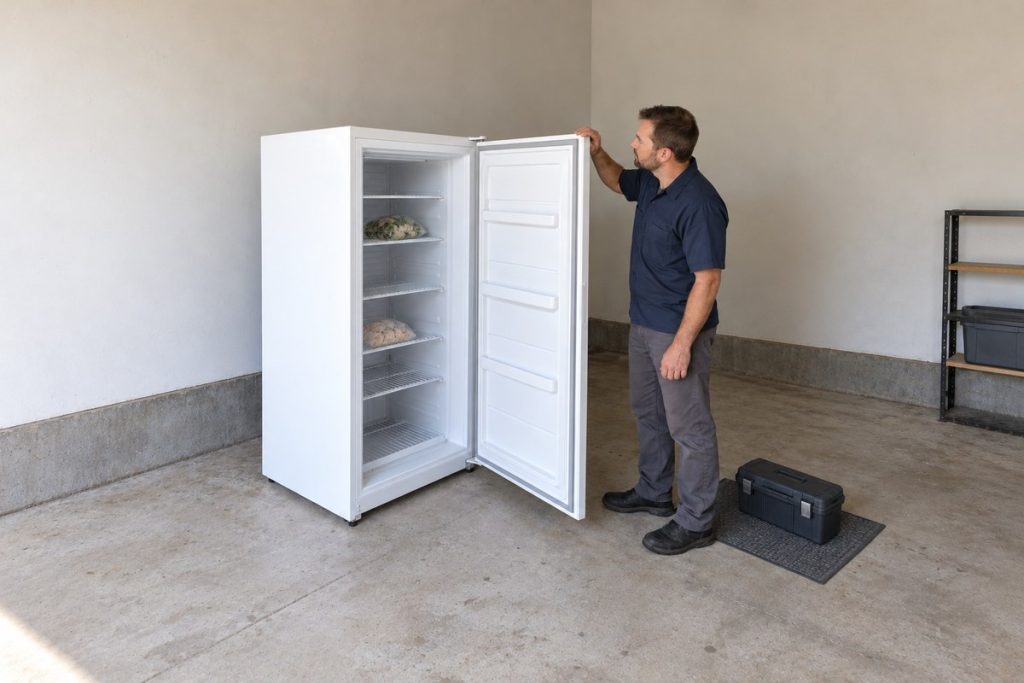
- FUF17SMRWW — GE Garage Ready upright freezer. Garage placement plus daily opening means ice often builds right where the door meets the frame. GE says the front legs should be set so the door closes easily when opened about halfway, and food packages shouldn’t stick out past the front of the shelves.
These freezers count on gravity, a sound hinge, and a tight magnetic gasket to close and seal. When the cabinet loses its slight backward tilt, a hinge wears, a gasket tears, or frost builds a ridge, the self-close quits — and you’re left pushing or propping. In our experience, French-door bottom freezers like the GFE28GYNFS and built-ins like the ZIS420NM top the list because of door weight and tight cabinet fits.
Can You Fix It Yourself? A Quick Diagnostic Checklist
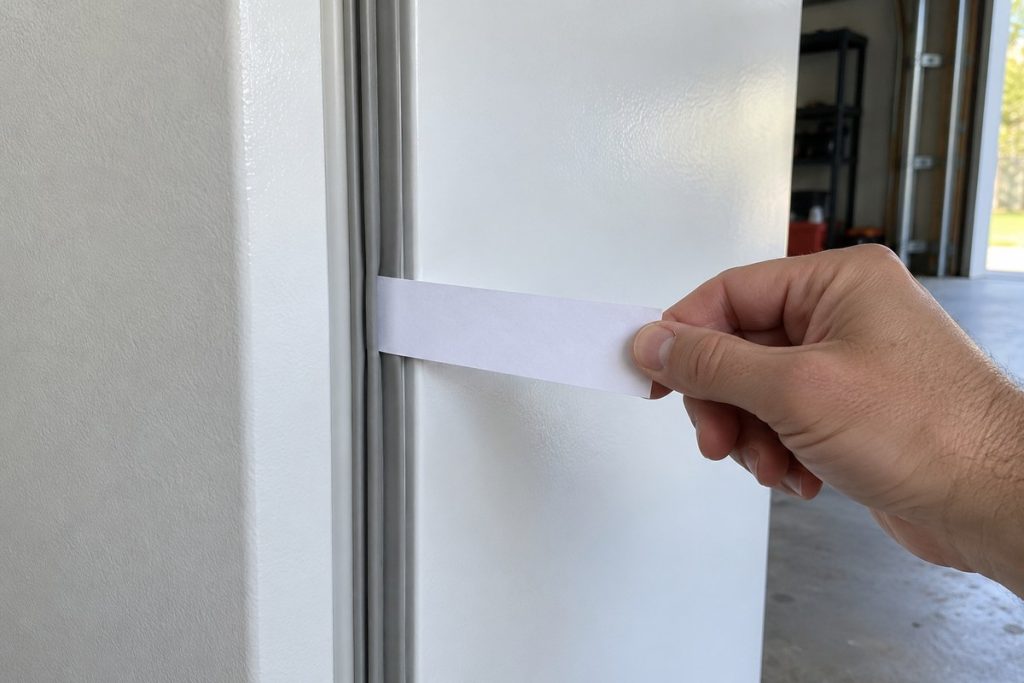
Don’t call a technician just yet. Many GE freezer door problems can be solved — or at least diagnosed — in under 10 minutes, with nothing more than a dollar bill. Work from top to bottom, and stop when you find the culprit or hit a red flag.
Safety first: Unplug the freezer before you defrost it or clean around the gasket and hinges. Never chip ice with knives or screwdrivers, and don’t use a heat gun or open flame. Don’t loosen hinge screws, take the door off, or force a door that won’t move. If your refrigerator has a water line, leave the valve and fittings alone. Anything beyond these checks is a job for a qualified appliance technician.
- Clear the path. Look for packages hanging past a shelf, a bin that’s not fully closed, a heavy jar tipping forward in the door, a stray ice cube. On a bottom-freezer drawer, wiggle the lower basket to make sure it’s fully seated in its slides.
- Look for frost or ice. Run your hand along the gasket and the frame. Feel a ridge of ice? Fix: move the food to coolers, unplug the freezer, leave the door open, and let the ice melt on its own — heavy ice can take several hours. Dry everything and restart. If the door closes now, ice was the blocker.
- Check the gasket — then run the dollar bill test. Starting at the corners, slide a finger along the gasket to confirm it’s seated in its groove, the way GE recommends. Then close a dollar bill in the door at several points and tug gently. If it slides out easily anywhere, the seal is weak there. Clean the gasket with warm soapy water, getting into every fold, and retest. On GE uprights, GE suggests a thin layer of petroleum jelly on the hinge side of the gasket after cleaning. Still loose? The gasket likely needs replacing.
- Check the leveling. Open the door less than 90 degrees and let go. If it stops halfway, the cabinet may have lost its tilt. Adjust the front legs or rollers only the way your owner’s manual shows, then retest.
- Check door alignment and hinge play. Does the door wobble, scrape, or sit uneven? On a freezer drawer, GE says it should touch the frame evenly, with the same gap at the top and the bottom. On a hinged door, lift it slightly while closing — if it latches more easily, the hinge is the problem. Wipe the hinge area clean, but skip spray lubricants; they attract dust.
If the door seals after these steps, you just saved yourself a service call. If not, read on.
When It’s Time to Call the Pros: Signs of a Serious Issue
Some door problems are quick home fixes; others need professional tools and parts. These are the clear signals that DIY has run its course:
- The door wobbles or feels loose even when pushed closed — almost always a worn hinge or loose mounting.
- The gasket still has visible tears or stays twisted after cleaning and reseating — it needs an exact replacement.
- Frost keeps building along the seal after a full manual defrost — the problem is deeper, usually an air leak you can’t see or a problem with the cooling coil behind the back panel.
- The door scrapes or grinds, or needs a hard slam to latch — the hinge is failing.
- You can see light around the edges or feel cold air leaking from one corner — the alignment is off beyond a leveling fix.
- The problem started after a move or a bump — a misaligned door or bent hinge parts are likely.
These mean parts replacement, precise realignment, or hidden fasteners — things that can damage the door or cabinet if done wrong at home. We’ve seen DIY attempts bend hinges further or tear gaskets beyond repair.
When we arrive, we:
- Inspect the hinges and adjust or replace them as needed.
- Check the door’s alignment, swing, and seal all the way around.
- Replace a worn gasket with a genuine OEM gasket made for your model.
- Realign a sagging door or a drawer front that’s out of adjustment.
- Clear any hidden frost and check the evaporator.
Tried the checks and the door still won’t stay shut? Call us or book online — we’ll take it from here.
Why Trust PRO Appliance Repair With Your GE Freezer?
We’re a family-owned team working across metro Atlanta, and GE freezers are among the units we see every week. For more than 15 years, our technicians have worked on these doors everywhere from Monogram built-ins in Buckhead kitchens to uprights in Marietta garages. We know how hinges wear on a ZIS420NM, why gaskets twist on a GFE28GYNFS, and how Georgia humidity turns small gaps into constant leaks.
What sets us apart:
- We don’t guess. We check door swing, seal, and hinge play on-site before touching anything.
- We explain everything in plain English. No jargon, no upselling — just “this hinge is worn, and here’s what it takes to fix it right.”
- Genuine OEM parts for gaskets and hinges.
- Insured, background-checked, EPA 608 certified (a federal certification for handling refrigerant) technicians.
- Workmanship warranty — up to six months.
We’ve seen doors that looked hopeless — sagging, scraping, frost everywhere — seal like new after proper hinge work or a gasket swap.
Conclusion: Don’t Let a Bad GE Door Spoil Your Groceries
A GE freezer door that won’t close is more than a minor hassle. It wastes energy, risks your food, and stresses the compressor. Hinges wear, gaskets tear, and frost builds — especially here in Atlanta, where humidity and heavy use take their toll.
Most of these problems are straightforward fixes. Start with the simple checks:
- clear the path and the frost,
- reseat, clean, and test the gasket,
- check the leveling and the hinge.
If those don’t solve it, don’t force it — that’s when worn parts need professional attention. And if the door trouble has already led to frost and a code on the display, our guide to GE freezer error code E1 explains what it means.
Get your kitchen back to normal. Schedule GE freezer repair with PRO Appliance Repair — call us or book online, and we’ll have a technician out same- or next-day across most of metro Atlanta. No more propping the door with a chair or waking up to soft ice cream.
FAQ
Can a damaged door gasket make my GE freezer run constantly?
Yes. A twisted or torn gasket lets warm air in all the time, so the compressor runs harder to compensate — driving up your electric bill and wearing it out faster.
How do I know if the hinge on my GE freezer is broken, not just misaligned?
If the door wobbles, scrapes, or sags even when you lift it slightly while closing, the hinge is likely worn or loose. Misalignment from an uneven floor usually fixes with leveling; a broken hinge needs replacing by a technician.
Is it safe to keep using my GE freezer if the door doesn’t seal perfectly?
Short-term, yes — but not for long. Gaps let cold air escape and humidity in, which leads to frost, higher energy use, and eventually spoiled food.
Why does my GE freezer door pop open after I close it?
Most often it’s a twisted gasket, a gasket corner out of its groove, or a cabinet that isn’t tilted back enough to let the door swing shut. Something sticking out from a shelf or door bin can do it too.
Can I temporarily fix a door that won’t close until the technician comes?
You can hold it shut with tape for a short time, but don’t rely on that — the freezer still wastes energy and your food is still at risk. Never force a door against a hinge that feels damaged. Better to call sooner.
Can moving my GE freezer cause door problems?
Yes. Shifting the unit can knock it off level, push hinges out of alignment, or twist the gasket — especially on heavy French-door models and built-ins. If the trouble started right after a move, check the leveling first.
PRO Appliance Repair is an independent repair company and is not affiliated with, sponsored by, or endorsed by GE Appliances, a Haier company. GE, GE Profile, and Monogram are trademarks of their respective owners; brand and model names are used only to identify the appliances this page is about.