

A refrigerator making loud noise is more than an annoyance — it’s often the first sign that something inside the appliance is wearing out or working too hard. Has your once-quiet fridge started sounding like a tractor, or put out a steady, unsettling buzz?
Before you start worrying about a big repair, know this: many of the causes behind those sounds are things you can check, and often fix, yourself. In this guide we’ll walk you through the six steps we use to track down a noisy refrigerator, from the easiest checks to the ones that need a trained technician. If you’d rather have someone listen to it in person, our refrigerator repair team runs this same diagnosis on service calls every week.
Why Is My Fridge Making Noise? Let’s Find the Culprit
Your noisy refrigerator isn’t trying to ruin your evening — it’s telling you something. Different sounds point to different causes, so careful listening comes first. Once you know whether you’re hearing a buzz, a rattle, a click, or a hum, the list of usual suspects gets much shorter.
Normal sounds you don’t need to fix
A soft hum when the compressor starts, a whoosh of air from the fans, gurgling as refrigerant moves through the tubing, a light pop as plastic expands and contracts, a sizzle during defrost, and ice dropping into the bin are all normal. Modern efficient refrigerators also run longer than older models, so you may simply hear them more often.
Sounds that point to a real problem
- Simple rattle: Usually the easiest fix. Loose shelves, glass panels, jars touching each other, or a loose bottom grille can make a surprising amount of noise as vibration travels through the cabinet.
- Buzzing fan: Your refrigerator relies on fans for airflow. Most have a condenser fan (at the back or bottom) and an evaporator fan (inside, behind the freezer wall). Dust can clog them, and their motors wear out over time, which leads to a steady or cyclical buzz or hum. A buzzing or rattling fridge is one of the most common complaints we hear.
- Grinding motor: A more serious sound. Worn bearings in a fan motor, or more seriously in the compressor, make a low, unpleasant grinding or rumbling that means parts are rubbing that shouldn’t be.
- Icy knock: A distinct ticking, knocking, or scraping sound coming from the freezer often means ice has built up where it shouldn’t and is hitting the evaporator fan blades as they turn.
- Wobbly vibration: A refrigerator that isn’t level can rock slightly when the compressor starts, so the whole unit vibrates against the floor and sends noise through the kitchen. This is a frequent source of “mystery” rattles.
- Serious hum: The compressor is the heart of your fridge. A soft hum when it starts is completely normal. A much louder hum than usual, or a hum with a knock, a loud click, or a buzz that keeps repeating, can mean the compressor or its start components are struggling.
Not sure where the sound is coming from? Sometimes a trained ear is the fastest answer.
How to Fix a Loud Refrigerator: Your 6-Step Game Plan
Grab a notepad and a flashlight. These steps go from the simplest fixes to the more complex ones, so you don’t skip an easy solution.
Important safety note: Always unplug the refrigerator or switch it off at the breaker before you reach behind it or inside its panels. Don’t open sealed panels, cut or bend tubing, touch wiring, or try to work on the compressor or refrigerant lines — that work is for trained, EPA 608 certified technicians. Never chip ice with a knife or melt it with a heat gun, hair dryer, or boiling water. If a step feels beyond your comfort level, stop there.
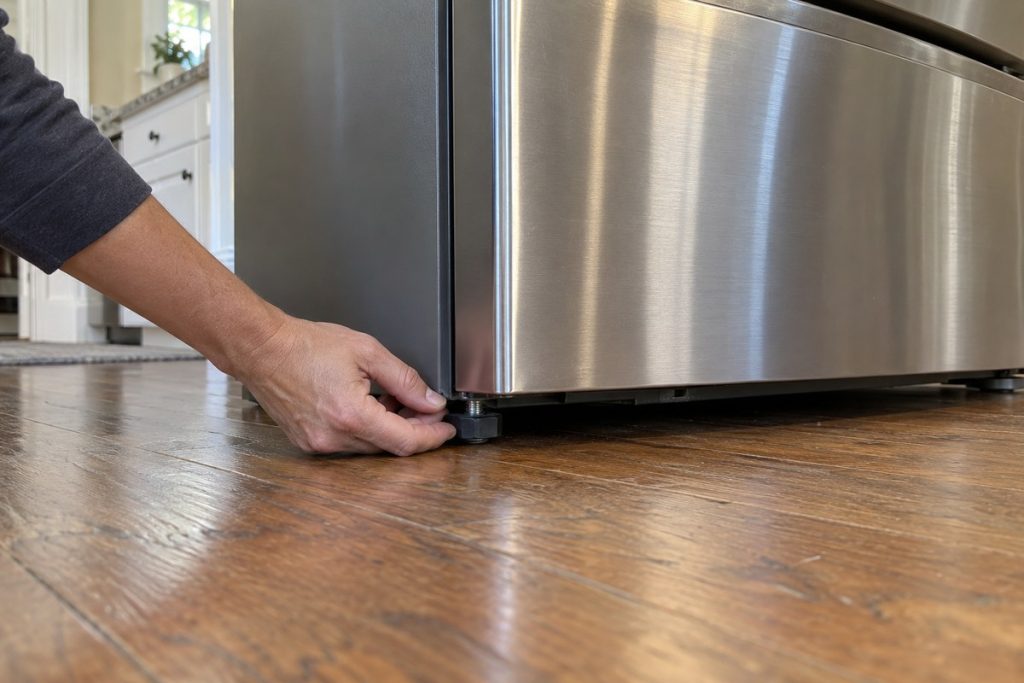
1. Check for a wobbly fridge
The easiest fix, and surprisingly common. Does the refrigerator rock when you push on a corner? Place a level on a top shelf and check front to back and side to side. Adjust the front leveling legs or rollers as your owner’s manual shows until the unit sits firmly on the floor. Many manufacturers want the front slightly higher than the back so the doors close on their own — your manual gives the exact setting. This simple step alone can solve a lot of vibration noise.
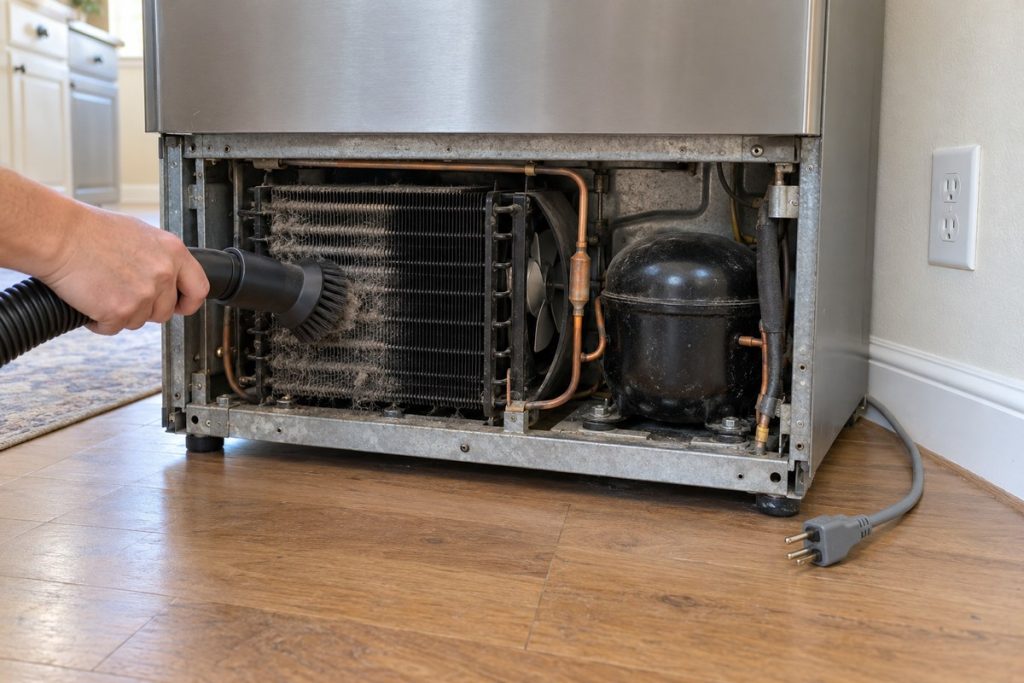
2. Clean the condenser fan and coils
On most freestanding refrigerators the condenser fan and coils sit at the bottom back, behind an access panel. Unplug the fridge, carefully Unplug the fridge and vacuum the front grille and the area you can reach without removing panels. If your manual describes condenser cleaning, follow it exactly; anything behind a panel is a job for a technician.
3. Defrost the freezer fan
Hearing a repeating click-clack or scraping from the freezer? You probably have ice building up around the small evaporator fan. Unplug the fridge, empty the freezer, and lay towels inside to catch the meltwater. Leave the doors open and let it defrost completely — several hours, or overnight for heavy ice. Once it’s fully thawed and dry, plug it back in and listen: the fan should run without scraping.
If the ice comes back within days or weeks, the real cause is usually a defrost system problem (a defrost heater, sensor, or control), and that’s a job for a technician.
4. Tighten everything up
Give the fridge a gentle shake. If you hear a rattle, it’s time to look closer. Check the interior glass shelves, door bins, crisper drawers, and the front grille or kick plate. Re-seat anything that’s loose and snug any screws you can reach on the outside grille. Don’t forget the simple stuff inside — glass bottles, jars, and containers clinking together. Rearranging them can make minor buzzing and rattling disappear. Also check behind the fridge: a water line or a drain pan that touches the wall or the cabinet can buzz with every cycle.
5. Listen closely to the compressor
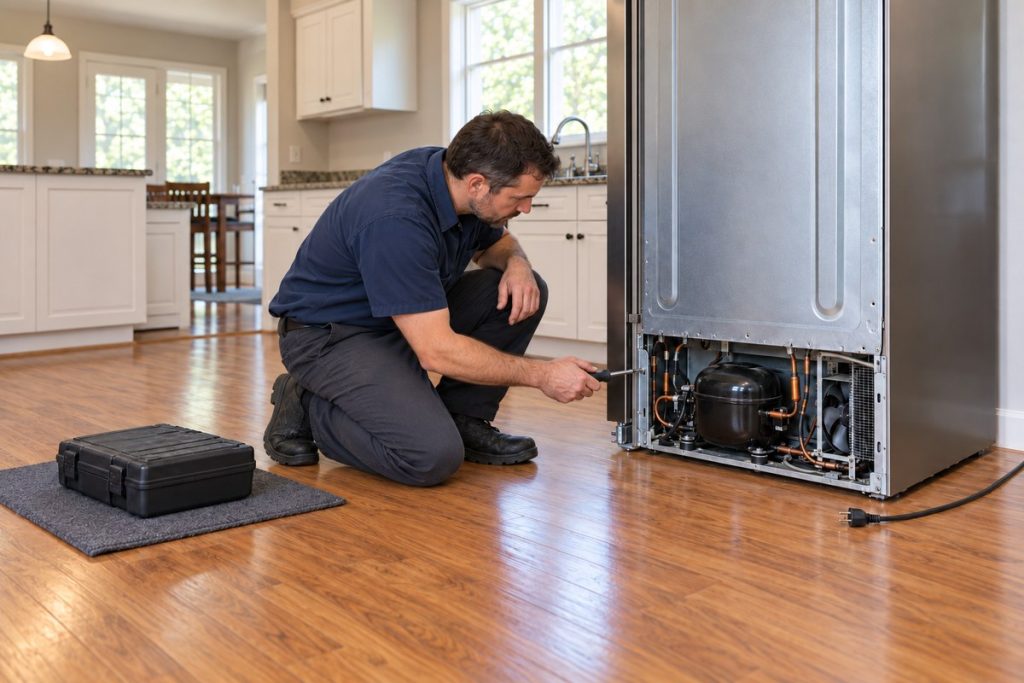
Now for the more serious component. The compressor is usually a black, round unit at the bottom back of the refrigerator. When it starts as part of its normal cycle, a soft hum or purr is perfectly normal. But a loud, harsh compressor noise — a deep, straining hum, a loud buzz, a distinct knock, or a click every few minutes while the fridge stays warm — can mean a problem with the compressor itself or its start components. Don’t try to test or replace these yourself; note what you hear and when, because that description helps a technician find the problem faster.
6. Consider part replacement
If you’ve worked through everything above and the noise is still there, a part such as a fan motor may need replacing. This is usually where a professional saves you time, makes sure the correct part goes in, and does the job safely.
Feeling out of your depth with the compressor? That’s our cue — our technicians handle these repairs every day.
What Affects the Cost of Getting Some Quiet?
If your checks point to a professional repair, here’s what shapes the final bill:
| Problem | What drives the cost |
|---|---|
| Replacing a fan motor | Which fan (condenser or evaporator), how hard it is to reach, and part availability for your model |
| Compressor or start-component repair | Whether it’s a start relay or the compressor itself; a compressor replacement is sealed-system work |
| Leveling and vibration fixes | Usually quick — often handled during the diagnostic visit |
| Clearing ice and fixing the defrost problem | Which defrost part failed and how much ice has built up |
The reliable way to know the cost is a proper diagnosis, with a clear estimate before any work starts.
When to Throw in the Towel and Call a Pro
Let’s be honest: some repairs are best left to trained technicians. Complex work without the right training and tools can lead to injury and more expensive damage. Call a professional if you run into any of these:
- The noise continues after all the steps above. If you’ve leveled, cleaned, defrosted, and tightened, and the noise is still there, the cause is most likely an internal part that needs replacing.
- The sound clearly comes from the compressor and sounds wrong. A soft hum is normal; loud knocking, heavy straining, or a harsh electrical buzz are classic signs of a compressor in trouble. This is not a repair for amateurs.
- You’re not comfortable with electrical parts or opening panels. Refrigerators run on household voltage and contain refrigerant under pressure. If you have any doubts about wiring, relays, or motors, let a technician handle it.
- Your fridge is loud and isn’t cooling properly. That combination often points to a failing fan or a compressor or sealed-system problem, and it needs a full professional diagnosis.
Own a high-end built-in? Our guides to Sub-Zero compressor noise and Sub-Zero PRO refrigerator noise explain which sounds are normal on those models — and if the noise is coming from a drawer, see Sub-Zero drawer noise.
Wrapping Up: You’ve Got This
A refrigerator making loud noise is frustrating, but you now have a solid plan. Working through these steps, you can find and fix many of the most common noise problems yourself, from rattling shelves to the tell-tale clicking of an iced-up freezer fan. For the tougher jobs, especially the deep hum or knock of a struggling compressor, calling a professional isn’t a sign of defeat — it’s the smart move, and acting early can prevent a complete breakdown.
Ready for a quiet kitchen? Schedule refrigerator repair with PRO Appliance Repair — same- or next-day service across most of metro Atlanta. Our insured, background-checked technicians use genuine OEM parts and back the repair with our workmanship warranty — up to six months on most brands and up to 12 months on Sub-Zero.
FAQ
Is it normal for my refrigerator to hum?
Yes. A soft, steady hum when the compressor runs is normal. A hum that’s much louder than usual, comes with knocking, or continues while the fridge gets warm is not.
Why does my fridge rattle only when it turns on?
Most often the refrigerator isn’t level, or something is touching the cabinet — a loose bottom grille, the drain pan, a water line, or a wall behind it. When the compressor starts, the vibration makes those parts rattle. Level the unit and make sure nothing behind or under it is touching.
What is the clicking or scraping sound in my freezer?
Usually ice touching the evaporator fan blades behind the freezer wall. Unplug the refrigerator and let the freezer defrost completely, then listen again. If the ice keeps coming back, a defrost part has likely failed and a technician should check it.
Can a dirty condenser make my refrigerator loud?
Yes. Dust makes the condenser fan buzz and the compressor run longer. Unplug the fridge and vacuum the fan and coils as your manual shows.
Is a loud refrigerator dangerous?
Usually not, but it’s a warning. A failing fan motor or compressor can stop cooling, and food can spoil. If the noise comes with a burning smell, sparks, or a tripped breaker, unplug the refrigerator and call a technician right away.
When should I call a technician for a noisy fridge?
Call when the noise continues after leveling, cleaning, and defrosting; when it clearly comes from the compressor; when you’d need to open panels or touch wiring; or when the fridge is loud and not cooling properly.
PRO Appliance Repair is an independent repair company and is not affiliated with, sponsored by, or endorsed by Sub-Zero Group, Inc. or any other appliance manufacturer. Brand and model names are used only to identify the appliances this page is about and remain the trademarks of their respective owners.