An LG refrigerator is designed to deliver steady cooling with quiet, efficient performance. But as it cools, moves air, and makes ice, it produces a range of sounds. LG’s own owner’s manuals list many of them as normal operation: clicking, rattling, whooshing, gurgling, popping, sizzling, dripping, and even a pulsing or high-pitched hum from the compressor.
Let’s be honest, though: some sounds come from a refrigerator that isn’t level, a cabinet touching the wall, frost around a fan, dust near the rear fan, or an ice maker trying to work without a water line. Those mean something needs attention.
This guide is here to make that easier.
If you’re here because your LG refrigerator is making noise, you’re in the right place. We’ll explain:
- which sounds are often normal,
- which patterns deserve a closer look,
- and when a loud noise should move you from “watch it for a day” to “book service now.”
We’ll go sound by sound — from valve clattering and compressor buzzing to ice maker humming and refrigerant gurgling — in plain English.
The goal is simple: understand the sound, protect your cooling, and know when service is the smart next step.
LG refrigerator making a sound you don’t recognize? Our LG refrigerator repair technicians can find the source and fix what needs fixing.
Why Your LG Refrigerator May Sound Different Throughout the Day
An LG refrigerator is built for consistent cooling. As it adjusts to temperature changes, airflow needs, and ice production, it can sound a little different at different times of day. In most cases, that’s part of normal performance.
Your refrigerator responds to everyday use. Opening the doors often, putting warm food inside, running the ice maker, or recovering after a defrost cycle can all make certain sounds more noticeable for a while. Some sounds are brief and expected. Others last longer or sound sharper when a part is working harder than usual.
That’s why a sound should always be judged in context. A short hum during active cooling is very different from a rattle that keeps coming back. A soft flowing sound may be refrigerant moving, while a stronger vibration may point to leveling or a fan. What matters is not only what you hear, but when you hear it, how long it lasts, and whether cooling stays steady.
Before we go sound by sound, here are the most common noise patterns in one place.
At a glance
- Sounds may change during the day
- Door openings can affect how loud things seem
- Ice-making cycles add short operating sounds
- Cooling demand changes how noticeable a sound is
Quick Sound Map
| Sound | What it may relate to | What to know first |
|---|---|---|
| Valve clattering | Refrigerant flow switching inside the system | Often brief and part of normal operation |
| Compressor buzzing or pulsing | Compressor start-up or active cooling | LG lists a pulsating or high-pitched sound as normal |
| Popping or cracking | Inside walls expanding and contracting with temperature | LG lists popping as normal |
| Evaporator fan ice | Frost or ice interfering with the fan | Often comes with airflow changes or frost |
| Condenser fan obstruction | Dust or debris near the rear fan area | May create a rough hum or vibration |
| Ice maker humming or buzzing | The water valve filling the ice maker | Normal while filling — but not when there’s no water line |
| Refrigerant gurgling | Refrigerant flowing through the system | LG lists gurgling as normal |
A simple way to listen
- Location — the back of the refrigerator, inside the cabinet, or near the ice maker
- Timing — brief, occasional, or constant
- Performance — normal cooling, or signs that something has changed
With that in place, the next step is to separate everyday operating sounds from the ones that signal a repair.
When a Sound Is Normal
An LG refrigerator uses several parts throughout the day to keep cooling steady. Because of that, some sound is expected. A short hum, a soft click, or a brief flowing sound can simply be normal operation as the refrigerator adjusts.
LG’s manuals spell out a lot of these. The defrost control clicks when the automatic defrost cycle starts and ends, and the control clicks as it cycles on and off. Rattling can come from refrigerant flow, the water line on the back, or items stored on top of the refrigerator. Whooshing is the evaporator fan moving air through both compartments, or the condenser fan pushing air over the condenser. Sizzling is water dripping on the defrost heater during defrost. Dripping is water running into the drain pan. And on high-efficiency compressors, a pulsing or high-pitched sound while the refrigerator runs is normal.
The difference is usually not the sound itself. It’s the pattern around it. A normal sound is brief, controlled, and not tied to a performance problem. A sound worth a service call is usually stronger, longer, more frequent, or paired with another sign that something has changed.
Here’s a simple side-by-side view.
Normal Sound or Repair Signal?
| What you hear | What it often means | What to watch for |
|---|---|---|
| Brief hum or pulsing during cooling | Normal compressor operation | Should come and go with cooling cycles |
| Short click or clatter | A control or valve switching | Usually brief, not constant |
| Light gurgling or flowing sound | Refrigerant moving through the system | Normal when cooling is steady |
| Occasional popping | Inside walls adjusting to temperature | Harmless if performance is normal |
| Repeated loud buzzing | A part struggling, or the ice maker on without water | Check the ice maker setting and the cooling |
| Strong fan noise from inside | Possible frost or fan interference | Look for weak airflow or frost |
| Rough vibration from the back | Leveling, wall contact, or a fan problem | Check placement and rear clearance |
| Repeating hum near the ice maker | Ice maker or water supply problem | Notice whether ice production is affected |
Homeowner checklist
- Time it: A brief sound is very different from a long one.
- Check cooling: Temperatures should stay stable.
- Notice vibration: Strong vibration changes the picture.
- Find the source: Back of the unit, inside the cabinet, or the ice maker.
Call for service when:
- The sound is new and noticeably louder than usual
- It keeps coming back in long stretches
- Airflow gets weaker
- Frost shows up where it shouldn’t
- Cooling performance changes
- The refrigerator shakes or vibrates more than usual
With that in mind, let’s start with a sound that often surprises homeowners: valve clattering.
What to Know About Valve Clattering
Some refrigerators use a switching valve to send refrigerant where it’s needed during operation. In some LG models, that valve can make a brief clattering sound as the system changes flow. That’s why valve clattering can sound odd even when the refrigerator is working as designed.
In most cases, the key detail is how long it lasts. A short clatter that shows up during a cycle change and then stops is usually normal. What deserves attention is a sound that turns harsh, lasts longer than expected, or comes with weak cooling.
Quick guide
| What you hear | What it often means |
|---|---|
| Short rhythmic clatter | Normal switching activity |
| Brief mechanical sound from the back | Refrigerant flow being redirected |
| Longer metallic clatter | A part may need inspection |
| Clattering with poor cooling | Service should be scheduled |
Homeowner checklist
- Listen for timing: Does it happen at the start or end of a cycle, then stop?
- Check for rattling items: LG notes that items stored on top of or around the refrigerator can rattle too.
- Check the water line: A loose line at the back can rattle against the cabinet.
- Watch performance: Cooling should stay steady.
Call technicians if
- The clatter becomes long or metallic
- The refrigerator feels warmer than usual
- The sound gets louder over time
That brings us to another sound homeowners notice quickly, especially when it lingers: compressor buzzing.
Compressor Buzzing: When It’s Normal and When It Isn’t
The compressor is the heart of the cooling system, and it makes some noise when it runs. LG explains that its high-efficiency compressors run longer than older models and that a pulsing or high-pitched sound while the refrigerator runs is normal. LG also notes that a refrigerator with a linear compressor can rattle briefly if it’s bumped or jarred while running — also normal.
What isn’t normal is a heavy buzz that keeps repeating, a buzz followed by silence and another start attempt, or a buzz that comes with a refrigerator that keeps getting warmer. Those can mean the compressor is struggling to start or a part around it is failing.
Quick guide
| What you hear | What it often means |
|---|---|
| Steady hum or pulsing while running | Normal compressor operation |
| Brief rattle after the refrigerator is bumped | Normal for linear compressors |
| Loud buzzing that comes back every few minutes | The compressor may be struggling to start |
| Buzzing with a warming refrigerator | Service should be scheduled |
Homeowner checklist
- Check stability: The refrigerator should feel level and solid on the floor.
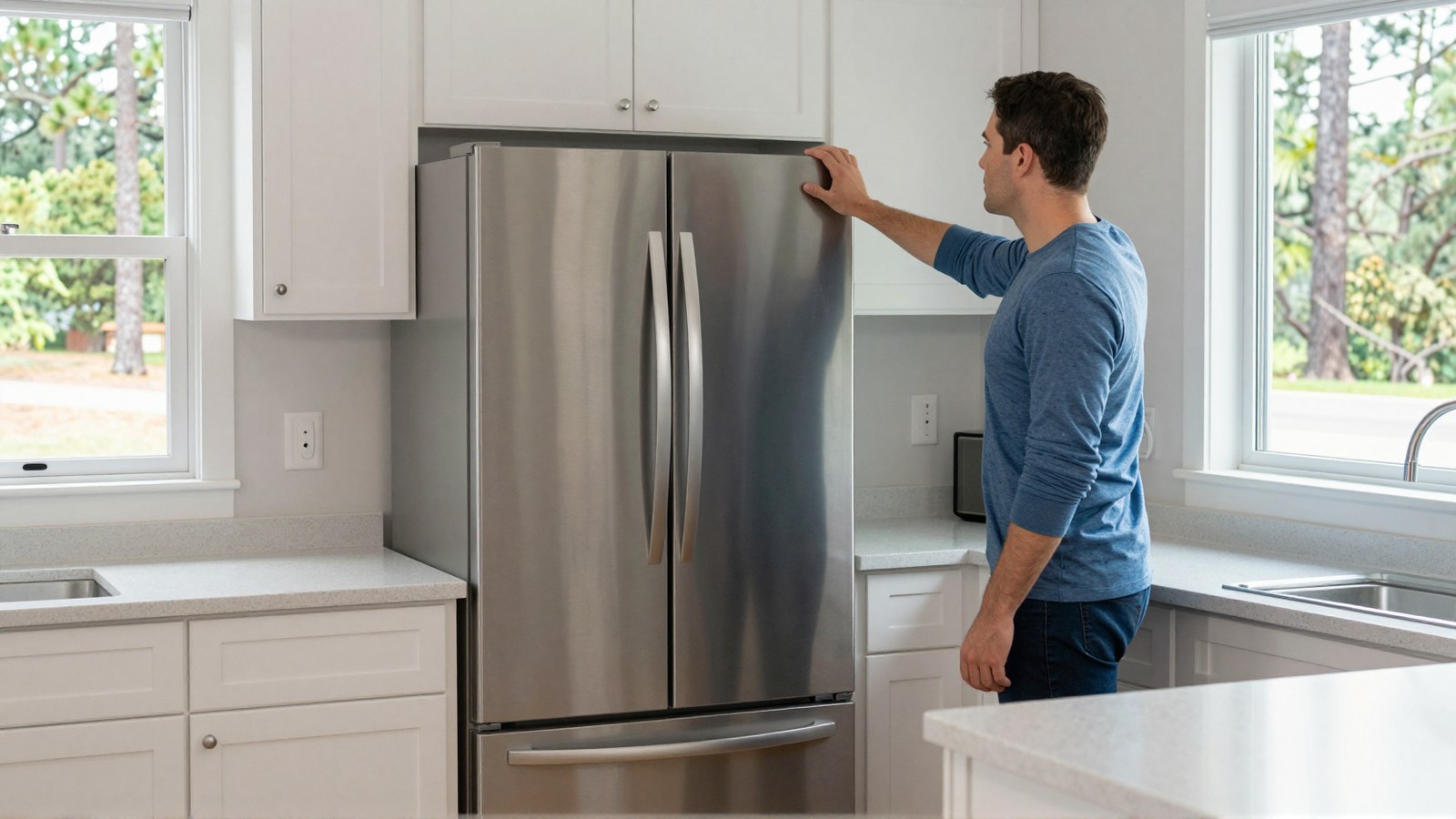
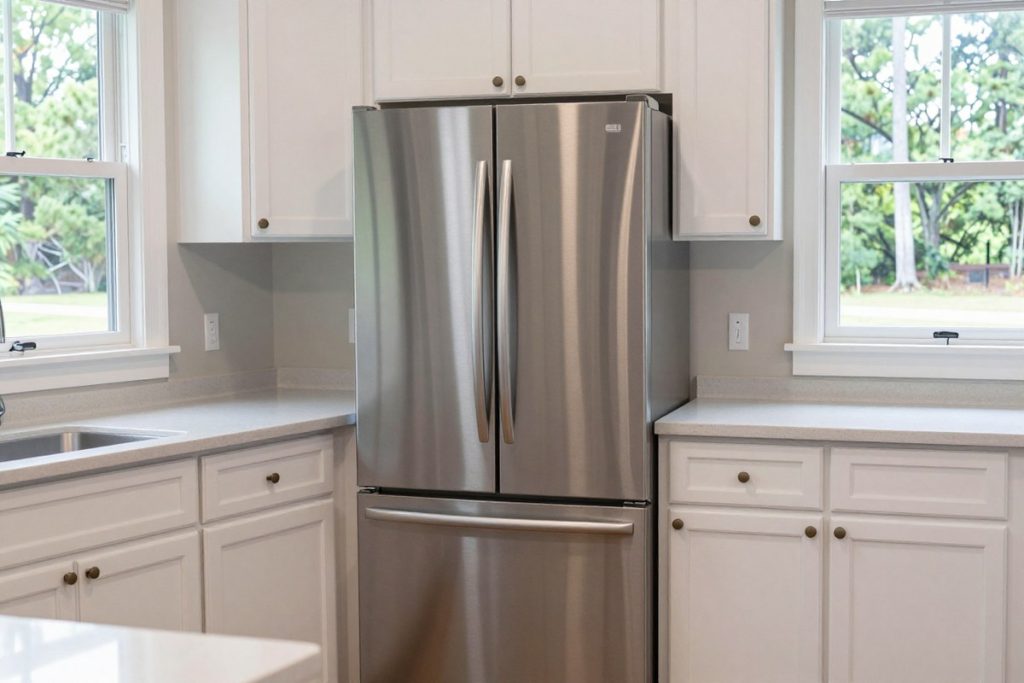
- Look at clearance: It shouldn’t press against the wall or cabinets. LG notes that a side or back touching a cabinet or wall can turn normal vibration into an audible sound.
- Listen for duration: A short buzz is different from a long one.
- Watch performance: Cooling should stay steady.
Call technicians if
- The buzzing lasts a long time or keeps returning with start attempts
- The refrigerator feels warmer than usual
- The cabinet vibrates strongly
- The sound gets heavier over time
Why Popping and Cracking Happen
As temperatures change during cooling and defrost, the materials inside the refrigerator respond. Liners, panels, and shelves expand and contract slightly. LG describes popping as “contraction and expansion of the inside walls due to changes in temperature” — normal operation.
The sound is usually a pop, crack, or snap. It can be sharp, but it’s brief. In most cases, it doesn’t affect cooling and doesn’t point to a failing part.
Quick guide
| What you hear | What it usually means |
|---|---|
| Occasional pop or snap | Normal material movement |
| Brief cracking during cooling changes | Temperature adjustment inside the cabinet |
| A single sharp sound with steady cooling | Usually not a repair issue |
| Frequent cracking with other symptoms | The refrigerator should be checked |
Homeowner checklist
- Notice the pattern: Occasional is different from constant.
- Check cooling: The temperature should stay stable.
- Look for damage: Panels and shelves should look intact.
- Watch for frost or airflow changes: Those point to a different problem.
Call technicians if
- The cracking becomes frequent
- The sound comes with weak cooling
- You see damage inside
- Another mechanical noise starts at the same time
A sharp pop can sound dramatic, but it’s often just the refrigerator adjusting to a temperature change. A sound that affects airflow matters more — which brings us to ice on the evaporator fan.
How Evaporator Fan Ice Affects Performance
The evaporator fan moves cold air through the refrigerator and freezer. A steady whoosh from it is normal. But when frost or ice builds up around the fan, airflow drops and the sound changes. That’s why ice on the evaporator fan can affect how evenly the refrigerator cools.
The first sign is often a humming, rubbing, or light knocking sound from inside the cabinet. As the ice grows, the fan blades may start hitting frost, or airflow may weaken enough for temperatures to shift.
Quick guide
| What you notice | What it may suggest |
|---|---|
| Humming or rubbing from inside | Ice may be interfering with the fan |
| Weak airflow from the vents | Cold air circulation is restricted |
| Frost on the interior panels | Moisture buildup may be affecting the fan area |
| Uneven cooling between sections | Air isn’t moving the way it should |
Homeowner checklist
- Listen inside the cabinet: This sound usually comes from inside, not the back.
- Check the vents: Air should still move freely.
- Look for frost: Pay attention to the back wall and vent areas.
- Watch the balance: Both the fresh food and freezer sections should stay cold.
- Check the doors: A door that doesn’t seal lets in moist air, which feeds frost.
Call technicians if
- The noise comes with frost buildup
- Airflow feels weak
- Cooling becomes uneven
- The sound continues after these checks
A fan affected by ice changes both sound and performance. Once rear airflow comes into the picture, the next place to look is the lower back of the refrigerator, where the condenser fan may be blocked.
Signs of Condenser Fan Obstruction
The condenser fan moves heat away from the refrigerator through the lower rear section. LG lists the sound of air being forced over the condenser as normal. But when airflow there is restricted, the refrigerator may sound rougher, louder, or less steady during cooling.
Dust, lint, and debris build up around the rear airflow path over time. When that happens, the fan can sound uneven and vibration becomes more noticeable.
Quick guide
| What you hear | What it often points to |
|---|---|
| Light rear whoosh or hum | Normal fan operation |
| Rough buzzing from the back | Airflow restriction or debris |
| Fan sound with vibration | Obstruction or unstable placement |
| Louder sound during cooling cycles | The rear airflow area needs attention |
Homeowner checklist
- Unplug the refrigerator first. Safety comes first.
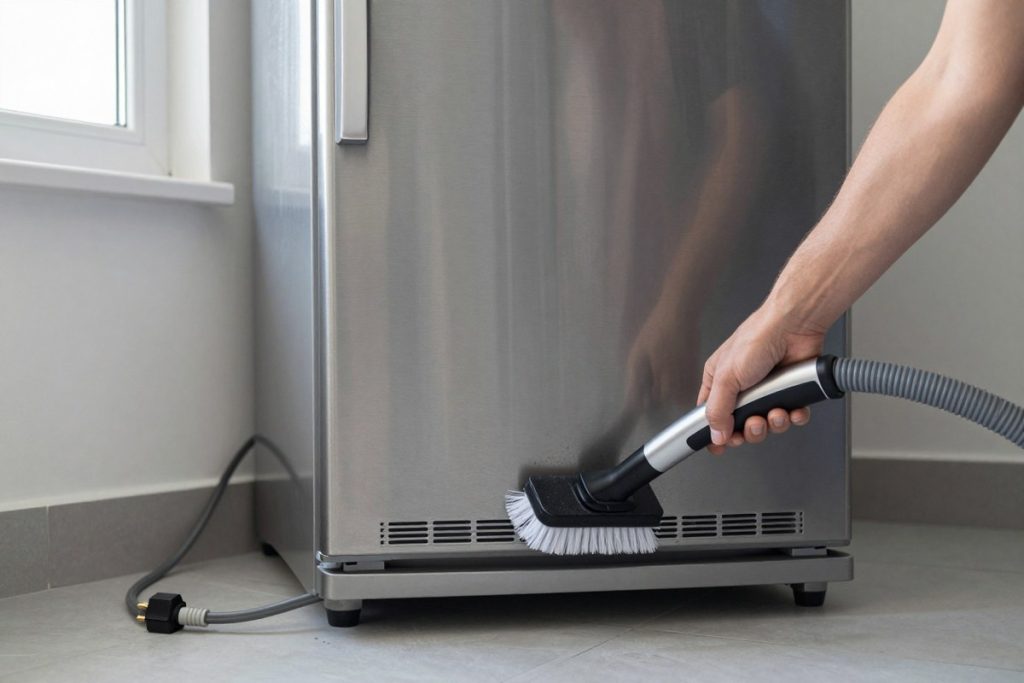
- Clean the condenser cover and vents. LG says to use a vacuum with a brush or crevice attachment — and not to remove the panel covering the condenser coil area.
- Look at wall clearance: The refrigerator needs room to breathe.
- Confirm the unit is level: Extra vibration makes sound louder.
Call technicians if
- The noise is still there after cleaning
- The fan sound is rough or irregular
- Cooling performance starts to change
- Rear vibration becomes strong or constant
A rear fan sound often starts as a small annoyance and gets harder to ignore. The next sound is one many homeowners hear right in the kitchen: ice maker humming.
When Ice Maker Humming or Buzzing Deserves Attention
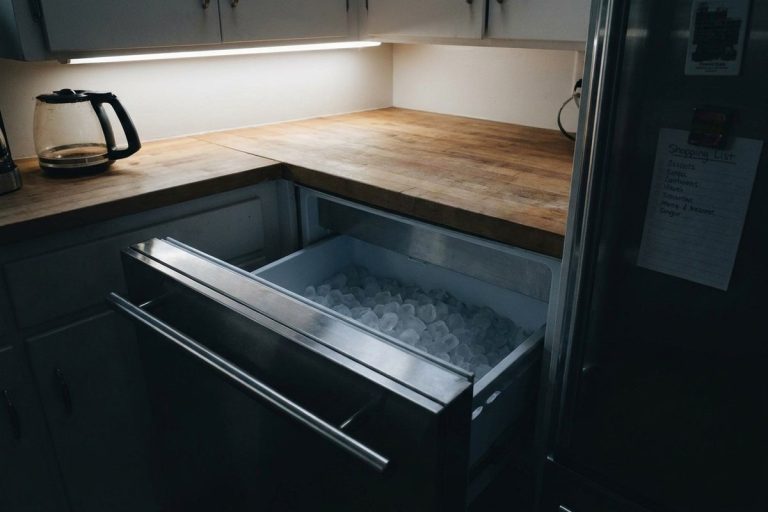
An LG refrigerator with an active ice maker makes operating sounds as it fills, cycles, and gets the next batch ready. LG explains that the ice maker water valve buzzes as the ice maker fills with water, and that you’ll hear ice dropping into the bin and water running in the pipes as it refills. That’s normal.
Here’s the one many people miss: if the ice maker is switched on but the refrigerator isn’t connected to water, the valve keeps buzzing anyway. LG’s answer is simple — turn the ice maker off until a water line is connected. LG also warns that leaving the ice maker on before the water line is hooked up can damage it.
A repeated hum that comes back without making ice, when the water line is connected, points to a different problem.
Quick guide
| What you hear | What it often means |
|---|---|
| Light buzz during filling | Normal water valve operation |
| Buzzing with no water line connected | Ice maker is on without water — turn it off |
| Repeating hum with slow or no ice | Ice maker or water supply problem |
| Noise with no ice at all | The system needs inspection |
Homeowner checklist
- Check whether the ice maker is on: If it is, some operating sound is expected.
- Confirm the water supply is connected: If there’s no water line, turn the ice maker off.
- Notice ice production: Low output or no new ice helps narrow it down.
- Listen for timing: If the hum repeats at intervals, the ice system is the likely source.
Call technicians if
- The hum repeats but ice production drops, with water connected
- The sound becomes stronger than usual
- You notice leaking, poor filling, or irregular ice
- The refrigerator cools fine, but the ice system isn’t working the way it should
A sound from the ice maker can seem minor, but it’s easier to solve early. The next sound is one many homeowners hear and instantly question, even though it’s usually normal: refrigerant gurgling.
Is Refrigerant Gurgling Normal?
Usually, yes. LG lists gurgling as “refrigerant flowing through the cooling system” — normal operation. It can sound like flowing, bubbling, or gurgling, and it can be surprising in a quiet kitchen.
What matters is the sound together with performance. Gurgling on its own isn’t the problem. The question is whether the refrigerator is still cooling properly and whether the sound stays in its usual range.
Quick guide
| What you hear | What it usually means |
|---|---|
| Light gurgling or bubbling | Normal refrigerant flow |
| A short flowing sound after a cycle change | Expected cooling activity |
| Gurgling with a stable temperature | Usually not a repair sign |
| Gurgling with weak cooling | The system needs inspection |
Homeowner checklist
- Check cooling: Food should stay cold in both sections.
- Notice duration: A brief flowing sound is more reassuring than a constant odd one.
- Watch for other symptoms: Frost, warming, or very long run times change the picture.
- Follow the pattern: An occasional sound is different from ongoing performance trouble.
Call technicians if
- The refrigerator is warming up
- The sound comes with nonstop running and rising temperatures
- Cooling becomes uneven
- You hear it together with other new mechanical noises
Once the sound is narrowed down, a quick check at home helps you decide whether to keep watching it or schedule a repair.
A Simple 10-Minute Check You Can Do at Home
Before booking service, a short inspection can tell you a lot. It separates a normal operating sound from one that needs repair — and helps you describe the problem clearly if you call.
- Listen for location: Is the sound coming from the back, inside the freezer, or near the ice maker?
- Check timing: Is it brief, occasional, or constant?
- Open the doors: Does the sound stop or change when the doors are open?
- Look for frost: Check the vents, the back panels inside, and freezer surfaces.
- Check airflow: Make sure cold air still moves through both compartments.
- Confirm stability: The refrigerator should feel level and solid on the floor.
- Look at wall clearance: Contact with a wall or cabinet can make normal vibration audible.
- Check the ice maker setting: If there’s no water line, the ice maker should be off.
- Look at the condenser cover safely: After unplugging, check for dust on the cover and vents.
- Notice cooling: A sound matters more when temperatures start to change.
What this quick check can tell you
| What you find | What it may mean |
|---|---|
| The sound is brief and cooling is normal | Likely normal operation |
| The noise changes when the doors open | A fan may be involved |
| Frost and weak airflow together | The inside fan area may need service |
| Strong vibration at the back | Leveling, wall contact, or a rear part |
| Ice maker hum repeats with poor ice production | The ice system needs attention |
Pro tip
✅ Don’t judge the refrigerator by sound alone. A sound becomes much more meaningful when it comes with weak airflow, frost, warming food, or longer cooling cycles.
With this check done, it’s easier to know what to do next.
What Homeowners Should Know About a Noisy LG
Most people don’t search by part name. They search for what they’re living with: a new buzz, a sharp rattle, or a refrigerator that suddenly sounds louder than it did last week.
The most helpful next step isn’t guessing at parts online. It’s figuring out whether the sound is normal, developing, or already affecting performance. A refrigerator can keep running while showing early signs of a problem — and catching it early usually makes the repair simpler and less expensive.
When homeowners usually call
- The sound is new
- The refrigerator is louder than usual
- Cooling has started to change
- Frost or weak airflow shows up
- The noise is affecting daily life in the kitchen
When to act, and how fast
| Situation | Best next step |
|---|---|
| A brief sound with normal cooling | Keep an eye on it and compare |
| A repeated sound with no change in performance | Schedule service soon |
| A strong noise with frost or weak airflow | Book a professional diagnosis |
| A noise with food warming up | Ask for the earliest appointment |
Why an in-home visit helps
- A technician hears the sound where it happens and gets you a direct answer.
- The refrigerator is checked in place, with its installation and airflow in view.
- Early service protects cooling and keeps the disruption small.
Need help now? We offer same- or next-day LG refrigerator repair appointments in Atlanta and across Georgia most days.
Pro Tips to Keep Refrigerator Noise Under Control
A well-installed, well-kept refrigerator is easier to live with. A few small adjustments can make normal sounds less noticeable and prevent avoidable vibration or airflow problems.
Pro tips
✅ Keep the refrigerator level: A stable cabinet vibrates less.
✅ Leave room from the wall: LG notes that a side or back touching a wall or cabinet makes normal vibration audible.
✅ Clean the condenser cover and vents now and then: Use a vacuum, as LG describes, without removing the panel.
✅ Catch frost early: Airflow problems are easier to fix before they grow.
✅ Use the ice maker correctly: If there’s no water line, keep it off.
✅ Notice changes in pattern: A new sound matters more than a familiar one.
Small changes that can make a difference
| Action | Why it helps |
|---|---|
| Level the refrigerator | Reduces vibration and cabinet movement |
| Keep space from the wall | Stops sound transfer and helps airflow |
| Keep dust off the condenser cover and vents | Keeps rear airflow clear |
| Watch for frost and vent airflow | Supports even cooling |
| Clear items off the top of the refrigerator | Removes a common source of rattling |
Conclusion
An LG refrigerator makes different sounds as it cools, moves air, and makes ice. Many of them are listed by LG as normal operation. The key is the pattern. A brief sound with steady cooling is very different from a stronger sound that comes with weak airflow, frost, vibration, or rising temperatures.
When your LG refrigerator’s noise no longer sounds routine, our LG refrigerator repair technicians can track it down. They’re EPA 608 certified and background-checked, we use genuine OEM parts, and our repairs come with a warranty of up to six months on parts and labor.
FAQ
Is humming normal in an LG refrigerator?
Yes, in many cases. LG says a pulsing or high-pitched sound from its high-efficiency compressors is normal while the refrigerator runs, and fans and the ice maker add their own sounds. A hum matters more when it’s unusually strong, lasts a long time, or comes with weak cooling.
Why is my LG refrigerator so loud at night?
Refrigerator sounds often seem louder at night because the kitchen is quieter. Cooling cycles, fans, defrost, and ice making are simply easier to hear then.
Why does the sound stop when I open the doors?
That can point to a fan. On many refrigerators, the fans pause when a door opens. If the sound changes when the doors open, a fan inside may need a closer look — especially if you also see frost.
Why does my LG refrigerator buzz when there’s no water line?
The ice maker is probably switched on. LG explains that the ice maker water valve buzzes as it fills, and it will buzz even when no water is connected. Turn the ice maker off until a water line is installed — LG warns that running it without water can damage it.
Is cracking or popping a bad sign?
Usually not. LG describes popping as the inside walls contracting and expanding with temperature changes. If cooling stays steady, it isn’t a sign of failure.
When should I call for service about a noise?
Call when the sound is new and louder than usual, keeps coming back in long stretches, or comes with frost, weak airflow, strong vibration, or food warming up. A noise plus a change in cooling is the clearest signal.
LG is a registered trademark of LG Electronics. We are an independent appliance repair company and are not affiliated with or endorsed by LG.