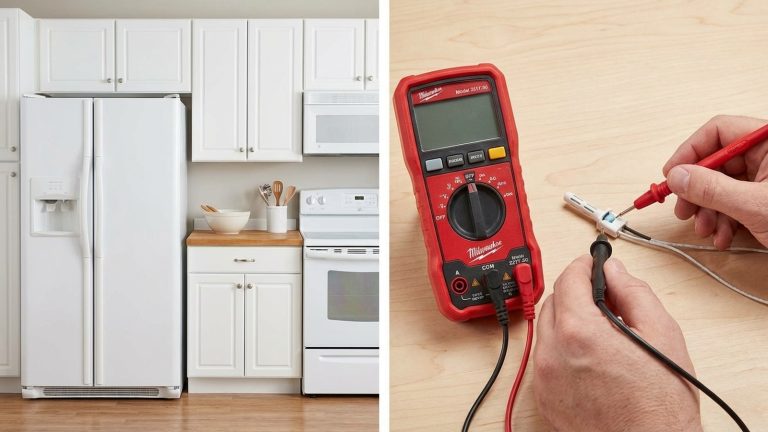
When your Whirlpool shows error code E1, the message is short, but the situation can get serious fast. On a refrigerator or freezer, a code like this usually means the control has detected a fault it can’t work around on its own. If cooling or defrost isn’t being managed properly, the appliance may run too long, not long enough, or let temperatures drift in a way that quietly hurts food quality before you notice anything dramatic.
In this article we explain how Whirlpool shows E1, what Whirlpool’s own help pages tell owners to do, what you can safely check at home, and what a professional diagnosis looks like when the code keeps returning. If you’d rather have it checked, our refrigerator repair team handles Whirlpool calls across metro Atlanta.
One important clarification first: people say “Whirlpool freezer,” but they often mean two different setups. Some homes have a standalone freezer. Many more have a refrigerator with a freezer section, such as French door, side-by-side, and bottom-freezer designs. Because the airflow and defrost layouts differ, an error can show different symptom patterns. That’s why this guide splits into two sections.
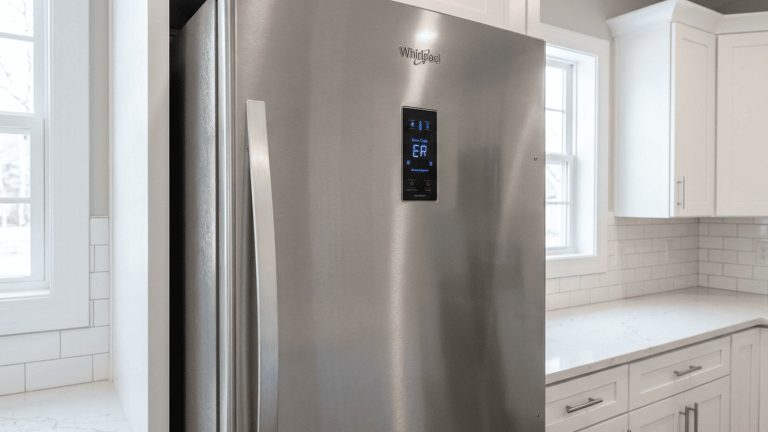
How Whirlpool Shows E1
On Whirlpool full-size refrigerators, E1 usually isn’t a code on its own. Whirlpool’s help pages list it as the second half of a pair that starts with the letter F: F1 E1, F3 E1, F4 E1, F6 E1, F7 E1, F8 E1, F9 E1, and others on bottom-freezer and French door models. Write down the whole pair exactly as it appears, because the first part is what a technician needs.
Whirlpool doesn’t publish what each pair means for owners. For every one of these pairs, its help pages give the same instruction: if the letter “F” is flashing on the display, reset the refrigerator, and “If the problem persists, schedule service.” The meaning of a specific pair belongs to Whirlpool’s service information, and a technician reads it for your exact model.
Here’s the key point. E1 isn’t the name of a single part. It’s the appliance telling you something in the control or cooling system needs attention, and the full code plus your model number decides what that is.
First priority: protect your food
Before troubleshooting, find out whether this is an inconvenience or an urgent food-safety issue.
If you have an appliance thermometer, place it in the center of the freezer and check it after a while. Freezer food is safest at 0°F. If the freezer is clearly warming and the reading keeps rising, move high-risk foods to another freezer or a cooler with ice. If you don’t have a thermometer, use ice cream as an early warning sign: if it’s softening, the freezer is running too warm.
Now you can troubleshoot without rushing.
Start with one proper reset
Whirlpool’s help pages give owners one step, and it’s worth doing exactly once and exactly as written:
- Power the unit down by turning off the circuit breaker or unplugging it for one (1) minute.
- Power it back up by turning on the breaker or plugging it back in.
- Ensure the cooling function is turned on.
- Monitor the refrigerator for one (1) minute to make sure the error code doesn’t display again.
If the code comes back, Whirlpool says to schedule service. Repeated resets don’t fix the cause and can erase the pattern a technician needs to see.
Standalone Whirlpool Freezers
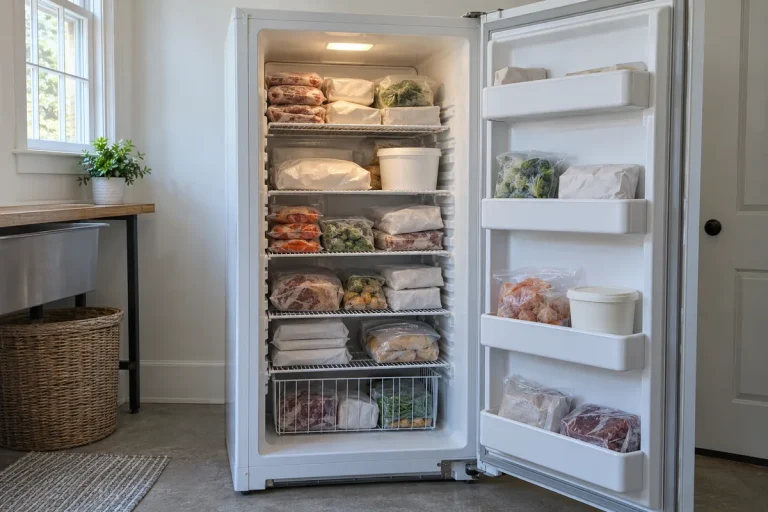
Standalone freezers are usually quicker to diagnose because there’s one temperature zone and fewer airflow paths than in a refrigerator-freezer combination. When a code like E1 appears here, a technician typically looks at a temperature sensor, wiring or connector trouble, the defrost system on models that have one, or, less often, the control board.
Step 1: check airflow and loading
A standalone freezer still needs circulation. If vents are buried or food is packed tightly against the back wall, temperatures can become uneven, and the control can react to pockets that don’t reflect the whole cabinet.
Rearrange only what you need to. Make sure vents aren’t blocked and nothing is pressed hard against the air return areas.
Step 2: look for frost patterns that change the diagnosis
A light, even frost film can be normal. Thick frost that returns quickly isn’t. Heavy frost can point to a defrost problem, and frost also blocks airflow, which creates uneven temperatures.
Don’t chip ice with sharp tools. That’s how evaporators get punctured. Clearing heavy frost means switching the freezer off and emptying it, so follow your own manual for defrosting, or let the technician handle it as part of the visit.
Step 3: understand what a technician tests, and why it matters
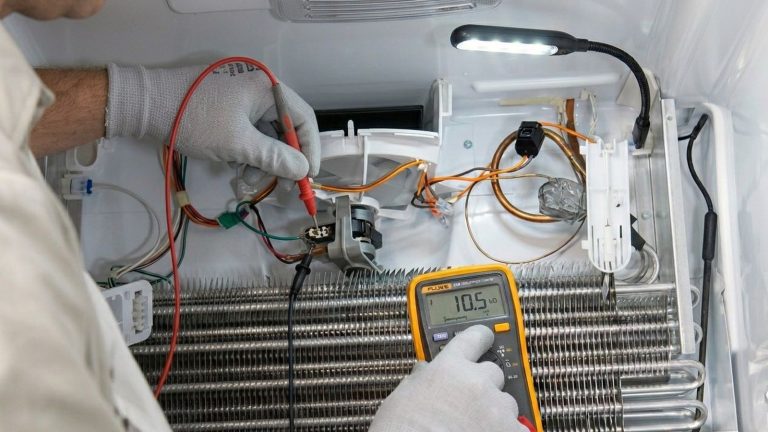
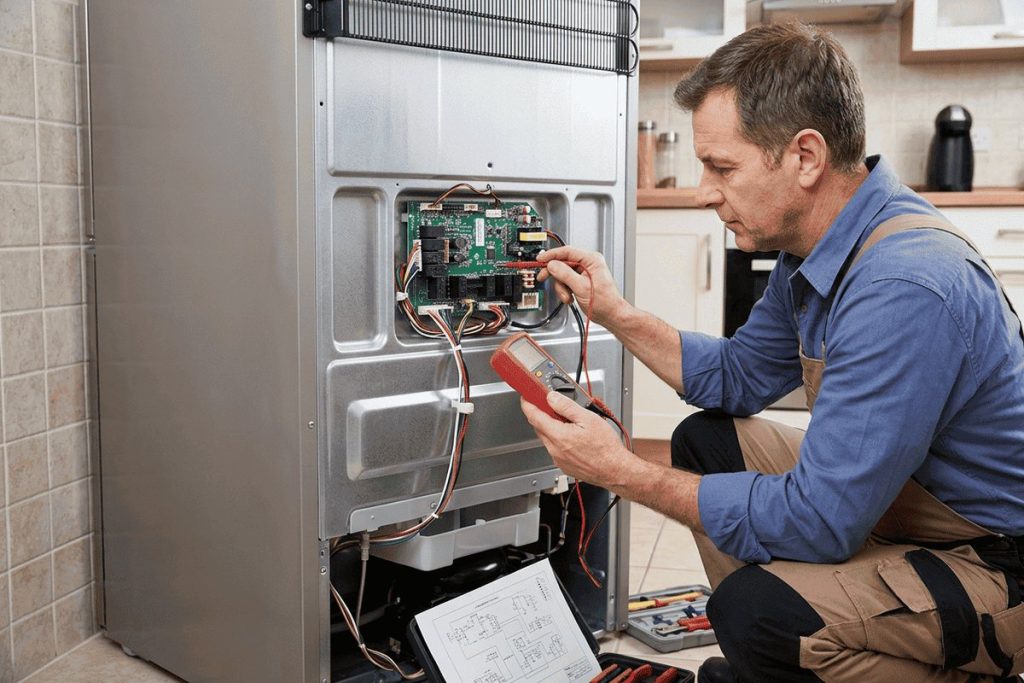
If the code keeps coming back, the real fix requires verification. A technician confirms the actual cabinet temperature, reads the full code against Whirlpool’s service information for your model, and tests the circuit the code points to. Wiring and connectors get inspected, because a loose pin or intermittent contact can look exactly like a failed sensor. If there’s heavy frost, defrost operation gets checked. The control board becomes the main suspect only after the sensors and wiring check out.
That sequence prevents unnecessary parts and gets to the real cause faster.
What gets tested on a standalone freezer service call
The focus is verification instead of guesswork: actual cabinet temperature, the full code, the sensor signal, the harness and connectors, where loose pins, corrosion, and wire damage are common. If the frost pattern points to a defrost problem, defrost operation gets evaluated in context, because a defrost issue can distort temperatures even when the sensor is fine.
What usually fixes it on a standalone freezer
Most repairs fall into a few categories: a sensor replacement, harness or connector repair, wiring repair, and sometimes defrost-related service. A control board replacement is less common and should come after the sensor and wiring checks.
Whirlpool Refrigerators With Freezer Sections
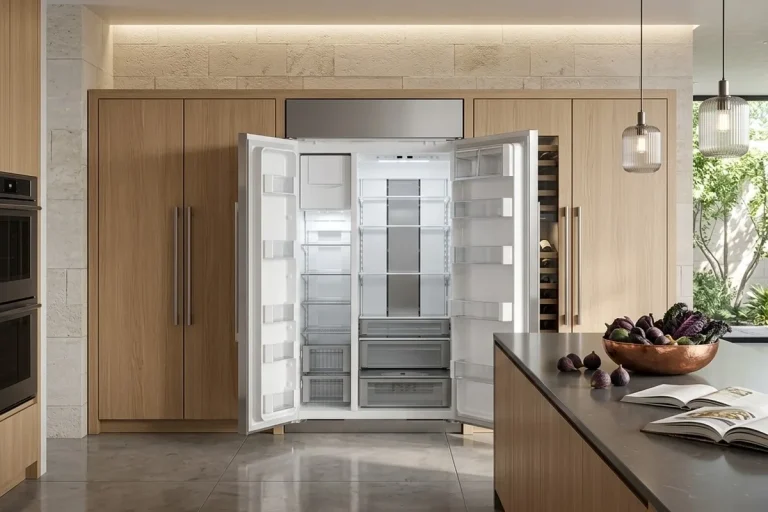
In a refrigerator with a freezer section, an error code can feel more confusing. One cooling system balances two compartments, and it depends heavily on airflow and defrost timing. When something in that system fails, you may see uneven temperatures: the freezer feels cold while the fresh-food section warms, or frozen food quality slips even though the refrigerator seems fine.
Step 1: check seals and vents before you assume a part failed
A weak door seal pulls humid air into the cabinet. Humidity becomes frost. Frost changes airflow. Airflow changes temperatures. That chain reaction can push the system out of balance.
Also check for vent blockage. On French door, side-by-side, and bottom-freezer layouts, it’s easy for a large item to block a vent without noticing. Whirlpool’s help pages put it directly: “Do not block any of these vents with food packages.”
Step 2: match the symptoms to likely causes
If you see heavy frost on the freezer back panel and the refrigerator section is warming, airflow restriction is likely, and the defrost system becomes a strong suspect.
If temperatures swing with no obvious frost, a sensor or an intermittent connection moves up the list. A drifting sensor can send readings that look believable but are wrong, so the system chases the wrong target.
If the unit runs constantly, don’t assume that means it’s cooling well. Constant running can happen when the system reacts to faulty input, or when it can’t release heat because the condenser is dusty. Pet hair and dust are frequent contributors to long run times.
Step 3: how a technician diagnoses combo units
Professional diagnosis on these models is methodical: verify temperatures in both compartments, check airflow and fan behavior, read the full code for your model, test sensors for stable readings, and inspect wiring at stress points and moisture-prone connectors. If the frost pattern supports it, defrost performance gets evaluated. The control board is considered only after the sensor circuit checks out.
That’s how you avoid replacing expensive parts that don’t solve the actual problem.
What gets tested on a refrigerator-freezer service call
Temperatures in both compartments get verified first. Then airflow and fan behavior, then the sensors for stable readings across the expected range, then the wiring at stress points and moisture-prone connectors. If the frost pattern supports it, defrost behavior gets evaluated too.
Only after the sensor and wiring checks does the control board become the main suspect. Replacing a board without verifying the sensor circuit is one of the most expensive ways to guess wrong.
What to do right now
If you want a plan you can follow today, use this sequence:
- Write down the full code, including the F part, and your model number
- Do one reset exactly as Whirlpool describes: one minute off, back on, cooling on, watch for one minute
- Check that doors seal and vents aren’t blocked
- Look for heavy frost that suggests airflow restriction
- Measure temperature with a thermometer if you can
- If the code returns, schedule service so the circuit behind it can be tested properly
That approach protects your food and keeps you from buying parts you don’t need.
When to call professional service
Call for service if:
- the code returns after a proper reset,
- temperatures are rising,
- you see repeated frost buildup,
- or the refrigerator section is warming while the freezer seems only partly effective.
The Bottom Line
On Whirlpool refrigerators, E1 usually shows up as part of a two-part code that starts with F, and Whirlpool’s instruction to owners is the same for each: one reset, and service if it comes back. In standalone freezers, the cause is often a sensor, connector, or wiring problem, sometimes alongside defrost trouble when there’s heavy frost. In refrigerator-freezer combinations, the symptoms can be uneven because airflow and defrost affect both zones.
Start with one proper reset, then check seals, vents, frost, and the real temperature. If the code returns, don’t gamble on random parts.
Get the code traced, not guessed. Book Whirlpool refrigerator repair with PRO Appliance Repair. We’re family-owned and insured, with same- or next-day service on most days across metro Atlanta. Our EPA 608 certified, background-checked technicians use genuine OEM parts, and our repairs carry a warranty of up to six months.
FAQ
What does Whirlpool error code E1 mean?
On Whirlpool full-size refrigerators, E1 usually appears as the second part of a code that starts with F, such as F3 E1 or F4 E1. Whirlpool doesn’t publish the meaning for owners; a technician reads the full code against service information for your model.
Can a power reset clear the code?
Sometimes. Whirlpool’s help pages say to turn the power off for one minute, turn it back on, make sure cooling is on, and watch for one minute. If the code comes back, schedule service.
Why is my refrigerator warm but my freezer seems okay?
In a refrigerator-freezer combination, airflow restrictions or frost in the freezer can reduce the cold air reaching the refrigerator section. Sensor problems can also cause uneven temperature control.
Is it always a defrost problem?
No. Defrost becomes a stronger suspect when heavy frost is present and airflow is restricted. Otherwise, sensors, wiring, and connectors come first.
Should I replace the control board first?
No. Sensor and wiring checks should come first. A control board is expensive and often isn’t the first thing that failed.
Do French door, side-by-side, and bottom-freezer models behave the same?
Not always. Layouts and controls differ, and Whirlpool lists its codes separately by refrigerator type. Diagnosis should be based on the full code and your model, not on E1 alone.
PRO Appliance Repair is an independent repair company and is not affiliated with, sponsored by, or endorsed by Whirlpool Corporation. Brand and model names are used only to identify the appliances this page is about and remain the trademarks of their respective owners.