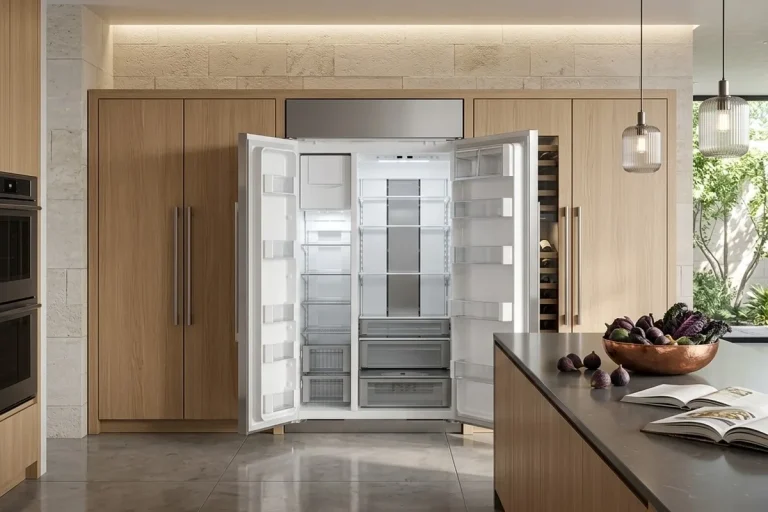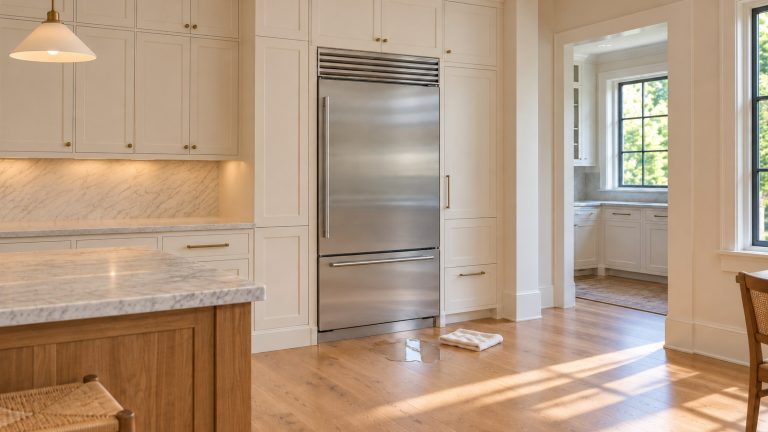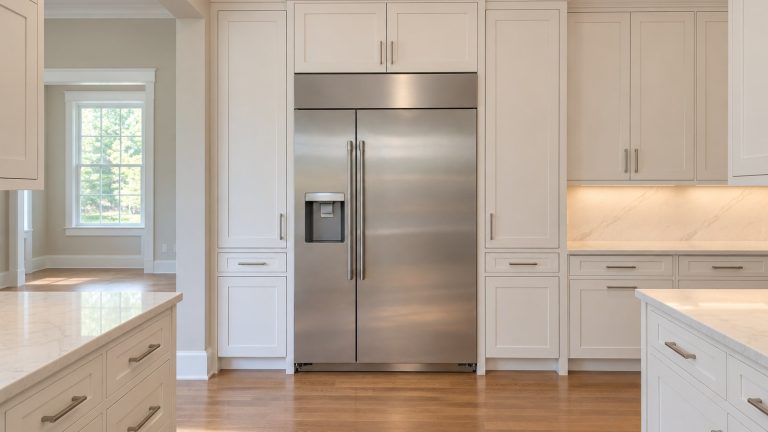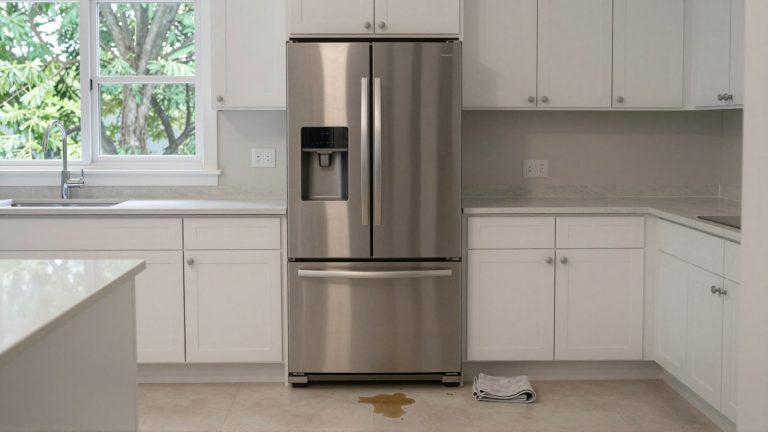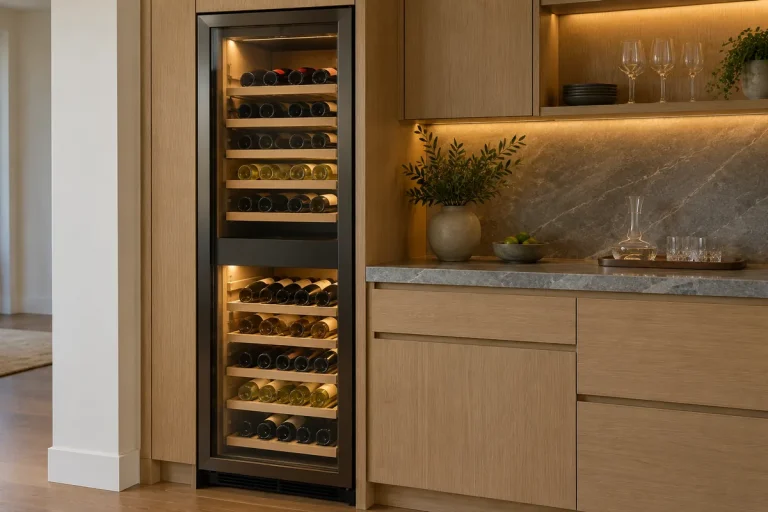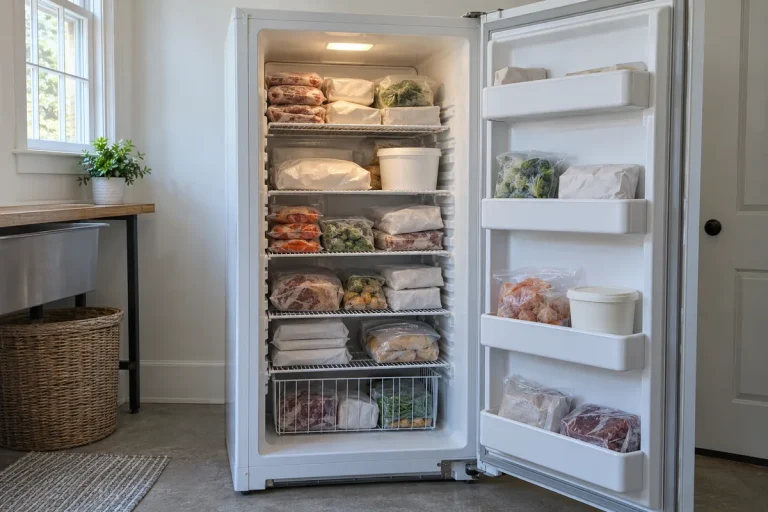
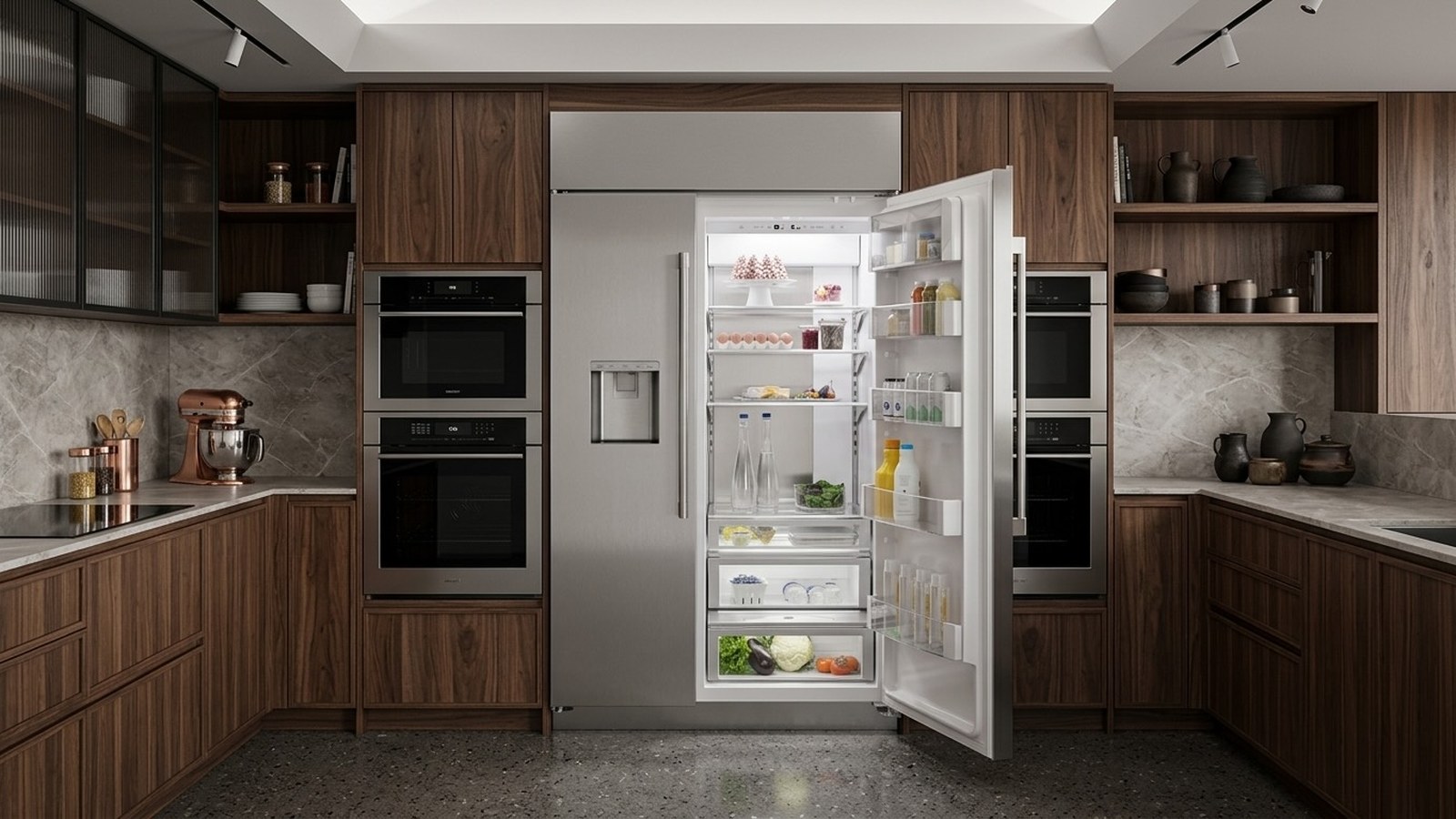
A GE Monogram is built to disappear into your cabinetry and just work — cold, quiet, invisible. So when you find water pooling on the floor, dripping inside a compartment, or creeping out from under the front, it feels wrong. Your first thought is probably the hardwood. Your second is what it’s going to take to fix.
Good news first: a leaking Monogram is almost always a fixable symptom, usually tied to one of a few points in the system: the defrost drain, the water supply, the dispenser, or how the unit sits. In this guide, we’ll walk you through how a Monogram is supposed to handle water, the most common reasons it leaks, what the leak’s location tells you, what’s normal and what isn’t, the safe checks you can make — and when it’s time for GE Monogram refrigerator repair.
How a Monogram Handles Water
Monogram refrigerators deal with water every day — they just do it out of sight. Knowing the normal path helps you spot where it went wrong:
- Defrost water. During the automatic defrost cycle, ice melts off the evaporator (the cooling coil inside). Monogram’s manuals describe it plainly: the water flows into the drain pan, and you may even hear a dripping sound while it happens. On side-by-side models, GE explains that a defrost drain tube carries that water to a drain pan underneath the refrigerator, where it evaporates.
- The water supply. On models with an ice maker or dispenser, water comes in from the house line through a water valve, then travels through plastic tubing to the ice maker, the dispenser and, on some models, a water storage tank.
- The water filter. Monogram’s filter sits in a housing — behind the top access panel on many built-ins — and, as we’ll see, it doubles as a safety shut-off.
These systems are reliable, which is why many owners go years without a drop. But built-ins are sensitive to installation, heavy use and age. In Atlanta’s humid summers, there’s also more moisture in the air for the refrigerator to manage.
Top Reasons Your Monogram Is Leaking
When a Monogram leaks, it’s usually one of these:
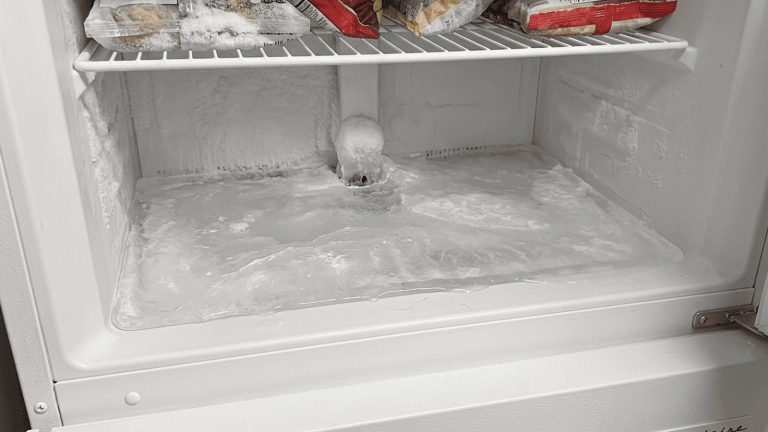
- A clogged defrost drain. Food particles or ice can block the drain tube. The defrost water then has nowhere to go and backs up inside — often freezing on the freezer floor or pooling under the vegetable pans. GE’s support pages say it directly: on Monogram models, water under the vegetable pans or bins is an indication of a clogged drain and requires service.
- A leak in the water system. GE lists three common sources of water on the floor: the water valve on the refrigerator, the supply line from the house, and the plastic fill line to the ice maker. Water under the fresh food drawers can also come from the water storage tank or its tubing.
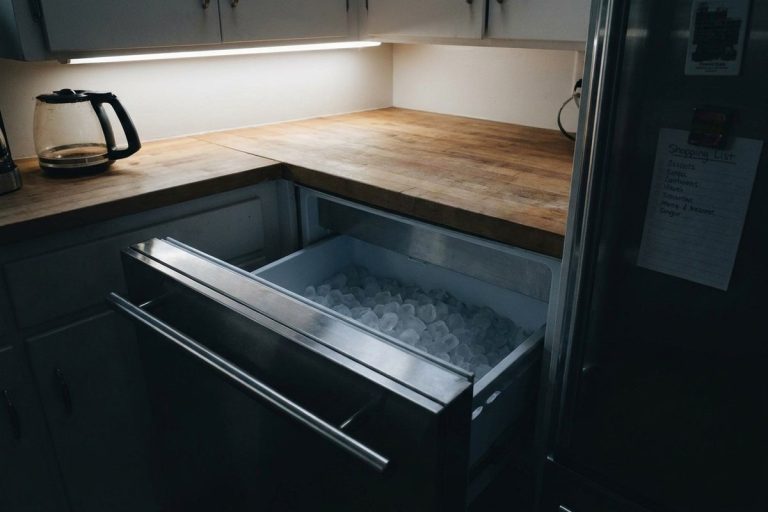
- The ice maker. GE’s checklist for a leaking ice maker includes loose water line fittings, a leaking water valve, water escaping from the fill tube extension, and a defrost drain that’s clogged or overflowing. Monogram’s manual adds that an ice maker that isn’t level can lose water containment.
- The dispenser. A few drops after you fill a glass are normal. A steady drip, or water that runs long after you stop, is not.
- How the unit sits. Built-ins sit flush to the cabinets. If the unit isn’t level, water can miss its path — and that’s an installer’s adjustment on a Monogram, not a weekend job.
These aren’t design flaws. They’re the wear and installation realities that show up over years of use. Spot the pattern early and the fix is usually smaller.

What Your Leak’s Location Is Telling You
Leaks in a Monogram rarely look the same twice, but where the water shows up is a strong clue.
Water or ice inside the bottom of the freezer, or under the vegetable pans
This is the classic sign of a clogged defrost drain. GE notes you may see ice or water on the freezer floor or in front of the freezer, and on Monogram models, water under the vegetable pans calls for service.
Drips at the front, near the dispenser
Especially after using the dispenser. A few drops are normal — GE explains that pressure in the water line and temperature changes cause some condensation and dripping. Monogram adds that after crushed ice, a little water may drip from the chute as ice particles melt, and the spill shelf doesn’t drain itself. A steady drip or a puddle in front of the door points to the dispenser’s water line or a loose connection.
Water under the refrigerator, at the back or one side
This usually points to the water supply — the house line, the water valve, or the fill line — or to the drain pan. On a built-in, these sit behind panels and cabinetry, so the location is a clue for the technician rather than a reason to pull the unit out.
Sweating on the outside, or between the doors
Monogram’s manuals call moisture on the cabinet surface or between the doors not unusual during periods of high humidity. Wipe it dry. If it never stops, mention it — it can point to a door that isn’t sealing.
Write it down: where the water appears, how often, and whether it’s tied to the dispenser or ice maker. Those details shorten the diagnosis.
Normal vs. a Problem
What’s usually normal
- Condensation on the outside of the doors or cabinet on humid days. Monogram says wipe it dry.
- A few drops from the dispenser right after use.
- A little water on the spill shelf after crushed ice.
- A dripping sound during defrost.
- Some moisture inside after frequent or long door openings, or in humid weather — Monogram lists both as causes.
What’s not normal
- A puddle on the floor that comes back daily, even a small one.
- Water or ice inside the compartments — the freezer floor, under the vegetable pans, or the fresh food floor.
- Water that keeps running from the dispenser after you stop.
- Wetness under the unit that never dries.
What’s at stake: hardwood and laminate can warp and stain, mold can grow out of sight under the cabinetry, and water near the base of the unit is never a good mix with electrical parts. What starts as “just a little water” can turn into a flooring repair if it runs for weeks.
Monogram Models We See for Leaks
Leak calls come from across the Monogram refrigerator line. The models owners mention most:
- Built-in side-by-sides such as the 36-inch ZISS360DNSS and 48-inch ZISS480DNSS with dispensers, the 42-inch ZISS420NNSS and the ZIS420N. Their external dispensers and large freezers mean more water to manage, so dispenser drips and clogged drains come up often.
- A 36-inch Monogram built-in all-refrigerator column, where leaks tend to be subtler — often installation and leveling related.
- The 36-inch built-in French-door ZIP360NH.
Whatever you own, find the model number on the rating label before you call.
First Response: Safe Checks You Can Make
Safety first: Monogram built-ins are top heavy, especially with the doors open, and are secured to the cabinetry to prevent tipping. Don’t pull a built-in out of its opening, don’t remove rear or interior panels, and don’t take the door apart. Monogram’s manuals say repairs must be performed by a qualified service professional. If water is near an outlet or electrical parts, keep clear and call.
Work through these in order:
- Stop the water at the filter. This is the one Monogram tip most owners never hear. Monogram’s manual says that removing the water filter immediately stops a water leak from the ice maker and dispenser system — the filter holder acts as a cut-off valve when the filter is out. Follow your owner’s manual to remove it; a little water may drip when you do.
- Turn the ice maker off. If the leak seems tied to the ice maker, GE’s first step is to turn it off.
- Check the filter setup. If your home has a reverse osmosis or other whole-house filtration system — or if you don’t have a replacement filter — Monogram says you must use the filter bypass plug — a plug that goes in place of the filter cartridge — to reduce the risk of water damage from leaks.
- Look, don’t dig. Check where the water is: freezer floor, under the vegetable pans, the dispenser shelf, or under the front. Dry it, then see where it returns first.
- Use the dispenser gently. If drips are only at the dispenser, tilt the glass in slightly while dispensing water, as Monogram suggests, and avoid overfilling tall glasses and pitchers.
- Ask about the plumbing. GE notes that if the leak is from the house supply line, a plumber may be the right call.
One thing not to do: don’t try to flush or clear the defrost drain on a Monogram yourself. GE says there’s no routine maintenance required for the drain tube or pan, and on Monogram models, water under the vegetable pans requires service. The drain sits behind interior panels — poking at it risks damaging the tube, wiring or the evaporator.
If the leak continues after these steps, or you can’t tell where it’s coming from, it’s time for a technician.
When to Call a Technician
Book a visit when:
- water or ice keeps appearing inside the compartments;
- the dispenser keeps dripping long after use;
- a puddle on the floor comes back even with the filter removed and the ice maker off;
- you can’t find the source, but the floor keeps getting wet;
- cooling seems off along with the leak.
On a flush built-in with custom panels, any disassembly done without care risks scratched finishes or misaligned doors — so the details you’ve written down help a technician get straight to the source.
Check the Warranty First
GE Appliances publishes a limited warranty for Monogram refrigerators: two years of parts and in-home labor for a manufacturing defect from the date of original purchase, with longer coverage for the sealed system. Read your own warranty document or contact GE Appliances before booking a repair; this page doesn’t tell you whether your unit is covered.
Conclusion: Dry Floors and Peace of Mind
A leaking GE Monogram is rarely random. It’s usually one point in the system — a clogged defrost drain, a water line or valve, the ice maker, or the dispenser — failing to contain or direct water the way it should. Catch it early with the safe checks above, and the repair tends to be straightforward, the floors stay intact, and nothing grows where you can’t see it. Your Monogram was built to run quietly for years; treating a leak as an early warning keeps it that way.
Frequently Asked Questions
A little water pools inside my Monogram every few weeks. Is it an emergency?
Not an emergency, but don’t ignore it. Water or ice inside — especially under the vegetable pans — is a classic sign of a clogged defrost drain, and GE says on Monogram models it requires service. Left alone, it can overflow onto the floor or encourage mold.
My fridge leaks clear water only when I use the dispenser. What’s wrong?
A few drops after filling a glass are normal; GE says pressure in the water line and temperature changes cause them. A steady drip or a puddle points to the dispenser’s water line or a loose connection. Remove the water filter to stop the flow, as Monogram’s manual describes, and book a diagnosis.
How do I stop a Monogram leak right away?
Monogram’s manual says removing the water filter immediately stops a leak from the ice maker and dispenser system, because the filter holder acts as a cut-off valve. Turn the ice maker off too. If the water is coming from the house supply line, a plumber may be needed.
Can dirty condenser coils make my Monogram leak?
Not according to GE’s leak guidance — none of its water-on-the-floor articles names the condenser as a cause. Look first at the defrost drain, the water valve, the supply and fill lines, the ice maker and the dispenser.
Is water on the outside of my Monogram doors normal?
Usually, yes. Monogram’s manuals say moisture on the cabinet surface or between the doors is not unusual during periods of high humidity — wipe it dry. If it never stops, have a technician check the door seals.
Do you repair leaks on panel-ready Monogram built-ins?
Yes. We work carefully around custom panels and cabinetry on built-in Monogram models, and we repair with genuine OEM parts matched to the model number.
Get Your Floors Dry Again
If your Monogram is still leaking after the checks above, or you can’t tell where the water is coming from, it’s time for a technician who knows built-ins.
PRO Appliance Repair is a family-owned, insured company with more than 15 years of experience. Our technicians are EPA 608 certified and background-checked, and we repair with genuine OEM parts. Our warranty covers parts and labor for up to six months, and same- or next-day appointments are available across the Atlanta area.
Book a visit from our GE Monogram refrigerator repair page.
Disclaimer: PRO Appliance Repair is an independent repair company and is not affiliated with or endorsed by GE Appliances, a Haier company. Monogram is a trademark of GE Appliances. All trademarks belong to their respective owners.