You close the door on your GE Monogram, walk away — and a minute later the door alarm beeps. Or the door needs an extra push, or it drifts back open an inch, or two doors no longer meet evenly in the middle. On an appliance built for a perfect flush fit, a door that won’t close feels like something bigger is wrong.
Usually it isn’t. Most Monogram door problems trace back to a few causes, and several of the first checks cost nothing. But it’s worth acting quickly: warm air sneaks in, food spoils faster, and the cooling system works harder than it should. In this guide, we’ll walk you through how a Monogram door is meant to close, the most common reasons it won’t, how the problem shows up on different models, the warning signs, the safe checks you can make — and when it’s time for GE Monogram refrigerator repair.
The Monogram Benchmark: Precision Meets Real Life
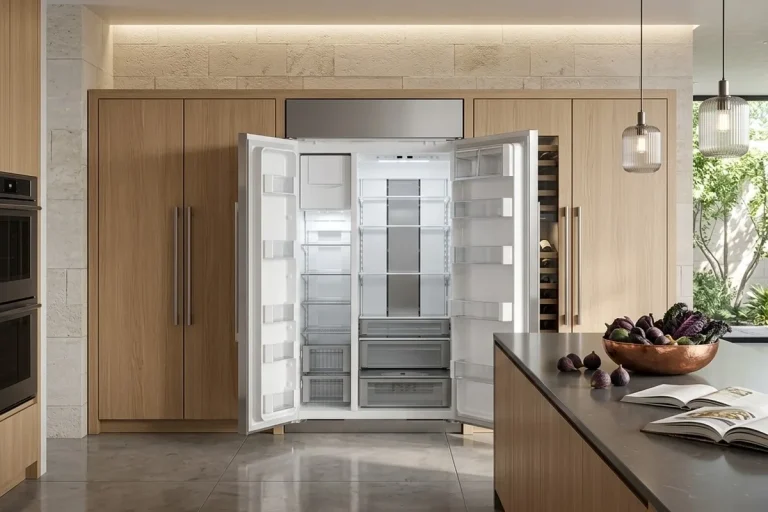
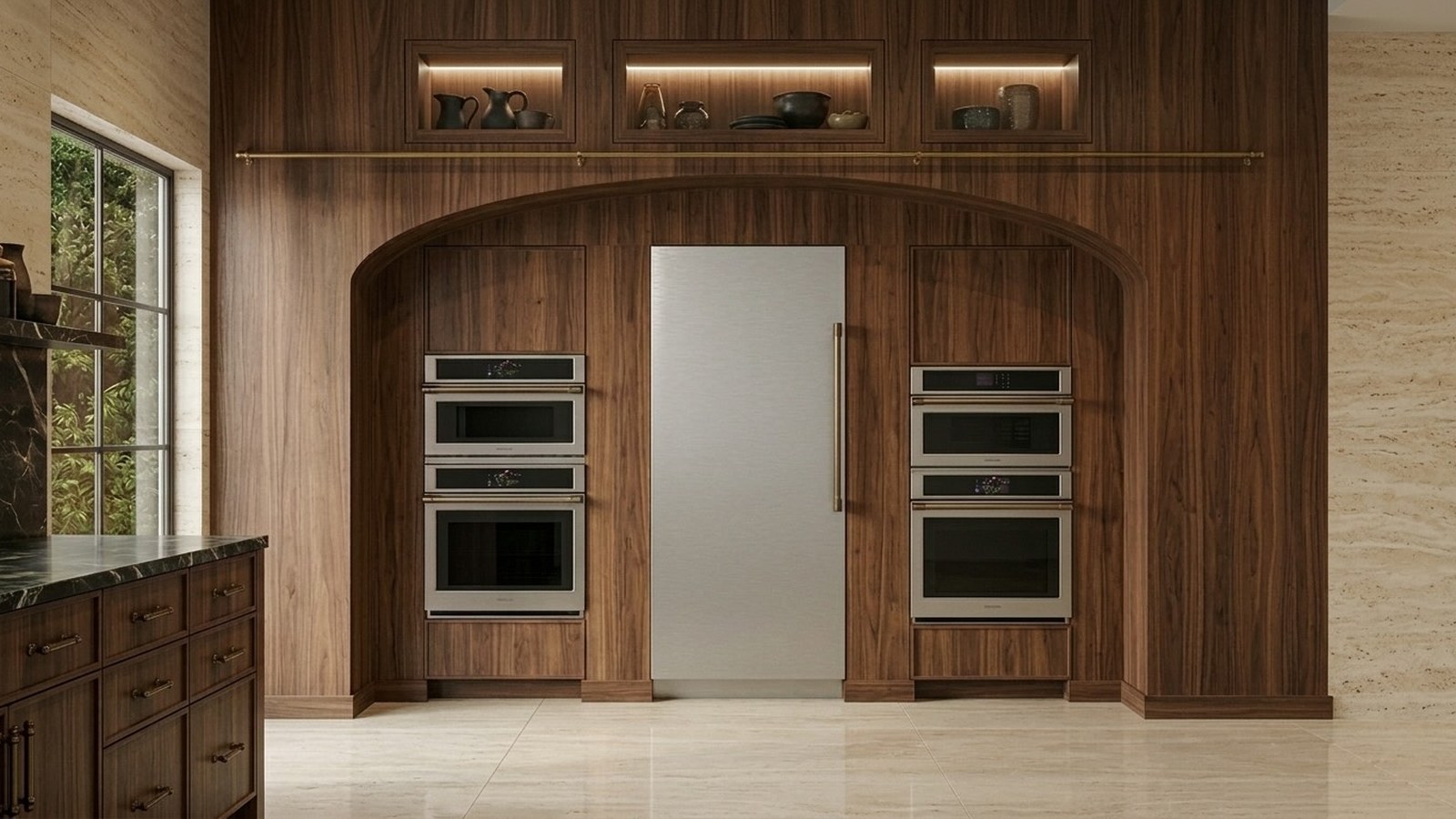
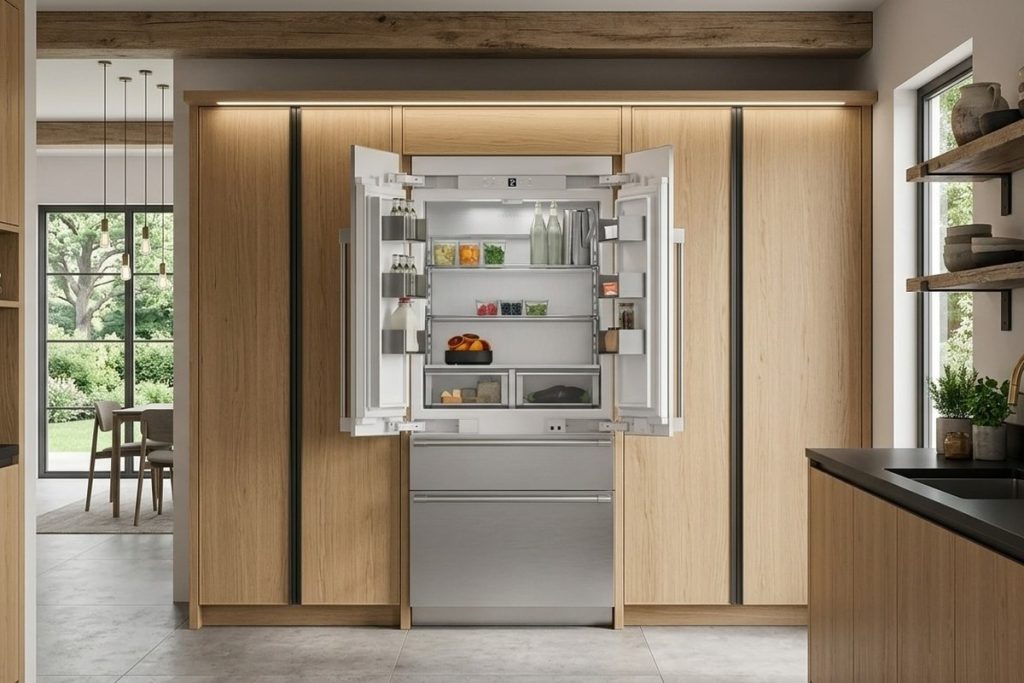
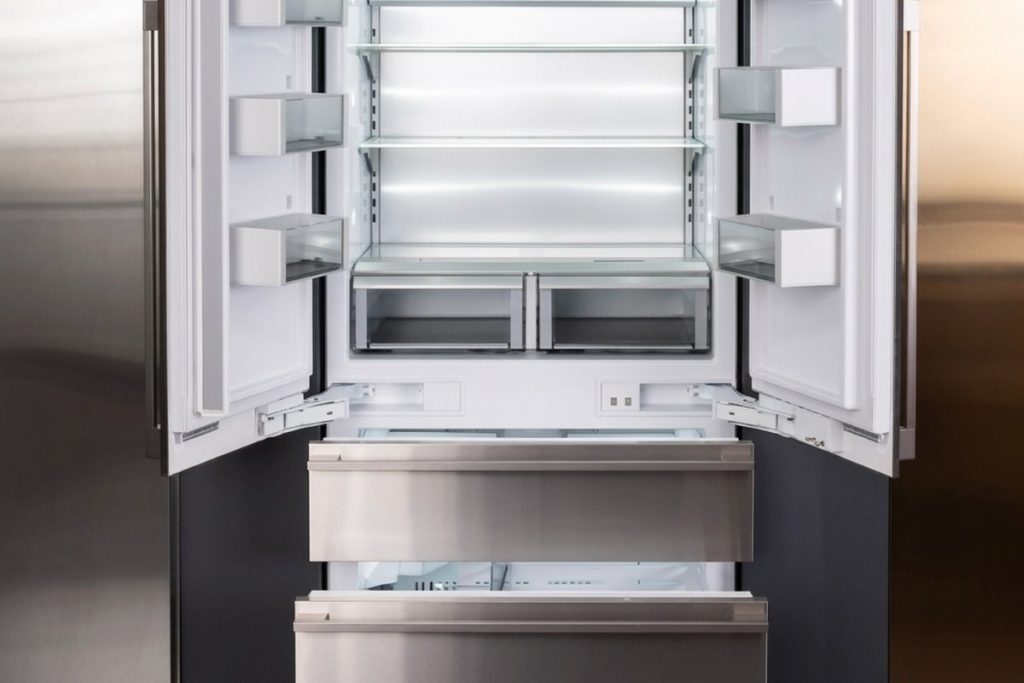
Monogram refrigerators are true built-ins, designed to disappear into high-end cabinetry. Their doors are full-size and heavy — often panel-ready with custom wood or stainless overlays — and they close against a door gasket, the flexible seal around the door edge.
That precision has a flip side. Monogram’s own manuals note that clearances between the doors, and between the doors and the cabinet, are necessarily small. There’s none of the wiggle room a freestanding fridge has. So small things — a package in the way, a gasket that slipped, a unit that’s no longer level, cabinets that have shifted as the house settled — show up quickly as a door that won’t close or seal the way it used to. Monogram units rarely fail dramatically. When door trouble starts, it usually starts small.
The Top Culprits: Why Your Monogram Door Won’t Close
Monogram’s troubleshooting tables for a door that isn’t closing properly list the same short set of causes across its built-in manuals. Here they are, in the order worth checking:
1. Something is holding the door open
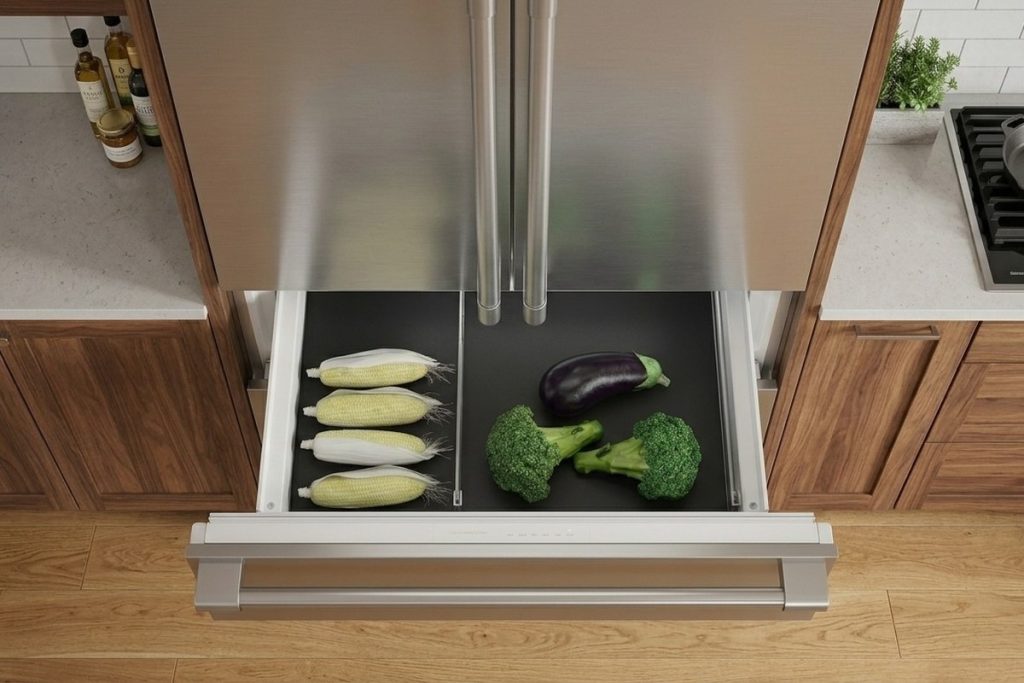
The first line in Monogram’s table: a package may be holding the door open. A tall bottle, a container pushed too far back, a drawer that isn’t fully closed — any of them can stop the door short. Monogram’s manuals also remind owners to close the produce drawers completely.
2. The door gasket is out of position
Monogram says to check the door gasket — it may be out of position. A gasket that has folded, twisted or pulled away at a corner won’t let the door seat. Over time a gasket can also crack, tear or flatten, and then it stops sealing even when the door looks closed.
3. The refrigerator isn’t level
Also straight from the table: the refrigerator is not level — see the installation instructions. On a built-in, even a small tilt changes how a heavy door swings and seats.
4. Cabinets or door alignment have shifted
If you see uneven gaps between the doors and the kitchen cabinets, Monogram says the cabinets may not be level or square — call the installer or cabinetmaker. If one door sits higher than the other, the manual says the door needs adjusting according to the installation instructions. Both are precise jobs on a flush built-in.
5. On French-door models: the center mullion
Monogram’s French-door built-ins have an articulating mullion — the hinged strip on one of the doors that the other door seals against. If it’s rotated out of position, the doors won’t close properly. Monogram’s fix: rotate the mullion back against the door before closing.
6. Hinge wear on heavy doors
Over years of daily use, heavy doors put stress on the hinges and their hardware. When a door sags at one corner or no longer sits flush after the checks above, the hinge is the next thing a technician looks at.
How the Problem Shows Up on Different Monogram Models
The way a door misbehaves depends on the configuration:
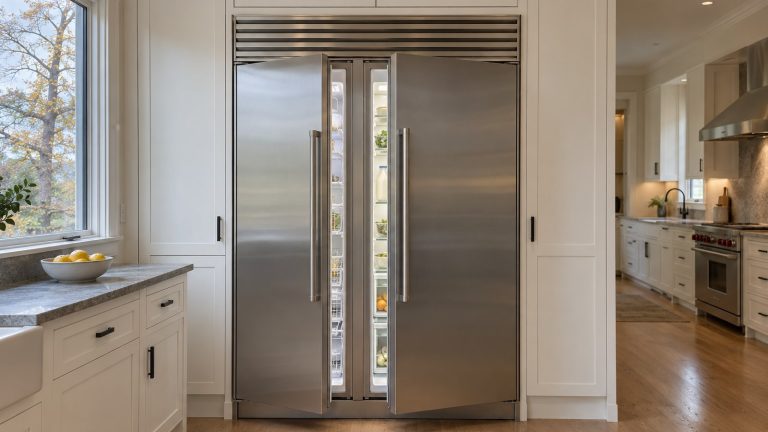
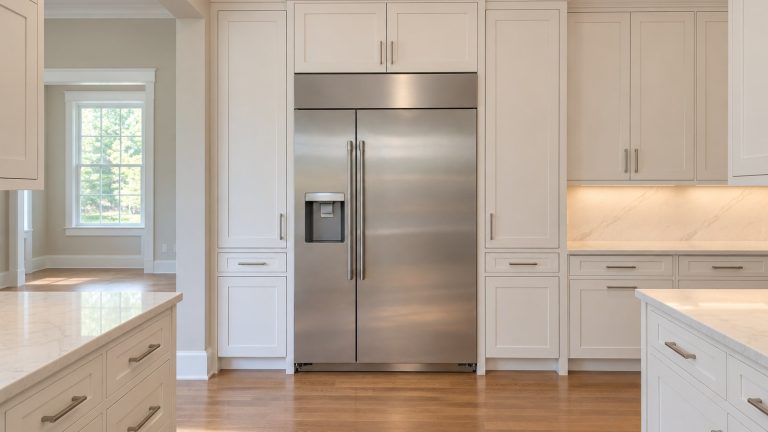
- Built-in side-by-sides such as the 42-inch ZISS420NNSS and the earlier ZIS420N: tall, heavy doors that run the full height of the unit. Watch for a door that drifts open a fraction of an inch, or a gasket that doesn’t press evenly from top to bottom. On models with a dispenser, the door alarm is on the dispenser panel.
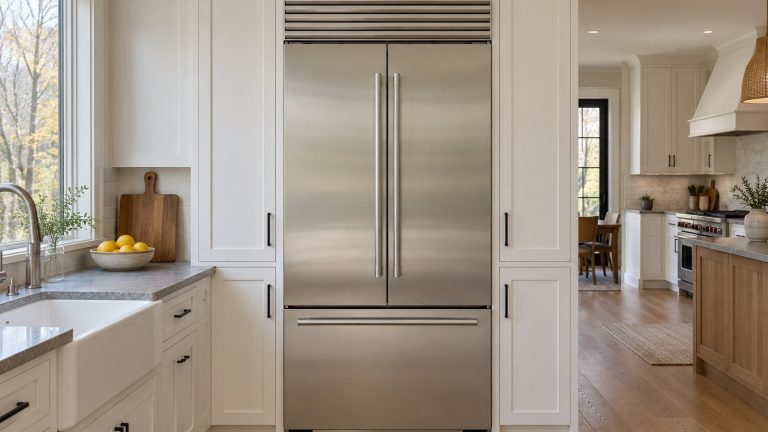
- French-door bottom-freezer built-ins such as the 36-inch ZIP360NH: two fresh-food doors that have to meet at the mullion. If one door won’t seal, check the mullion first, then the gasket.
- Built-in columns and all-refrigerators such as a 36-inch built-in column: single doors with subtler symptoms, but any tilt from imperfect leveling shows up immediately as a gap.
- The freestanding French-door ZWE23ESHSS. A counter-depth, freestanding Monogram French-door refrigerator. Its manual notes that on some models, if the doors won’t close after installation, they need to be taken off and put back on following the manual’s door procedure — a job for the installer.
Telltale Signs: Is Your Door Asking for Help?
Catching door problems early saves food and hassle. The most common red flags:
- the door needs an extra nudge or a firm push to latch, instead of closing smoothly;
- you feel cool air escaping along the edge when you hold your hand near the seal;
- frost or ice crystals build up on frozen food, or condensation appears near the door — Monogram links both to a door left open or a package holding it open;
- the door alarm sounds while the door looks closed;
- there’s a visible gap, or doors that no longer line up evenly.
About the alarm: on many Monogram models, the door alarm flashes and beeps if a door stays open for more than 2 minutes. If yours beeps with the door “closed,” the door isn’t actually seated.
What’s at stake: a door that doesn’t seal lets warm, moist air in all day. That means more frost, warmer food, and a compressor that runs longer than it should. Ignored for weeks, a simple fix can turn into a bigger one.
DIY Checks: What You Can Safely Do
Safety first: Monogram built-ins are top heavy, especially with the doors open, and are secured to the cabinetry to prevent tipping. Never remove a door, take hinges apart, or pry at hinge hardware — these are heavy parts, and Monogram’s manuals say repairs must be performed by a qualified service professional. Be careful closing doors when children are nearby: the gaps are small.
Work through these in order:
- Clear the path. Open the door fully and check every shelf, bin and drawer. Push back anything that sticks out, close the produce drawers completely, and test the door again.
- Check the mullion (French-door models). Make sure the hinged center strip is folded back against the door before you close it.
- Look along the whole gasket. Check every edge, including the hinge side and the corners, for spots that are folded, twisted, cracked, torn or flattened. If it’s simply out of position, ease it back into place with your fingers.
- Clean the gasket. Monogram’s manual cleans the door gaskets the same way as the inside: warm water with about a tablespoon of baking soda per quart. Wipe the gasket with a soft cloth, rinse, and dry it. Avoid harsh cleaners.
- Try the paper test. Close the door on a strip of paper at several points around the edge and pull it gently. It’s a simple household check — use it to compare spots. Where the paper slides out with no drag at all, the gasket deserves a closer look.
- Check the alarm. Close the door and wait. If the door alarm still sounds after a couple of minutes, the door isn’t seated.
Leave these to an installer or technician: leveling a built-in, adjusting door alignment, and anything involving the hinges. Monogram sends leveling and door adjustment to the installation instructions, and cabinet gaps to the installer or cabinetmaker.
If the door still won’t close on its own after these steps — or you’ve found obvious wear — it’s time for a professional.
When to Call a Technician
Book a visit when:
- the gasket is torn, cracked, flattened, or pulling away from the door;
- the door sags at a corner, or doesn’t sit flush after you’ve cleared the path;
- one door sits higher than the other, or French doors no longer meet evenly at the mullion;
- you feel grinding or a “slipping” sensation when closing;
- the alarm keeps sounding with the door shut;
- frost keeps building near the door.
On a panel-ready built-in, door and hinge work done without care risks scratched panels and misaligned cabinetry. A technician with the right parts and patience can replace a gasket or realign a door without leaving a mark. Bring the model number from the rating label and a description of what you’ve seen.
Check the Warranty First
GE Appliances publishes a limited warranty for Monogram refrigerators: two years of parts and in-home labor for a manufacturing defect from the date of original purchase, with longer coverage for the sealed system. Read your own warranty document or contact GE Appliances before booking a repair; this page doesn’t tell you whether your unit is covered.
Conclusion
A Monogram door that won’t close is rarely just an annoyance. It’s a symptom — a package in the way, a gasket out of position, a unit that’s no longer level, or wear on heavy hardware — and it affects food freshness, efficiency and how hard the refrigerator has to work. Start with the free checks: clear the path, check the mullion, look the gasket over. If the door still won’t seat, a professional fix gets your Monogram back to the flush, quiet fit you bought it for.
Frequently Asked Questions
Can I replace just the magnetic part of my Monogram door seal?
We’d advise against trying. A gasket is designed to seal as one piece, and the right replacement depends on your exact model number. When a gasket is torn, cracked or flattened, the usual fix is a complete genuine replacement gasket fitted by a technician, so it seals evenly all the way around.
My French door seems to drop slightly when I open it. Is that normal?
A small amount of movement can be normal with heavy doors. But if the door stays out of line, one door sits higher than the other, or the doors don’t meet evenly at the mullion, Monogram’s manuals say the door needs adjusting per the installation instructions — that’s a job for an installer or technician.
How long does a Monogram door gasket last?
There’s no fixed schedule. Gasket life depends on use and care — residue, harsh cleaners and heavy door use all wear it faster. Replace it when it’s torn, cracked or flattened, and keep it clean in the meantime.
Why does my Monogram door alarm keep going off?
On many Monogram models, the alarm sounds if a door is open for more than 2 minutes. If the door looks closed, something is keeping it from seating — a package, a drawer that isn’t fully closed, a gasket out of position or, on French-door models, the mullion. Check those first.
Why does my Monogram door bounce back open when I close it gently?
Usually something is stopping it at the last moment: a package, an out-of-position gasket, the mullion on French-door models, or a unit that isn’t level. If none of those is the cause, have a technician check the door alignment and hinge hardware.
Do you repair doors on panel-ready Monogram built-ins?
Yes. We work carefully around custom panels and cabinetry, and we repair with genuine OEM parts matched to your model number — gaskets, hinge parts and the rest.
Get a Perfect Seal Again
If your Monogram door still won’t close or seal after the checks above, it’s time for a technician who knows built-ins.
PRO Appliance Repair is a family-owned, insured company with more than 15 years of experience. Our technicians are EPA 608 certified and background-checked, and we repair with genuine OEM parts. Our warranty covers parts and labor for up to six months, and same- or next-day appointments are available across the Atlanta area.
Book a visit from our GE Monogram refrigerator repair page.
Disclaimer: PRO Appliance Repair is an independent repair company and is not affiliated with or endorsed by GE Appliances, a Haier company. Monogram is a trademark of GE Appliances. All trademarks belong to their respective owners.