You open the fridge and the milk isn’t cold. The freezer still feels fine — or maybe it doesn’t. Either way, that warm shelf is one of those moments that stops you cold. Take a breath: when a Frigidaire refrigerator stops cooling properly, the problem usually started quietly before you noticed it. Airflow slows, heat stops leaving the cabinet efficiently, or the sealed system loses pressure. A fridge rarely goes warm without warning.
In Frigidaire’s Gallery French door (FGHB) and side-by-side (FGSS) lines, cooling depends on three things working together: steady refrigerant circulation, proper air movement, and accurate temperature control. When one of them slips, the temperature follows.
In this guide, we’ll walk you through how Frigidaire cooling is meant to work, what changes when it starts to fail, and how to tell whether the problem is airflow, a control part, the compressor, or a refrigerant leak. Knowing the pattern keeps you from paying for parts you don’t need.
Fridge warming up and food on the line? Our Frigidaire refrigerator repair team can find the cause and get it cold again.
Start Here: What Frigidaire Asks You to Check First
Before anything mechanical, Frigidaire’s own support guidance for a refrigerator that isn’t cooling starts with the simple stuff — and so should you. These checks cost nothing:
- Give it time. After installation or a power loss, Frigidaire says the unit needs 24 hours for the temperature to stabilize.
- Check the settings. Frigidaire’s suggested settings are 37°F for the refrigerator and 0°F for the freezer. Acceptable ranges are 33°F to 47°F for the refrigerator and −6°F to 6°F for the freezer.
- Clear the vents. Blocked vents stop airflow, and the unit can’t cool properly. Move anything sitting in front of the air vents, and if the freezer is packed tight, take a few items out.
- Test the door seal. Close the door on a dollar bill and tug. You should feel resistance. If it slides out easily, the seal isn’t doing its job. Clean the gaskets with warm, soapy water.
- Mind the room. Frigidaire doesn’t recommend installing the unit where the temperature drops below 55°F — worth knowing for a garage fridge.
If all of that checks out and the fridge is still warm, the cause is inside the machine. Here’s how it usually plays out.
How Airflow and Refrigerant Flow Affect Cooling
When a Frigidaire refrigerator is warm inside, the first two systems we look at are airflow and refrigerant flow. A fridge that held a steady cold temperature doesn’t suddenly fail unless one of those basic processes has been compromised.
In the FGHB and FGSS lines, cooling isn’t just about cold air — it’s about moving heat out of the cabinet efficiently. Everything else depends on that flow of air and refrigerant.
Why Cold Air Distribution Matters More Than You Think
A refrigerator has two compartments: freezer and fresh food. Depending on the design, the fresh food side often depends heavily on cold air moving in from the freezer side.
Cold air is made at the evaporator coils. An evaporator fan keeps that cold air moving. When the fan works normally, cold air reaches every shelf in the freezer and is carried into the refrigerator section through vents.
If the evaporator fan fails, cold air stays trapped near the coils. The freezer may still feel cold, but the refrigerator section warms up quickly. That’s why we so often hear:
“The freezer is fine, but the fridge is not cold.“
How the Evaporator Fan Fails in Real Use
The evaporator fan can fail a few ways:
- Motor bearings wear out
- The fan blade becomes unbalanced
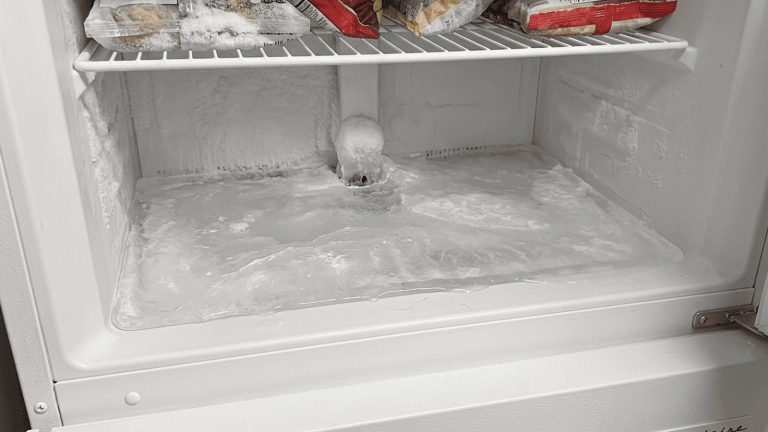
- Ice forms around the blade and blocks it
- Wiring to the fan becomes brittle and loses connection
The scenario we run into most is ice building up around the fan housing until the blade can’t turn. That typically happens when the defrost system isn’t clearing frost or when a door seal lets extra humidity in.
When the fan hums but doesn’t move much air, the fridge feels cool right next to the evaporator and warm on the shelves.
Not a mystery — an airflow failure.
How Warm Air Entry Makes It Worse
A door that doesn’t seal lets warm, humid air into the refrigerator. That moisture lands on cold surfaces and freezes into frost. Over time, frost piles up around the evaporator coils and fan housing, and the system gets less efficient.
When we see frost building up again and again in FGHB and FGSS units, the cause is very often a combination of door seal wear and lost fan airflow.
Dirty Condenser Coils Slow Heat Rejection
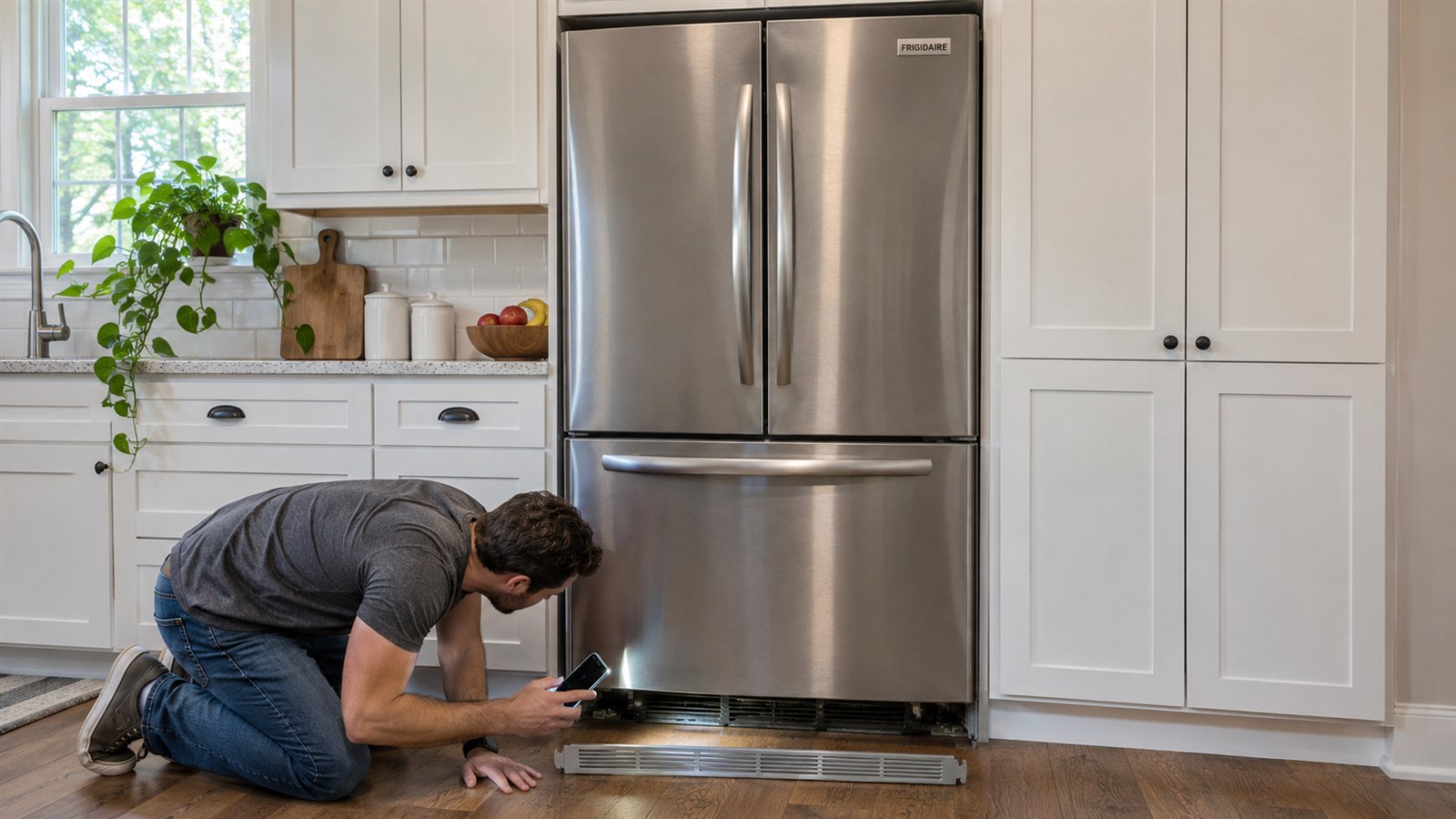
While the evaporator side moves cold air, the condenser side has to get rid of heat. The condenser coils are usually under or behind the refrigerator. Their job is to release the heat pulled out of the cabinet into the room.
When the coils are covered in dust, pet hair, or debris, they can’t do that job well. The compressor works harder. Pressure in the system climbs. Cooling capacity drops. Frigidaire’s own guidance makes the same point: if the vent cover on the back of the refrigerator is clogged with dust, it chokes the airflow and the unit has to work harder. Frigidaire also asks for at least 1 inch of clearance from the wall so air can circulate.
In many FGSS units we service in Atlanta, heavy dust around the condenser area lines up directly with the “fridge is warm” complaint.
In those cases, the first step is cleaning — not replacing parts. Follow the cleaning steps in your model’s manual, and unplug the refrigerator first.
Pressure Patterns Inside a Refrigeration System
To stay cold, the system has to hold the right pressure difference. The compressor raises pressure on the condenser side. The evaporator side stays at lower pressure.
If the condenser can’t shed heat — because the coils are dirty or the airflow behind the fridge is blocked — pressure and temperature on the high side climb. The refrigerant can’t absorb as much heat inside the evaporator, and cooling drops.
In our experience, restricted condenser airflow is one of the biggest reasons a warm fridge gets mistaken for a dying compressor.
When Multiple Systems Interfere
Sometimes airflow and condenser problems stack up. Here’s a pattern we see:
- The door seal starts to lose contact. Moisture gets in.
- Frost starts building on the evaporator coils.
- The evaporator fan slows against the frost.
- Cold air circulation drops.
- The refrigerator section warms up.
- The condenser coils are dusty from normal use.
- Heat leaves the system more slowly.
- The compressor runs harder and longer.
By the time you notice, several things are contributing, not just one.
That’s why partial fixes don’t last. Clearing frost helps for a while, but until the moisture getting in and the coil condition are dealt with, the frost comes back.
How We Confirm Airflow Failures
When we first look at a cooling complaint, we:
- Measure the actual temperature inside, instead of relying only on the display
- Check evaporator fan operation
- Inspect the frost pattern on the evaporator coils
- Check door seal contact and hinge alignment
- Inspect the condenser coils for dust, debris, and blocked airflow
Often several small problems add up to one big symptom: moderate frost on the coils, a fan spinning slowly, dust-packed condenser coils, and a seal gap at one corner — a familiar combination in FGHB and FGSS units.
Want the cause pinned down before food spoils? Book a cooling check and our technicians will find exactly what’s going on.
Common Misconceptions We Hear
“The temperature is already set to the coldest.” We hear this a lot. Check the settings first — Frigidaire lists them among the first things to look at. But if the settings are right and airflow or heat rejection is compromised, turning the dial colder won’t fix it. It just makes the system run longer.
“It was fine yesterday.” Cooling can decline over days or weeks. One day circulation is good enough. The next, frost or a failing fan tips the balance. Once that happens, it doesn’t fix itself.
“The freezer is cold, so everything should be fine.” The freezer can stay cold near the evaporator while cold air still isn’t reaching the refrigerator section.
Airflow Failures in FGHB and FGSS Units
In our experience, restricted airflow is the most common reason a Frigidaire refrigerator isn’t cooling properly. When circulation weakens, temperatures get uneven.
Common Signs of Airflow Imbalance
- Freezer stays cold but the fridge is warm
- Upper shelves warmer than the lower drawers
- Cold air near the rear panel but not across the compartment
- Evaporator fan humming but weak airflow
- Frost building up near the vent openings
When we see that pattern in an FGHB or FGSS unit, we test the evaporator fan and look for whatever is blocking the air.
Frost Restriction and Evaporator Overload
Airflow problems are often tied to frost.
Every time the door opens, humid air comes in. That moisture freezes onto the evaporator coils. The defrost cycle is designed to clear it. When defrost stops working well or airflow weakens, frost builds faster than it’s removed.
As frost thickens, the air channels narrow. The evaporator fan pushes against more resistance. Circulation drops further, and the warm fridge gets more noticeable.
We see this especially in humid Atlanta summers. A slightly worn door seal lets in more moisture, ice builds on the evaporator coils, and within weeks the airflow is restricted enough to warm the fridge.
In those cases, clearing the visible frost is only part of the fix. The airflow or seal problem underneath has to be corrected, or the frost comes back.
Condenser Efficiency and Heat Rejection
Cooling inside the cabinet depends on heat leaving the system outside it.
Dirty condenser coils cut into that. When they’re packed with dust or pet hair, heat can’t escape well. The compressor runs longer, and cooling declines gradually.
Unlike airflow problems, a condenser restriction affects both compartments over time — the fridge may still cool, but it struggles in hot weather. Cleaning the condenser area often brings back stable cooling without replacing major parts.
Skipping this maintenance adds strain on the compressor — and raises the risk of compressor trouble later.
When Controls Create Cooling Confusion
Sometimes the mechanical parts are fine, but the control feedback isn’t.
A temperature sensor that drifts out of range can give the control board bad information. The refrigerator may shut off before it reaches the right temperature. The display can show normal settings while the fridge stays warm.
On older designs, a failing thermostat can do the same thing. The system cycles unevenly, and cooling swings through the day.
In those cases, the airflow and coils look normal. The problem is temperature regulation, not refrigerant flow. Confirming it takes electrical testing.
Airflow or Sealed System: Knowing the Difference
This is where reading the pattern matters.
If the freezer stays cold but the refrigerator section is warm, airflow is the likely cause. Check for blocked vents, then the evaporator fan and frost buildup.
If both compartments are warm and the compressor runs nonstop without ever reaching temperature, the sealed system needs to be checked. That includes compressor failure or a refrigerant leak.
One caution before you read too much into run time: Frigidaire notes that every compressor cycles on and off, and many of its French door models use variable-speed compressors designed to run almost continuously. Long running alone isn’t a fault. Long running plus a cabinet that never gets cold is the warning sign.
Here’s a simple map of what we see in the field:
| Condition you notice | Most likely direction |
|---|---|
| Freezer cold, fridge warm | Blocked vents, airflow restriction, or evaporator fan problem |
| Both sections warm, never reaching temperature | Compressor failure or refrigerant leak |
| Display normal, temperature unstable | Temperature sensor or thermostat problem |
| Long run times, warm air at the back or bottom | Dirty condenser coils or blocked airflow behind the fridge |
We use this map every day. It cuts out guesswork and keeps you from paying for parts you didn’t need.
Not sure which row you’re in? Our technicians can tell you exactly why your Frigidaire isn’t cooling.
When the Problem Is Inside the Sealed System
Not every cooling complaint is about airflow. When both compartments are warm and the fridge can’t recover, we turn to the sealed system.
If the evaporator fan is moving air and the condenser coils are clean, yet the refrigerator still isn’t cooling properly, the pressure inside the refrigeration circuit has to be checked.
Two main concerns:
- Compressor failure
- Refrigerant leak
Compressor Failure Patterns
The compressor is the engine of the cooling system. It compresses refrigerant and keeps the pressure difference between the condenser and evaporator.
When a compressor starts to fail, we usually see one or more of these:
- The compressor runs but the cabinet stays warm
- Repeated clicking from the start relay
- The compressor casing running unusually hot
- A weak or incomplete frost pattern on the evaporator coils
A healthy system leaves an even frost pattern across the evaporator. When compression weakens, frost forms only partly or not at all.
In our Atlanta service work, true compressor failure in FGHB and FGSS models is less common than airflow problems — but when it happens, it hits both compartments at once.
If the freezer and refrigerator are equally warm, the sealed system needs testing.
Refrigerant Leak Behavior
A refrigerant leak usually doesn’t cause a sudden, total failure. It causes a slow decline.
People often tell us the fridge was a little warm for weeks before it was clearly not cold. That slow slide is typical of pressure loss.
Common signs of a refrigerant leak:
- Long run times
- Weaker cooling in both compartments
- Frost on only one part of the evaporator coils
- The compressor running but the temperature never reaching the setting
Refrigerant doesn’t get used up. If it’s low, it’s escaping somewhere.
Finding the leak and repairing a sealed system takes specialized equipment and an EPA 608 certified technician. This isn’t a surface-level repair.
What a Partial Frost Pattern Tells Us
Here’s a pattern that shows why testing matters. A side-by-side comes in with the freezer hovering just below freezing and the fridge clearly warm. The fan is running, the condenser is clean, and there’s no visible frost blockage. Open up the evaporator, and frost covers only one small section of it. That partial pattern points to a refrigerant problem.
Without checking the sealed system, a unit like that is easy to misdiagnose as an airflow or control failure — and replacing the wrong part doesn’t fix it.
Escalation Timeline: From Minor to Major
Cooling failures usually start small.
An evaporator fan weakens. Airflow drops a little. Frost builds. The compressor runs longer to keep up. Dirty condenser coils add more strain.
Over time, those long run cycles put more heat and wear on the compressor. What started as a circulation problem can help push the compressor toward an early failure.
Dealing with the early symptoms protects the sealed system.
Get an exact diagnosis before replacing parts. Our technicians test before they swap anything.
How We Diagnose a Frigidaire That Isn’t Cooling
When you tell us your Frigidaire isn’t cooling properly, we follow the same order every time:
- Measure the actual internal temperature with a calibrated thermometer
- Confirm evaporator fan airflow
- Inspect the frost pattern on the evaporator coils
- Check the condenser coils and the airflow behind the fridge
- Test compressor operation
- Check the temperature sensor readings
That order separates airflow, control, and sealed-system causes. The order matters.

Before You Call: What You Can Safely Check
Before you book service, a few observations help narrow it down — no tools, no panels off:
- Is the freezer cold while the refrigerator is warm?
- Are any vents blocked by food or containers?
- Does the door pass the dollar bill test?
- When you open the freezer door, can you hear the fan running?
- Is the vent cover at the back of the fridge clogged with dust?
- Is there heavy frost on the back wall of the freezer?
Freezer cold, fridge warm? Think airflow.
Both compartments warm and never reaching temperature? The sealed system may be involved.
Heavy frost on the back freezer panel? Ice on the evaporator coils may be blocking airflow.
Stop food loss before it spreads. Our Frigidaire refrigerator repair team serves Atlanta and the surrounding Georgia area, with same- or next-day appointments available most days.
Common Misdiagnosis Patterns
Many people respond to a warm fridge by turning the temperature colder. That doesn’t fix a failing evaporator fan. If airflow is restricted, colder settings only make the system run longer.
Another common move is replacing the thermostat. A bad thermostat is possible, but it won’t fix dirty condenser coils. If heat can’t leave the system, the temperature stays unstable.
We also see people melt the visible frost and assume the problem is solved. Thawing removes the symptom, not the cause. If the airflow restriction or moisture leak is still there, the frost returns.
The most expensive mistake is assuming the compressor has failed without checking airflow first. In FGHB and FGSS units, a fridge that’s warm while the freezer still works is far more likely to have an airflow problem than a sealed-system problem.
“Not cooling properly” describes what you see. It doesn’t tell you which part failed. Our job is to find the exact mechanical or electrical cause before any part is replaced.
Preventing Cooling Decline in FGHB and FGSS Models
A little maintenance lowers the risk of a warm-fridge surprise:
- Keep the condenser area and the vent cover at the back free of dust, following your model’s manual
- Leave at least 1 inch of clearance from the wall, as Frigidaire recommends
- Check the door seals regularly with the dollar bill test
- Don’t overpack shelves in front of the internal vents
- Pay attention to new fan noises
- Book a professional check if the temperature keeps swinging
Small habits extend the life of the compressor and reduce long, strained run cycles.
Why Professional Diagnosis Matters
Airflow, controls, and pressure interact all the time. Replacing the wrong part doesn’t fix the system — it adds cost and delays the real repair.
When we service a Frigidaire FGHB or FGSS unit in Atlanta, we check the whole cooling system before recommending a replacement: airflow, sensor accuracy, condenser condition, and compressor behavior, in that order.
That keeps you from paying for sealed-system work when the problem is minor — and keeps a major problem from waiting too long.
Get a clear answer. Our EPA 608 certified, background-checked technicians use genuine OEM parts, and our repairs come with a warranty of up to six months on parts and labor.
Conclusion
A Frigidaire that isn’t cooling properly is sending a clear signal. The cause may be blocked vents, restricted airflow, a failing fan, a temperature sensor or thermostat problem, dirty condenser coils, compressor failure, or a refrigerant leak.
The pattern of temperature loss points to the cause.
If the freezer stays cold and the fridge is warm, airflow is likely. If both compartments are warm and never get cold, the sealed system needs a look. If the temperature swings without visible frost or airflow problems, the controls may be involved.
Knowing the difference prevents misdiagnosis and unnecessary repairs. When the free checks don’t fix it, our technicians will find the exact failure and get your fridge cold again. We’re an independent repair company, not affiliated with Frigidaire.
FAQ
Why is my Frigidaire freezer cold but the fridge warm?
That usually points to restricted airflow. Start with the free check Frigidaire recommends: make sure no food or containers are blocking the vents. If the vents are clear, a failing evaporator fan or frost blocking the air path is the likely cause — cold air is being made, it just isn’t reaching the refrigerator section.
Can dirty condenser coils make a refrigerator stop cooling?
Yes. Dirty coils can’t release heat well, so the compressor works harder and cooling drops — often worst on hot days. Frigidaire’s guidance says a vent cover clogged with dust chokes the airflow and makes the unit work harder. Unplug the fridge, follow your manual’s cleaning steps, and keep at least 1 inch of clearance from the wall.
How do I know if it’s a compressor failure?
If both compartments are warm and the compressor runs without ever bringing the temperature down, the sealed system needs to be evaluated. Keep in mind that many Frigidaire French door models have variable-speed compressors that run almost continuously by design — long running on its own isn’t a fault. A cabinet that won’t get cold is.
What does a refrigerant leak look like?
Cooling fades gradually over days or weeks. The compressor runs longer, both compartments drift warmer, and frost covers only part of the evaporator coils. Refrigerant doesn’t get used up, so if it’s low, it’s leaking — and finding and fixing that takes an EPA 608 certified technician.
Can a temperature sensor cause a Frigidaire to stop cooling properly?
Yes. A faulty temperature sensor can give the control board the wrong reading, so the fridge shuts off too early or cycles unevenly. The display may look normal while the shelves stay warm. Confirming a sensor problem takes electrical testing.
Should I unplug my refrigerator if it’s warm?
Not as a first step. First check the settings, clear the vents, and test the door seal. Frigidaire says the unit needs 24 hours to stabilize after a power interruption or a new install, so don’t judge it in the first hour. Unplug it if you’re cleaning the condenser area, or if it’s making unusual noises or smells like it’s overheating — then have it checked.
Frigidaire is a registered trademark of its owner. We are an independent appliance repair company and are not affiliated with or endorsed by Frigidaire.