
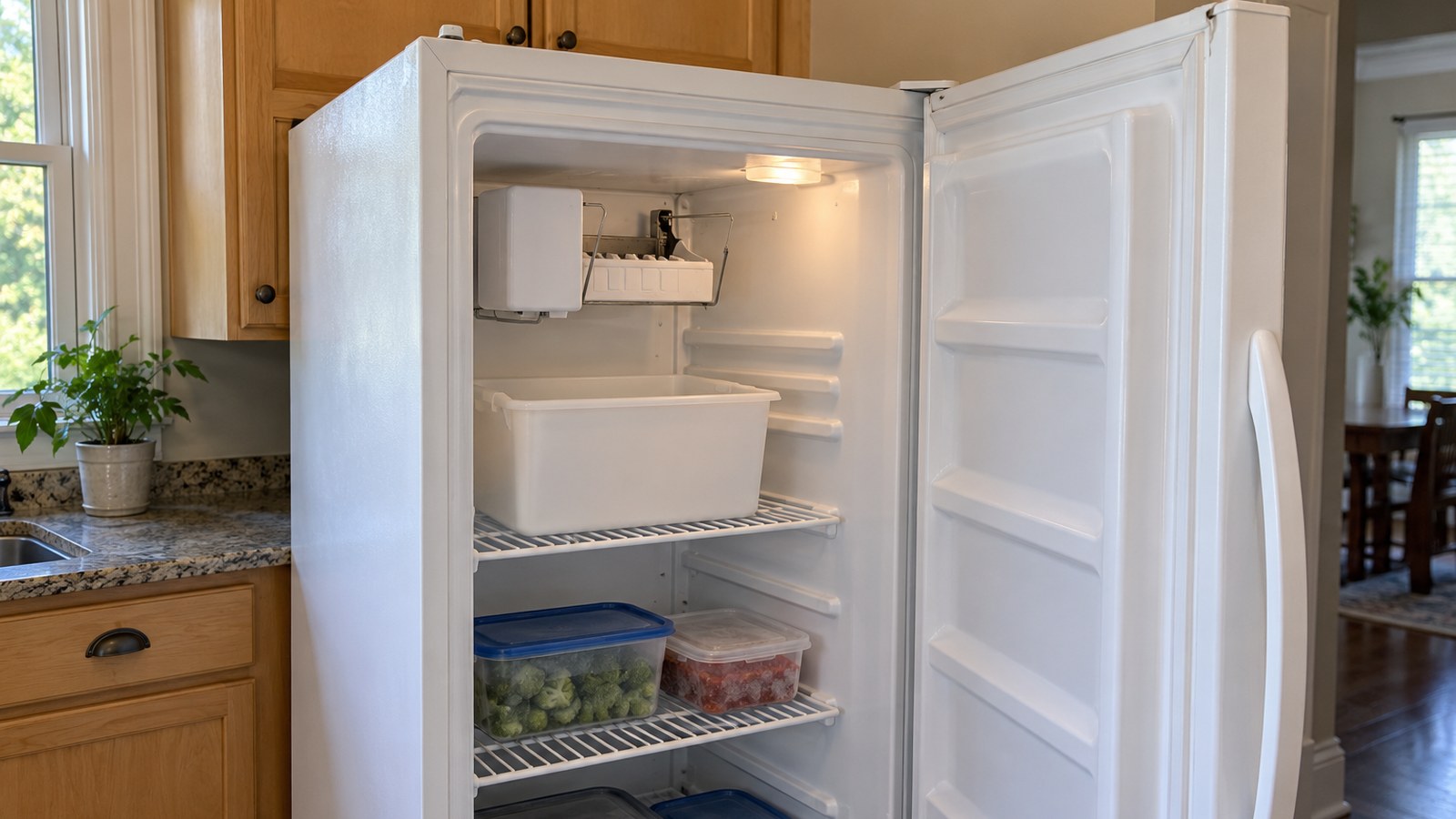
Run these four checks before anything else. A surprising number of “broken” ice makers come down to one of them:
- Is the ice maker turned on? On models with a wire signal arm, the arm must not be in the UP position; on models with a switch, it must be set to ON (I).
- Is the freezer cold enough? Kenmore recommends 0°F for normal ice production, and the ice maker won’t even start until it reaches 15°F or below.
- Is the water supply valve behind or under the unit fully open, with no kink in the line?
- Is the water filter overdue? Check the replacement interval in your owner’s guide.
If any of these is off, fix it first and give the freezer 24 hours before moving on.
Ice makers are one of the most common reasons owners call us about Kenmore freezers and refrigerator-freezers. The frustrating part is that the symptom looks the same every time — no ice — but the causes are completely different. A frozen fill tube, a failed water inlet valve, a worn ice maker module, a sensor that thinks the bin is full — each needs a different fix. This guide walks you through them in the right order, so you’re not replacing parts you don’t need. If you’d rather hand it to a technician, our freezer repair team works on Kenmore ice makers across metro Atlanta.
A quick note on Kenmore: your full model number tells a technician which parts and test procedure fit your unit, so keep it handy.
Why Your Kenmore Freezer Ice Maker Stopped Working
Freezer Temperature Is Too High
This is the first thing to rule out, because no other fix will work if the temperature is wrong. Kenmore’s refrigerator guide puts it plainly: the recommended freezer temperature for normal ice production is 0°F, and if the freezer is warmer, ice production will suffer. The same guide says the ice maker won’t begin to operate until it reaches 15°F or below.
A freezer thermometer placed in the center of the compartment gives you a reliable reading. If the freezer isn’t getting cold enough, that’s a separate problem to solve first. A door that isn’t sealing, a defrost problem, or a dirty condenser can all push the temperature up enough to stop ice production.
Water Supply Problems: Filter, Line, Pressure, and Valve
Several separate failure points, all with the same result — no water reaching the ice maker:
Clogged water filter: A filter that’s past its replacement date starts restricting flow. A restricted filter often produces small, hollow, or misshapen cubes before production stops entirely. Kenmore’s guide also notes that mineral content in the water can affect ice taste, and a filter may help.
Low water pressure: Kenmore’s refrigerator guide gives a working range: between 20 and 120 psi on models without a water filter, and between 40 and 120 psi on models with a filter. Below that, the ice maker won’t get enough water for normal cubes. The same guide warns that a reverse osmosis system can drop the pressure below the minimum.
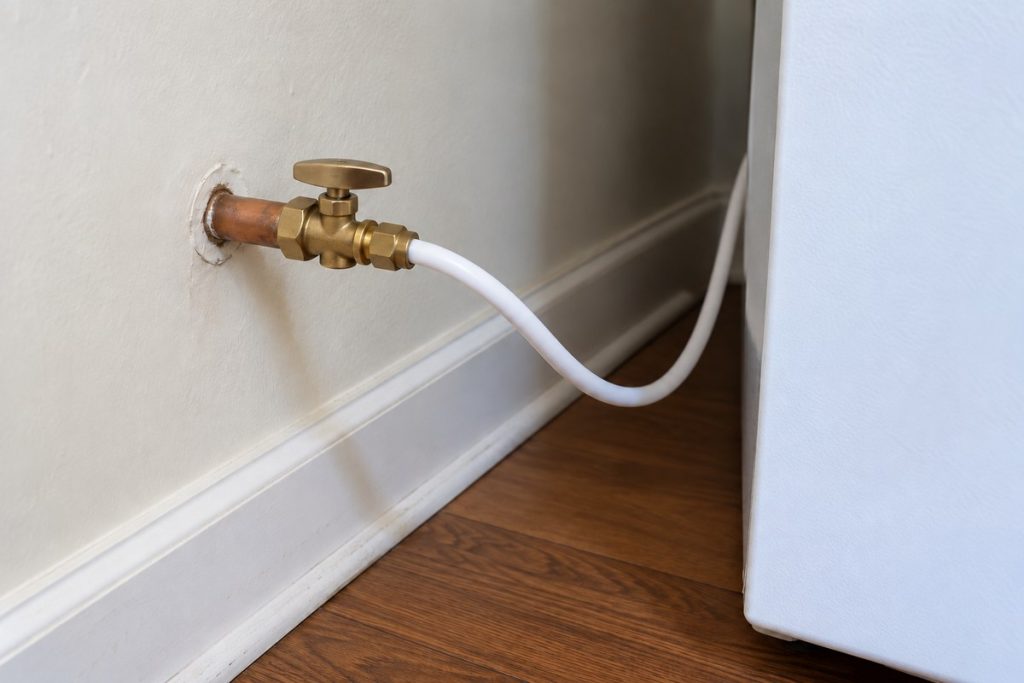
Kinked or closed supply line: Kenmore lists a supply valve that isn’t fully open and a kink in the water line as causes of no ice — both easy to check.
Frozen fill tube: The fill tube is the small tube that carries water from the inlet valve into the ice mold. If warm, humid air keeps getting into the freezer — a door seal problem, for example — this tube can freeze solid. The ice maker may cycle and you’ll hear the motor, but no water fills the mold.
Faulty water inlet valve: The inlet valve is an electrically controlled valve at the back of the unit. If it fails, no water flows even when everything else is right. Testing and replacing it is a job for a technician.
Frozen Ice Maker Assembly
When the ice maker assembly itself freezes up — ice jammed around the ejector arms, frost built up in the mold — the mechanism can’t complete its cycle. It usually happens because of a door seal problem letting humid air in, or a defrost system that isn’t keeping up. The ice maker may click and hum but produce nothing.
Frost around the ice maker area is the pattern to look for. Kenmore’s guide also notes that the ice compartment door must be kept closed tightly; if it isn’t, the ice maker can stop producing ice.
Faulty Door Switch
On many models, the door switch turns on the interior light and tells the ice maker and dispenser when a door is open. A switch that’s stuck can make the control think the door is always open, so the ice maker never runs. If the interior light stays on when you press the switch with the door open, the switch is a likely suspect.
Defective Ice Maker Module
The ice maker module is the motor-driven control that runs the fill, freeze, and harvest cycle. When it fails, the ice maker either doesn’t cycle at all or gets stuck partway — arms that won’t turn, molds that fill but never eject. On many models, the module is replaced as a unit rather than repaired.
Failed Mold Thermostat or Sensor
On many ice makers, a small thermostat or sensor on the ice mold tells the module when the ice is fully frozen and it’s time to harvest. If it fails, that signal never comes: the mold fills, freezes solid, and just sits there. The ice maker appears to be working but never ejects.
Ice Level Sensor
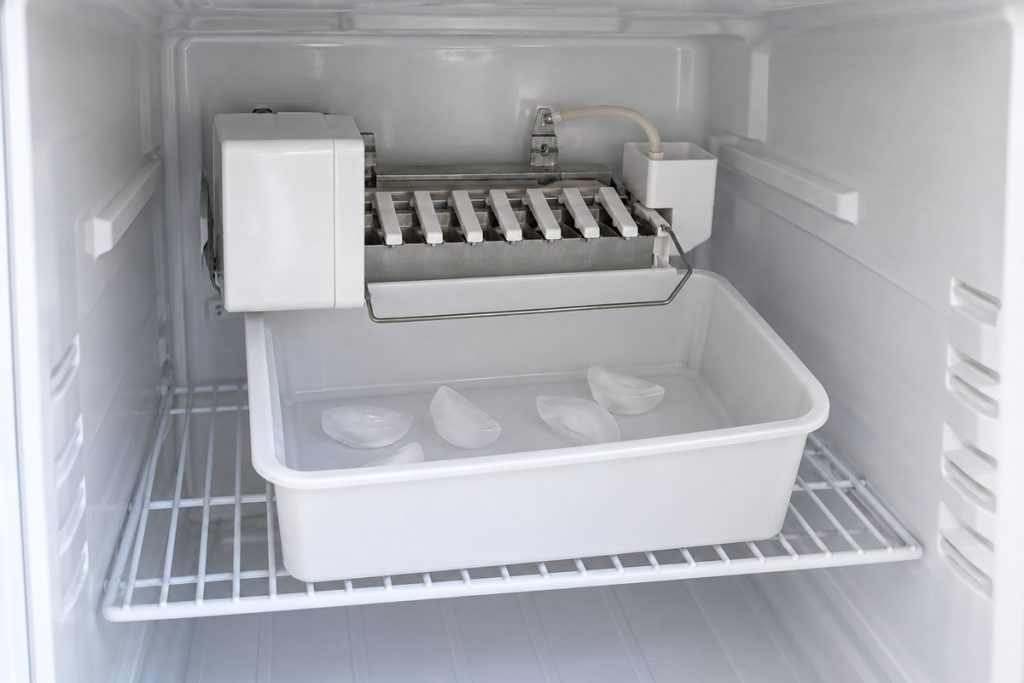
Some Kenmore models use an ice-detecting sensor to tell when the bin is full. When the bin is full, the ice maker stops; when ice is used, production resumes. Kenmore’s guide notes that foreign substances or frost on the ice-detecting sensor can interrupt ice production, and that uneven ice in the bin can make the ice maker misread the level — shaking the bin to level the ice can help.
How to Fix a Kenmore Freezer Ice Maker
Work through these in order. The first steps cost nothing and solve many cases.
Important safety note: Unplug the refrigerator or freezer before you reach into the ice maker area, and keep hands away from the ice maker mechanism while it’s plugged in — Kenmore warns about this too. Don’t remove the ice maker, disconnect wiring, or test parts with a meter unless you’re trained to do so, and never use a heat gun, open flame, or boiling water to thaw ice. Steps 4–8 describe what a technician checks.
Step 1 — Check and Correct the Freezer Temperature
Set the freezer to 0°F (or the middle setting your guide recommends). Kenmore’s guide says to change the setting one step at a time and wait 24 hours before adjusting again. Place a freezer thermometer in the center of the compartment — not on the door — and check it after 24 hours. If the freezer isn’t reaching temperature, the ice maker problem is secondary to a cooling problem that needs to be fixed first.
For a freezer that won’t get cold, see our guide to Kenmore freezer too warm.
Step 2 — Check the Water Supply and Replace the Filter
Make sure the supply valve is fully open and the line behind the unit isn’t kinked or pinched. If the filter is overdue, replace it following your owner’s guide for your model — filter location varies between models, so use the guide rather than guessing. After a new filter, Kenmore’s guide says the first ice and water may contain particles or odor from the line; throw away the first few batches of ice, about 24 cubes.
If you have a reverse osmosis system, ask a plumber to check that the pressure reaching the refrigerator is in range.
Step 3 — Clear a Frozen Fill Tube or Iced-Up Assembly
If the ice maker cycles but no water fills the mold, or ice has built up around the ejector arms, the safest way to clear it is to let it thaw. Turn the ice maker off, unplug the unit, move the food to another freezer or a cooler, and leave the doors open with towels in place to catch the water. Once everything is thawed and dry, plug it back in and turn the ice maker on.
If the fill tube freezes again within a few days, the cause is usually a temperature or door seal problem — not the tube itself. That’s the part to fix.
Step 4 — Water Inlet Valve (Technician)
If water still doesn’t reach the mold with the supply open, pressure in range, and no ice in the fill tube, the inlet valve is the next suspect. A technician tests the valve’s electrical coil, checks the inlet screen for mineral buildup, and replaces the valve with the correct part for your model number if it has failed.
Step 5 — Ice Jam and Test Cycle (Technician)
A technician can clear a jam without damaging the mold and run the ice maker through a test cycle to confirm the arms rotate and the mold fills. The test procedure depends on the ice maker design, which varies between Kenmore models.
Step 6 — Door Switch
You can do the first part yourself: with the door open, press the switch by hand and watch whether the interior light goes out. If it doesn’t, a technician can test the switch and replace it.
Step 7 — Ice Maker Module (Technician)
If the ice maker doesn’t respond during a test cycle, the module has likely failed. Replacement means removing the ice maker, disconnecting its wiring, and aligning the new unit with the fill tube — a technician matches the module to your full model number, since modules differ between Kenmore platforms.
Step 8 — Mold Thermostat or Sensor (Technician)
If the ice maker fills but never ejects, the mold thermostat or sensor is the likely cause. A technician tests it and replaces it if it’s no longer working.
Still no ice after Steps 1–3? That’s the point where a diagnosis usually saves time and parts.
How to Reset a Kenmore Ice Maker
This is one of the most-searched Kenmore ice maker questions, so here’s what you can safely do:
Method 1 — Turn the Ice Maker Off and On
Turn the ice maker off — lift the wire arm to the UP position, or set the switch to OFF (O). Wait a minute, then turn it back on — arm down, or switch to ON (I). Give it time: Kenmore’s guide says a newly installed refrigerator takes about 12 to 24 hours to begin making ice, and 72 hours for full production.
When to Switch the Ice Maker Off
Kenmore’s guide recommends setting the ice maker to OFF when the water supply will be shut off for several hours, when the ice bin is removed for more than a minute or two, and when the refrigerator won’t be used for several days. It also warns that leaving the ice maker on before the water line is connected can damage it.
What normal looks like: Kenmore’s refrigerator guide says its ice maker produces 10 cubes per cycle — about 100 cubes in 24 hours, depending on freezer temperature, room temperature, and how often the doors are opened. Kenmore’s upright freezer guides put normal output at 4 to 5 pounds of ice in 24 hours on models with an ice maker.
Kenmore Ice Maker Troubleshooting by Symptom
Ice Is Small, Hollow, or Thin
Cause: Low water pressure or a partly clogged filter restricting flow to the mold. The mold fills partway, freezes, and ejects undersized cubes.
Fix: Replace the water filter first. If cubes are still small, check the water pressure range above; a reverse osmosis system is a common culprit. If pressure is fine, a technician can check the inlet valve.
Ice Maker Is Leaking Water Into the Freezer
Cause: A cracked water line, a fill tube that isn’t lined up with the mold, or an inlet valve that’s stuck open and overfilling. A sheet of ice forming under the ice maker usually means water is missing the mold.
Fix: Turn the ice maker off and have the water connections and valve checked.
Ice Maker Clicks or Hums but Produces Nothing
Cause: The motor is cycling, but water isn’t reaching the mold. That points to the water supply, the inlet valve, or a frozen fill tube — not necessarily the module. Go through Steps 2 and 3 before assuming the module has failed.
Ice Maker Makes Ice but the Dispenser Won’t Deliver It
Cause: On models with a door dispenser, Kenmore’s refrigerator guide lists several simple reasons ice won’t come out: a door that isn’t fully closed, a dispenser display that’s locked, ice not selected on the panel, an ice bin that isn’t seated correctly, cubes that have frozen together because the dispenser wasn’t used for a while, or a chute blocked by frost or ice fragments.
Fix: Close all doors firmly, unlock the display and select ice, and reseat the bin. If cubes have clumped, empty the bin and let the ice maker start fresh. Keep hands out of the ice door and chute — Kenmore warns about injury there. If the chute is iced up or ice keeps clumping, the cause is usually warm air getting in or a dispenser problem, and a technician should take a look.
Ice Tastes Bad or Has an Off Smell
Cause: Kenmore lists several: a recent installation, ice stored too long, food in the freezer that isn’t wrapped, minerals in the water, or an ice bin that needs washing.
Fix: Throw out the old ice, wash the ice bin, wrap food well, and replace the filter if it’s due. Kenmore’s guide adds that if ice comes out discolored, check the filter and water supply and don’t use the ice until the problem is corrected.
How to Keep Your Kenmore Ice Maker Working
Most ice maker problems start somewhere else — in the freezer temperature, the water supply, or warm air getting in. A few habits keep those causes away:
- Keep the freezer at the recommended setting. 0°F is the target for normal ice production. If you change the setting, do it one step at a time and wait 24 hours, as Kenmore advises.
- Replace the water filter on schedule. Your owner’s guide gives the interval for your model. A fresh filter protects both water pressure and ice taste.
- Keep the doors closing tightly. Don’t let bins, bags, or tall containers block a door, and keep the ice compartment door closed. Warm, humid air is what freezes fill tubes and ices up the ice maker.
- Use the ice regularly, or switch the ice maker off. Stored ice can clump and pick up odors. If you’re away for several days, Kenmore recommends turning the ice maker off.
- Don’t store anything in the ice bin. Kenmore notes that cans or other items stored in the bin can damage the ice maker.
- Wash the ice bin from time to time. It’s one of the causes Kenmore lists for bad-tasting ice.
- Mind the water line. Make sure it isn’t kinked when the refrigerator is pushed back into place, and that the supply valve stays fully open.
These take a few minutes a month and prevent most of the calls that start with “no ice.”
When to Call a Professional
The checks above handle many ice maker problems. These situations are the exceptions:
- The control board has failed. Diagnosing a control board means reading the control’s codes and testing circuits.
- The freezer isn’t reaching temperature. If cooling is the real problem, no ice maker repair will help until the cooling system is fixed, and any refrigerant work must be done by an EPA 608 certified technician.
- A new module didn’t fix it. At that point the problem is likely electrical — wiring or a control board — rather than mechanical.
- Water is leaking. A leaking valve or line can damage floors and cabinets quickly.
A careful diagnosis finds the actual cause first, so you only pay for the part that failed.
Conclusion
A Kenmore freezer ice maker that stops working almost always traces back to a handful of causes: the freezer is too warm, the water supply is blocked (filter, pressure, frozen line, or valve), the ice maker assembly has frozen up, or a part like the module, mold thermostat, or ice level sensor has failed.
The order matters. Start with the ice maker switch, the temperature, and the water supply — they’re free to check and account for many cases. If those check out, the mechanical and electrical parts are next, and that’s where a technician earns their keep.
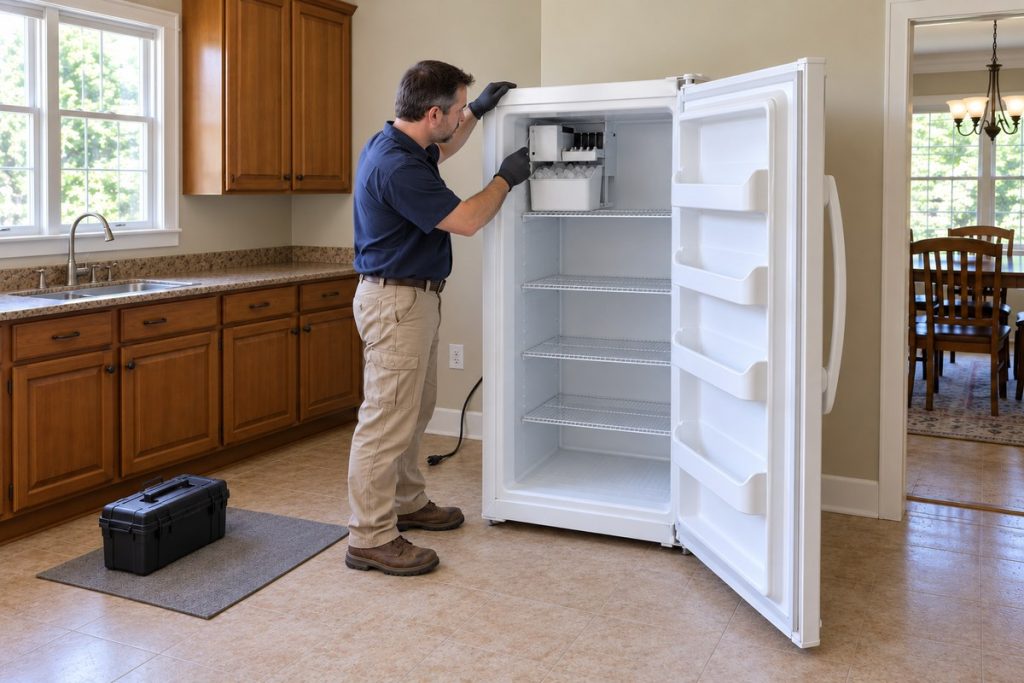
Still no ice? Schedule freezer repair with PRO Appliance Repair — same- or next-day service across most of metro Atlanta. Our insured, background-checked technicians use genuine OEM parts and back the repair with our workmanship warranty of up to six months. If your Kenmore is also making strange sounds, see our guide to Kenmore freezer making loud noise.
FAQ
My Kenmore ice maker was working fine, then stopped overnight. What’s most likely?
A sudden stop usually means the ice maker was switched off — the wire arm bumped into the UP position or the switch set to OFF — or the water supply was interrupted. Check both, plus the freezer temperature, before anything else.
My Kenmore freezer is at 0°F and the water supply is fine, but still no ice. What’s next?
Look for a frozen fill tube or ice around the ejector arms, and check the ice-detecting sensor for frost. If those are clear, the inlet valve, the module, or a sensor is the likely cause, and a technician can test them.
How do I know if my Kenmore ice maker is getting water at all?
If the mold stays empty after the ice maker cycles, water isn’t reaching it — the supply valve, filter, pressure, a frozen fill tube, or the inlet valve. If there’s water in the mold but no ice comes out, the problem is in the ice maker itself.
How long does a new Kenmore ice maker take to make ice?
Kenmore’s guide says about 12 to 24 hours for a newly installed refrigerator to start making ice, and 72 hours for full production. Throw away the first few batches, about 24 cubes.
Can I run my Kenmore freezer without using the ice maker?
Yes. Turn the ice maker off — wire arm up, or switch to OFF (O). Kenmore recommends doing exactly that if the water supply is off or not yet connected. The freezer will keep working normally.
My ice maker fills with water, but the ice never ejects. What’s causing that?
That’s the classic sign of a failed mold thermostat or sensor, or a module that isn’t finishing the harvest cycle. A technician can test both and replace the one that failed.
PRO Appliance Repair is an independent repair company and is not affiliated with, sponsored by, or endorsed by Kenmore or Transform SR Brands LLC. Brand and model names are used only to identify the appliances this page is about and remain the trademarks of their respective owners.