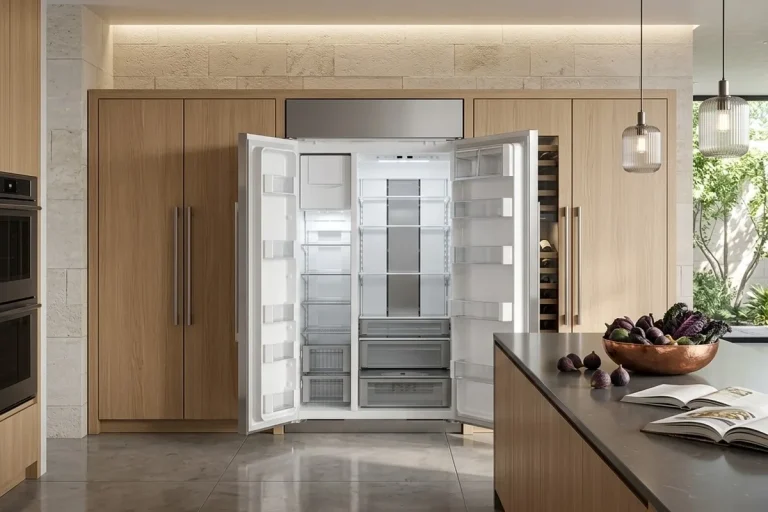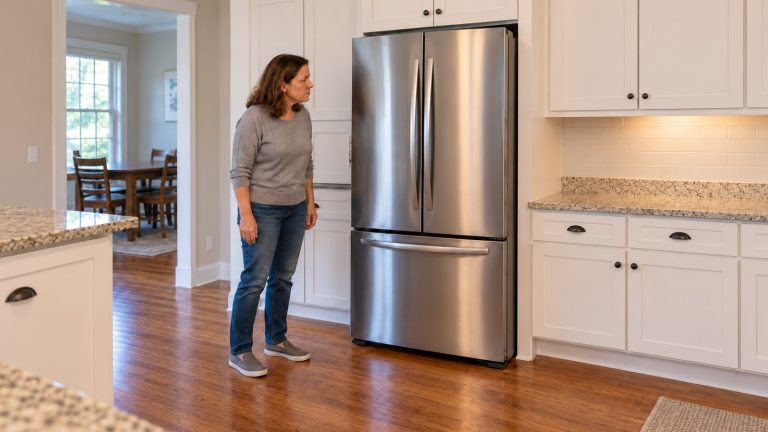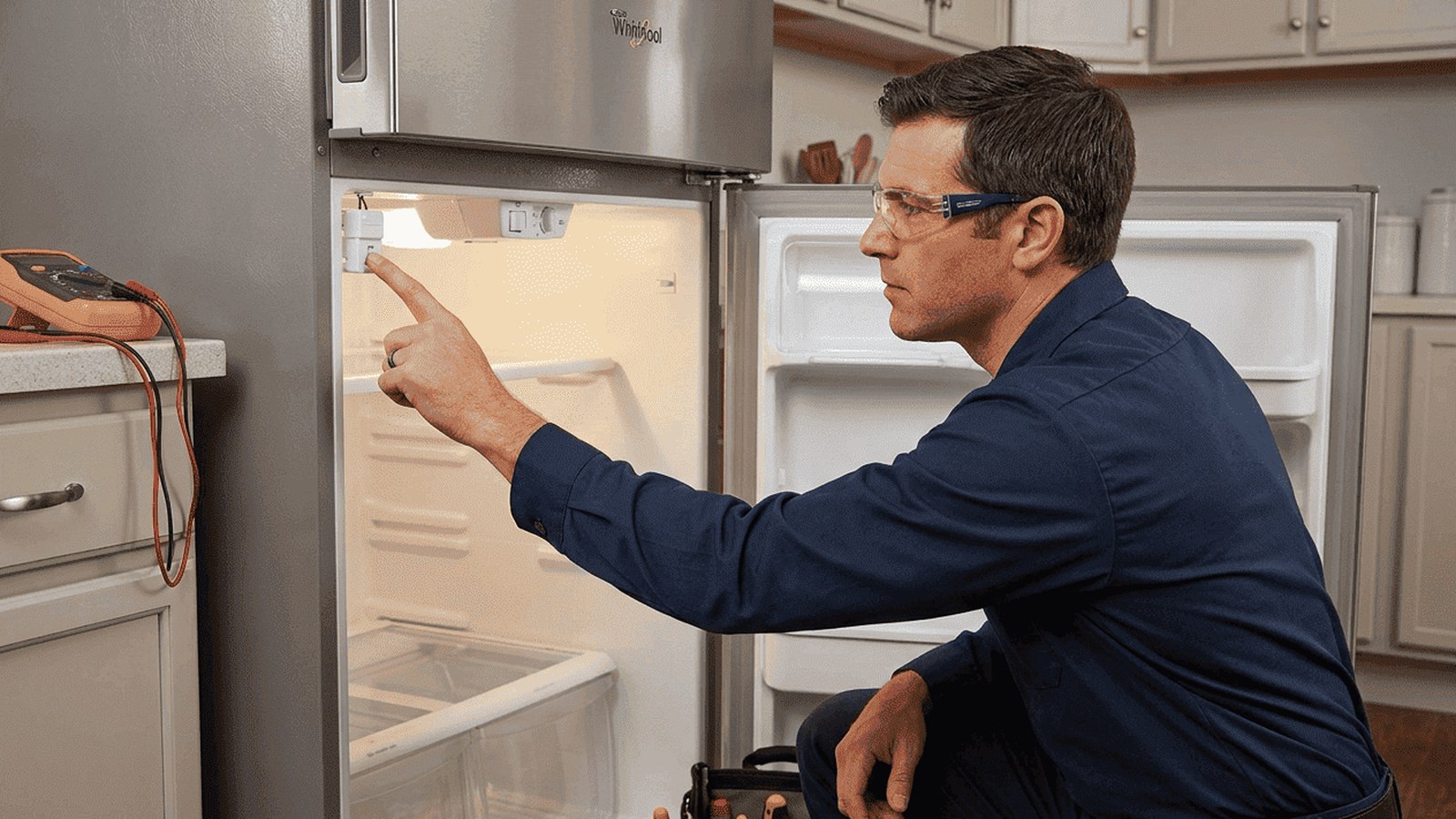
A Whirlpool refrigerator or freezer that starts making loud noise rarely does so without a cause. These appliances are designed to run quietly and consistently, so when a new sound appears or an old one gets louder, it usually means something is working harder than it should.
What makes it confusing is that cooling often continues. The freezer still feels cold, food looks frozen, and nothing seems broken. That creates uncertainty: is the noise harmless, or is it the first sign of a problem that will soon affect performance?
The same patterns come up again and again. A buzzing sound starts near the ice maker. A humming noise grows louder inside the freezer. Vibration develops near the back of the unit and carries through the floor or cabinets. These sounds aren’t random. They can point to airflow restrictions, fan trouble, ice buildup, water supply problems, or extra load on the compressor. If you’d rather have it checked, our refrigerator repair team handles Whirlpool calls across metro Atlanta.
This article covers Whirlpool standalone freezers and Whirlpool refrigerators with freezer sections, including French door, side-by-side, and bottom-freezer models. They share core systems, but the way noise shows up, and the way it’s repaired, can differ by design.
Read on to learn which sounds Whirlpool itself calls normal, what the most common problem noises mean, what you can safely check, and when professional repair is the safest choice.
Is the Noise a Problem?
Whirlpool refrigerators aren’t silent. Whirlpool’s help page on normal sounds says its refrigerators “make a variety of sounds as they cool, defrost, and circulate air,” and that most of them show “the appliance is working as designed.” It lists, among others:
- Humming: “The compressor and fans run to maintain consistent temperatures. A low, steady hum is common, especially after the doors have been opened.”
- Clicking or tapping: relays and control boards switching parts on and off; a single click when the compressor starts or stops.
- Gurgling or bubbling: refrigerant moving through the tubing and defrost water flowing to the drain pan.
- Popping or cracking: contraction and expansion of the inside walls.
- Sizzling or hissing: water dripping onto the defrost heater during the defrost cycle.
- Swooshing: the evaporator and condenser fans moving air.
- High-pitched or pulsating tones: fans and, on variable-speed models, the compressor changing speed.
- Thumping: the water line during a fill cycle.
Whirlpool also notes that a new refrigerator “will probably make different sounds or noises than your previous refrigerator.”
What raises concern isn’t the presence of sound, but a change in sound. If your Whirlpool is making a noise you didn’t hear before, or it suddenly gets louder, something inside may be under stress. That stress doesn’t always stop cooling right away, which is why many owners aren’t sure whether to act.
A few practical signs:
- Does this noise catch your attention when it didn’t before?
- Has the sound become louder or more frequent?
- Does it continue longer than a normal cooling cycle?
- Does it come with temperature changes, alarms, or extra frost?
If the answer to any of these is yes, the noise deserves attention.
Sound is often the first warning sign. A fan working against ice, a motor straining against restricted airflow, or a compressor carrying extra load tends to announce itself before performance drops. Ignoring that signal because the freezer still feels cold is one of the most common reasons a small repair turns into a larger one.
Start by Pinpointing Where the Noise Comes From
The most useful first step is to identify where the sound is coming from. The location often tells you which system is involved and how serious it may be.
If the noise is coming from inside the freezer compartment, it’s usually related to airflow. Often that means the evaporator fan is working against resistance, and that resistance is often ice. As frost builds in areas meant to stay clear, airflow is restricted and the fan gets louder as it struggles. Many owners notice the sound changes when the door opens, because airflow inside shifts.
A related sign is frost on the back wall of the freezer. Even if the temperature seems normal, frost there can mean ice is building around the evaporator fan, which adds noise and reduces airflow.
If the noise is coming from behind or underneath the appliance, the issue is usually mechanical. Attention turns to the condenser fan and the compressor area. Dust or debris near the condenser fan can cause buzzing or humming that grows louder over time, and restricted airflow there makes the compressor work harder to release heat.
When the noise comes from the lower rear and carries through the floor or cabinets, it often means vibration combined with fan or compressor strain. These sounds tend to get more noticeable during longer cooling cycles.
Knowing whether the sound is inside the compartment or at the back narrows the problem and helps prevent unnecessary part replacement.
Ice Maker Buzzing With No Water Supply
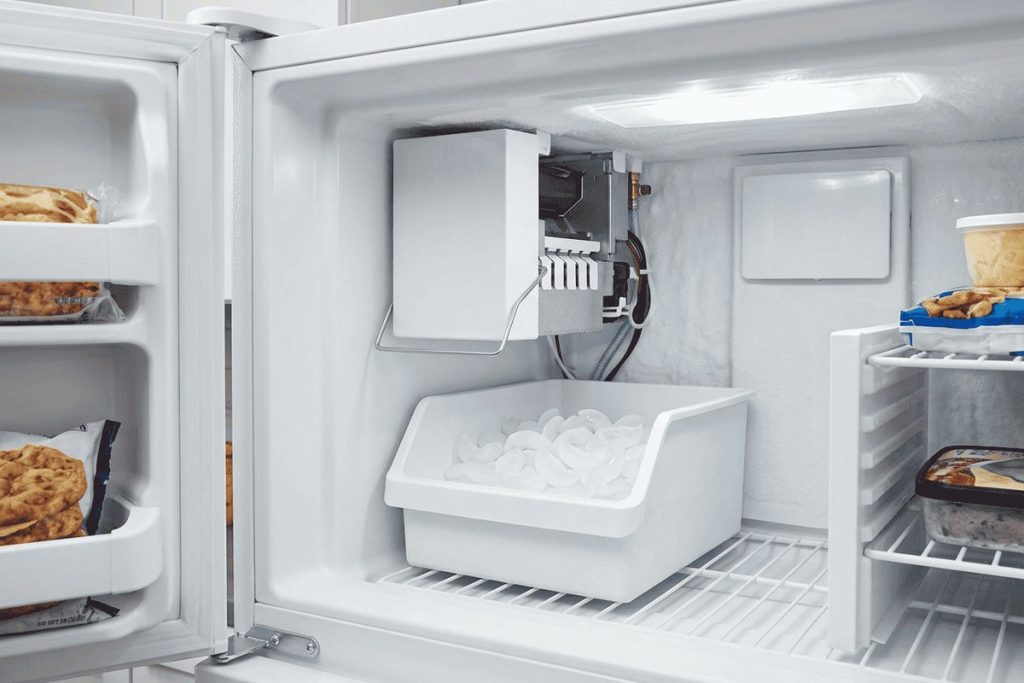
One of the clearest noise problems is an ice maker buzzing with no water. Whirlpool’s own words: “If the ice maker is not connected to a water supply, the water valve will make a buzzing or clicking sound.” It happens when the ice maker is on but the refrigerator isn’t connected to a water line, or the supply is shut off.
This is more common in:
- New installations
- Homes where the ice maker was never used
- Second refrigerators or garage freezers
What owners usually notice
- A buzzing or clicking sound at intervals
- No ice production
- The sound returning each time the ice maker tries to fill
Safe DIY action
Whirlpool’s step is simple: “Check that the ice maker is turned off if the refrigerator is not connected to a water supply.” Use the method in your own manual to turn it off.
A brief buzz while the ice maker fills or while you dispense water is normal, according to Whirlpool. If water is connected and the buzzing is constant or loud, the cause may be:
- Restricted water flow
- A failing inlet valve
- Mineral buildup inside the valve
In those cases, professional testing is needed to avoid leaks or ice maker damage. A chattering sound while dispensing has its own simple cause, per Whirlpool: “The water line may be kinked.”
Loud Humming Inside the Freezer: Ice Around the Evaporator Fan
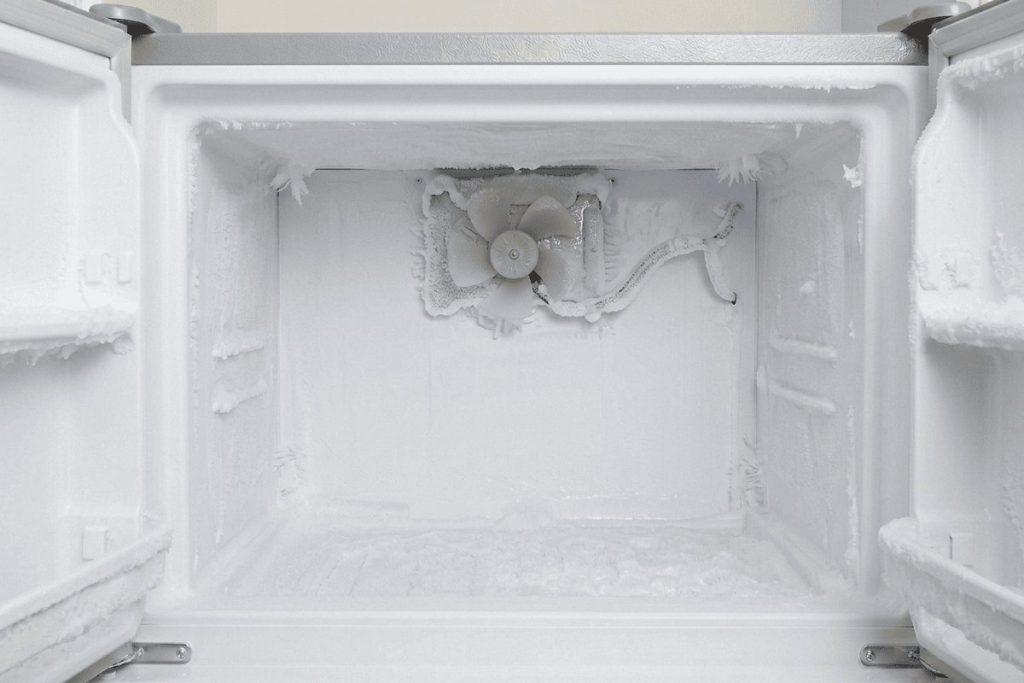
When owners describe loud humming or buzzing inside the freezer, a frequent cause is ice around the evaporator fan.
The evaporator fan moves air across the evaporator coil and circulates cold air through the freezer and, on combination models, the refrigerator section. If frost or ice builds up around the fan or coil, the blades can strike ice, creating a loud humming, buzzing, or rubbing sound.
Frost on the back wall
Frost on the back wall of the freezer is an important clue. It often means ice is building around the evaporator, even if the temperature still seems normal.
It’s commonly tied to:
- Defrost system problems
- Door seal issues letting moisture in
- Frequent door openings in humid weather
Why this affects refrigerators with freezers more
In French door and bottom-freezer refrigerators, airflow paths are more complex. Ice in one zone can affect another, causing freezer noise even when the refrigerator side seems fine.
Standalone freezers tend to show the problem more directly, as airflow is restricted throughout the cabinet.
What owners can safely do
- Look for visible frost on interior walls
- Keep food packages away from the vents
- Notice whether the noise changes when the door opens
Removing panels or chipping ice almost always causes damage and isn’t recommended. If the noise comes with frost buildup, book an evaporator fan and defrost check.
Noise From the Bottom or Back: The Condenser Fan
Noise from the rear or lower part of the appliance often points to the condenser fan.
The condenser fan moves air across the condenser coil to release heat. When airflow is restricted or the fan is obstructed, the motor works harder and gets louder.
Common causes
- Dust and pet hair buildup
- Debris near the fan blades
- Worn fan motor bearings
This is especially common in:
- Homes with pets
- Units that haven’t been moved or cleaned in years
- Standalone freezers in garages or basements
Standalone Freezer vs. Refrigerator Difference
Standalone freezers often have simpler airflow paths but collect dust faster because of where they sit. Refrigerators with freezers may hide condenser fan noise until it gets severe, because the cabinet amplifies vibration.
What Whirlpool says about the condenser
On the WRF555SDFZ French door model, Whirlpool’s Use and Care Guide says there’s “no need for routine condenser cleaning in normal home operating environments,” but if the home is particularly greasy or dusty, or has significant pet traffic, the condenser “should be cleaned every 6 months.” Its steps start with unplugging the refrigerator and removing the base grille, then vacuuming with a soft brush. The same page carries a warning about flammable refrigerant and puncturing the tubing, so if you’re not comfortable with that, leave it to a technician. Other models may differ; follow your own guide.
Safe owner checks
- Listen at the base grille without moving the unit
- Look for visible dust at the grille
- Never touch moving parts
If the fan fails completely, overheating and cooling failure can follow quickly. Book a condenser fan inspection if the noise or vibration is at the back.
Compressor Humming, Thumping, and Vibration
Some compressor noise is normal. Whirlpool says a humming noise “may come from the compressor or fans as they adjust to optimize performance” and calls it “part of normal operation.” What deserves attention is a hum that becomes much louder, constant, or comes with vibration.
Owners often describe:
- A deep hum that never seems to stop
- Thumping during startup
- Vibration shaking cabinets or floors
Often the compressor itself isn’t failing. It’s reacting to:
- Restricted airflow
- A dusty condenser area
- Defrost problems adding extra workload
Leveling and cabinet contact
Sound gets amplified when the appliance touches cabinets or walls, especially after flooring changes or renovations. Whirlpool lists “the refrigerator not level” and “items on top of the refrigerator” among the causes of rattling or vibrating, and recommends a solid, level floor. Its leveling steps use the front adjusters so the refrigerator is level side to side and front to back; follow the procedure in your own guide.
When compressor noise is a warning
If loud compressor noise comes with poor cooling, long run times, or repeated alarms, a professional evaluation helps prevent sealed-system damage.
Door Alarm Buzzing and Door Switch Problems
Sometimes what owners call “noise” is actually an alarm.
On models with a door alarm, it sounds when a door or drawer is left open too long. Misaligned doors, worn gaskets, or overpacked compartments can trigger it again and again. In some cases a faulty door switch signals that a door is open even when it’s closed.
Safe checks
- Make sure doors close fully
- Remove items that block closing
- Look at the gaskets for damage
If the alarm keeps sounding with the doors fully closed, the switch needs testing.
Noise Patterns by Whirlpool Model Type
French door models
- More sensors and airflow zones
- Common noise sources: evaporator fan, ice maker, vibration
Side-by-side models
- Long airflow paths and a dispenser in the door
- Common noise sources: evaporator fan, ice maker, water line, vibration
Bottom-freezer models
- Drawer alignment issues
- Frost-related evaporator fan noise
- Repetitive clicking: on some bottom-freezer models, Whirlpool says a dual evaporator valve makes “rapid repetitive clicking sounds as the unit switches from cooling one compartment to cooling the other,” and calls it normal
Across all designs, the same core parts are involved: the evaporator fan, the condenser fan, the compressor, the water inlet valve, and the ice system.
DIY vs. Professional Repair
DIY checks are fine when you’re:
- Turning off an ice maker that has no water supply
- Checking door closure and obstructions
- Looking for frost or airflow problems
DIY gets risky when:
- Panels are removed
- Ice is chipped by hand
- Electrical parts are replaced without testing
Most costly mistakes happen during unplanned disassembly.
When a Whirlpool Keeps Making Noise
When a Whirlpool refrigerator or freezer keeps making noise, early diagnosis prevents expensive damage. Technicians work daily with:
- evaporator fan and defrost problems
- condenser fan obstructions
- compressor vibration and overload
- ice maker and water inlet valve failures
Final Note: What a Noisy Whirlpool Is Telling You
Appliance noise has a way of fading into the background, especially when everything still seems to work. Over time, many owners stop noticing it or assume it’s part of normal operation. In reality, persistent or changing noise usually reflects added strain inside the system.
What makes sound useful is timing. Noise tends to appear before cooling problems do. Addressed early, these issues are often straightforward. Ignored, they tend to grow.
Design differences matter too. Standalone freezers behave differently from French door, side-by-side, and bottom-freezer refrigerators. If your Whirlpool sounds different than it used to, that change is worth attention.
Get the noise traced, not guessed. Book Whirlpool refrigerator repair with PRO Appliance Repair. We’re family-owned and insured, with same- or next-day service on most days across metro Atlanta. Our EPA 608 certified, background-checked technicians use genuine OEM parts, and our repairs carry a warranty of up to six months.
FAQ
Why is my Whirlpool making noise but still cooling?
Many causes of new noise, such as ice around the evaporator fan or a dusty condenser fan, don’t stop cooling right away. Noise often appears before performance drops.
Is compressor noise always a sign of failure?
No. Whirlpool calls a low, steady hum from the compressor and fans part of normal operation. It deserves attention when it gets much louder, constant, or comes with vibration or temperature problems.
Why does my ice maker buzz with no water?
Whirlpool says that if the ice maker isn’t connected to a water supply, the water valve makes a buzzing or clicking sound. Turn the ice maker off if there’s no water supply.
Can frost on the back wall cause noise?
Yes. Frost on the freezer’s back wall often means ice is building around the evaporator, which can interfere with the fan and cause loud airflow noise.
Why does the noise change when I open the freezer door?
Opening the door changes airflow and fan behavior. If the sound shifts or briefly stops, the cause is often airflow, fan resistance, or ice rather than the compressor.
Is it safe to ignore a loud noise?
It’s risky. A new loud noise usually means a part is under strain, and continued operation can lead to more serious failures if the cause isn’t found.
PRO Appliance Repair is an independent repair company and is not affiliated with, sponsored by, or endorsed by Whirlpool Corporation. Brand and model names are used only to identify the appliances this page is about and remain the trademarks of their respective owners.