A sudden hum, rattle, or bang from your Electrolux freezer can turn a quiet kitchen into a distraction fast. The good news: most freezer noises aren’t signs of a dying appliance. Some are completely normal, and many of the rest can be fixed once you know where they’re coming from.
Electrolux freezers are designed to run quietly, so when yours gets louder, it’s telling you something. Maybe a fan is struggling, the unit is out of level, or a part is wearing out. Or maybe it’s simply doing its job: Electrolux’s own guides list a whole range of sounds that are normal for a modern freezer.
In this guide, we’ll go through the sounds these freezers make and what they usually mean, which sounds Electrolux calls normal, the safe steps you can take to quiet things down, and when it’s smarter to call a technician. Where we quote Electrolux, we’re quoting the owner’s guides for the EI33AF80WS1 and EI32AF80QSA upright freezers and the EW28BS85KS8 bottom-freezer refrigerator. If your freezer has gotten noticeably louder and you’d rather not guess, our Electrolux freezer repair team can track the noise down.
Sounds Electrolux Calls Normal
Start here, because it can save you a service call. Electrolux is upfront that modern freezers make sounds older ones didn’t.
The 2020 upright freezer guide (EI33AF80WS1) explains that today’s freezers have more storage space and more stable temperatures, so they need heavy-duty compressors. When the room is quiet, you may hear the compressor running while it cools — and that’s normal. The same guide calls these normal too:
- Popping or cracking when the compressor comes on — metal parts expanding and contracting, like hot water pipes. It levels off as the freezer runs.
- Bubbling or gurgling — refrigerant circulating through the system.
The bottom-freezer refrigerator guide (EW28BS85KS8) goes further and lists sounds by part:
| Sound | Where it comes from |
|---|---|
| Boiling or gurgling | Refrigerant moving through the evaporator |
| Air rushing | The evaporator fan or condenser fan moving air |
| Hissing or sizzling, then popping | Water dripping onto the defrost heater during a defrost cycle |
| Ice dropping, a fan, a valve | The automatic ice maker at work |
| Snapping or clicking | The electronic control turning the cooling on and off |
| High-pitched hum or pulsing | A modern high-efficiency compressor, which runs faster than older ones |
| Buzzing each time it fills | The water valve opening to fill the ice maker |
| Water dripping | Water running into the drain pan during defrost |
That guide also notes that floors, walls, and cabinets can make these sounds more noticeable — and that the energy-efficient foam inside isn’t a sound insulator. So a new freezer in a kitchen with hard floors and cabinets on both sides can simply sound louder than the old one did.
Common Types of Noise and What They Usually Mean
Normal sounds come and go with the freezer’s cycles. Sounds that are new, constant, or getting worse are worth a closer listen. Here’s what a technician usually connects each one to.
High-pitched whine or grinding inside the freezer
Usually the evaporator fan, which moves cold air through the compartment. Ice building up around the blades or a motor starting to fail can make it whine or scrape.
Rattling or buzzing from the bottom or back
Often the condenser fan near the bottom of the unit hitting debris, a loose fan blade, or worn motor bearings. The water supply line behind the freezer can also rattle — both Electrolux upright guides tell installers to coil the extra line behind the appliance so it doesn’t vibrate or rub against other surfaces.
Humming that’s much louder than usual
Some compressor hum is normal. A hum that’s suddenly much louder, or a knocking sound, can mean loose compressor mounts or wear inside the compressor. That’s a job for a technician.
Buzzing or chattering when the ice maker fills
A short buzz each time the water valve opens is normal. A loud, repeated chattering is different. Electrolux’s bottom-freezer refrigerator guide warns that if the ice maker is on but there’s no water supply, the fill valve “may make a loud chattering noise” as it tries to fill — the fix is to turn the ice maker off until the water is connected.
Clunking or scraping during ice harvest
Ice dropping into the bin is normal. Repeated loud clunks or a scraping sound can come from the ice maker’s ejector hitting built-up ice, or from an ice maker assembly that’s failing.
Vibration or thumping against cabinets
Usually a freezer that isn’t level or isn’t standing firmly on all four corners, or an off-balance fan.
Identifying the sound helps a technician bring the right parts on the first visit.
Freezer too loud? Book Electrolux freezer repair and we’ll find the source.
Models Owners Ask About
These are the Electrolux models owners most often call us about for noise:
- EI33AF80WS1 — an upright all-freezer. Its guide lists compressor sound, popping, and gurgling as normal.
- EI32AF80QSA — the IQ-Touch upright freezer. Its guide stresses leveling: if the freezer isn’t level, the door can be misaligned and fail to seal, which leads to frost and moisture problems — and frost on the fan is a common noise source.
- EW28BS85KS8 — a bottom-freezer refrigerator with the detailed list of normal sounds above.
- EI28BS80KS — another bottom-freezer refrigerator. The guide we found for it is a scan without a text layer, so we haven’t quoted it.
Normal wear, heat and humidity, or a recent move can make small issues audible on any of them. Catching them early prevents bigger problems like lost efficiency or a failed fan motor. For noise from a Frigidaire, which is a separate brand, check that model’s own guide.
First Steps to Reduce the Noise Yourself
A lot of loud noises turn out to be things you can quiet down in a few minutes. Here’s the order we suggest.
1. Check that the freezer is level
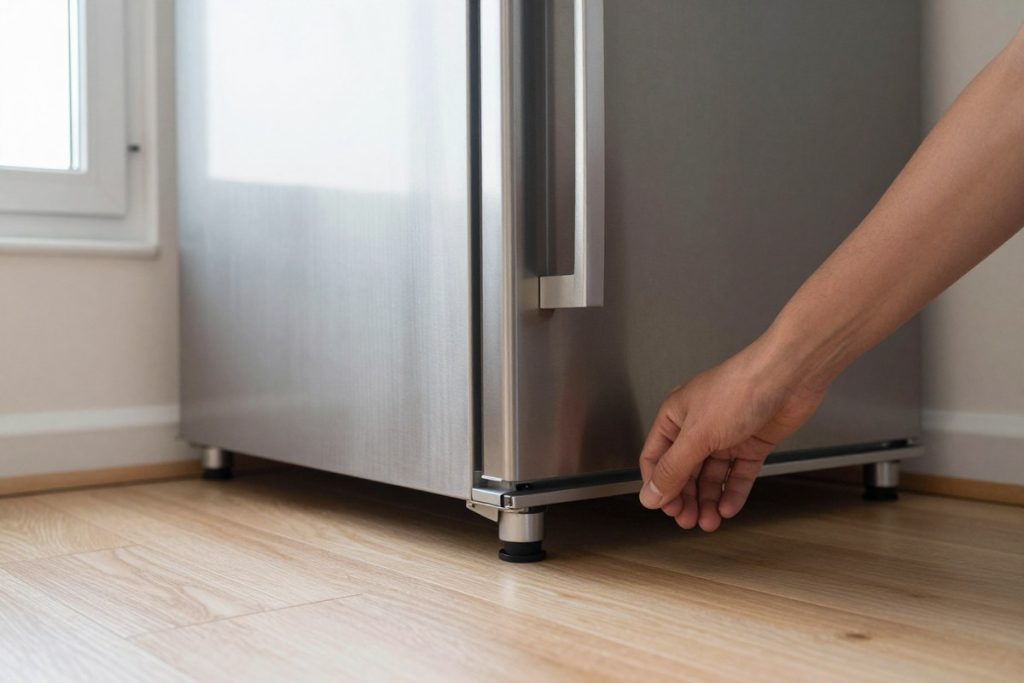
A freezer that rocks or leans vibrates against the floor and cabinets. Electrolux’s guides ask for a carpenter’s level, front to back and side to side, with all four feet touching the floor. The IQ-Touch guide adds a detail: set the front feet half a bubble higher, so the door closes easily when left halfway open.
The 2020 guide notes that the cabinet is heavy and recommends two people to level it, and that model also has an anti-tip bracket at the lower front. If leveling means tilting a full freezer or touching the bracket, leave it to a technician.
2. Keep the lower front clear and dust-free
The condenser fan pulls air through the lower front of the freezer. Electrolux says not to block the lower front, because sufficient air circulation is essential. Gently vacuum dust and pet hair from the grille area. A fan pulling against a clogged path works harder and sounds louder. Deeper coil cleaning behind panels is best left to a technician.
3. Look for loose items inside and behind
Open the door and make sure shelves, baskets, and packages aren’t touching the back wall or the fan cover. A frozen pizza box leaning just right can buzz every time the fan spins. Behind the freezer, check that the water line isn’t touching the wall or cabinet.
4. Check the ice maker has water
If the ice maker is on but the water is off or not connected, turn the ice maker off. That stops the chattering valve.
5. Listen during a defrost cycle
Hissing, sizzling, popping, and dripping during defrost are on Electrolux’s normal list. If the sound is unusually loud, note when it happens — it helps a technician diagnose faster.
If the noise drops or disappears after these steps, great. If it’s still disruptive, the problem is likely a fan motor, a mount, the ice maker, or the water valve.
When Loud Noises Need a Technician
Some noises won’t go away with leveling or cleaning. They point to parts that are wearing out or failing:
Fan motors going bad
A grinding or screeching evaporator or condenser fan usually means worn motor bearings or ice on the blades. A technician clears the cause and replaces the motor if needed.
Compressor problems
Knocking or a constant, much louder hum can signal loose mounts or internal wear. The technician checks the mounts first and evaluates the compressor if the noise continues.
Ice maker trouble
Loud clunks or scraping during harvest often come from a failing ejector or ice maker assembly. Replacing the assembly with a genuine OEM part usually restores quiet cycles.
Water valve chatter
A valve that chatters even with the water on and normal pressure usually needs replacement. Electrolux’s upright guides call for water pressure between 30 and 100 psi.
A technician listens on site, runs quick tests, and confirms the freezer runs quietly before leaving. Most noise repairs are done in one visit.
Still noisy? Our Electrolux freezer repair technicians handle fans, mounts, valves, and ice makers.
Conclusion
Many sounds from an Electrolux freezer are normal — gurgling refrigerant, popping metal, a modern compressor’s hum, the hiss of a defrost cycle. The ones worth acting on are new, constant, or getting louder. Start with what you can do safely: check that the freezer is level, keep the lower front clear, move anything touching the back wall, and turn off an ice maker that has no water. If the noise points to a worn fan, a loose mount, or a failing valve, a technician who knows these units makes the difference.
Our EPA 608 certified, background-checked technicians bring 15+ years in the field, use genuine OEM parts, and back repairs with a warranty of up to six months. We’re a family-owned, insured, independent repair company, not affiliated with Electrolux, and we offer same- or next-day appointments when the schedule allows. If the display is also showing a code, see our guide to Electrolux error code E2, or start at our Electrolux repair page.
FAQ
Is it normal for my Electrolux freezer to make some noise?
Yes. Electrolux lists compressor sound, popping when the compressor starts, gurgling refrigerant, fan air, and defrost hissing as normal. Grinding, rattling, knocking, or a sound that’s suddenly much louder is worth checking.
Why did my freezer get louder after I moved it?
Moving can throw off leveling or push the water line against the wall. Re-check the level front to back and side to side, make sure all four feet touch the floor, and check that nothing is touching the back.
Why does my Electrolux sound louder than my old freezer?
Electrolux explains that modern freezers use heavy-duty, high-efficiency compressors that run faster, and that hard floors and cabinets can make sounds more noticeable. A higher-pitched hum on a new freezer is often normal.
Does humid weather make freezer noise worse?
It can. Humid air that gets past a door that isn’t sealing well adds frost, and frost on the evaporator fan can make it scrape or whine. A level freezer with a good seal keeps that in check.
How can I tell if a noise is serious?
If the noise is new, constant, getting louder, or comes with a freezer that’s warmer than usual, have it checked. Hissing and popping during defrost are on Electrolux’s normal list.
My ice maker chatters loudly. What should I do?
Check that the water supply is on. Electrolux says an ice maker running without water can make the fill valve chatter loudly — turn the ice maker off until the water is connected. If it chatters with the water on, the valve may need replacing.