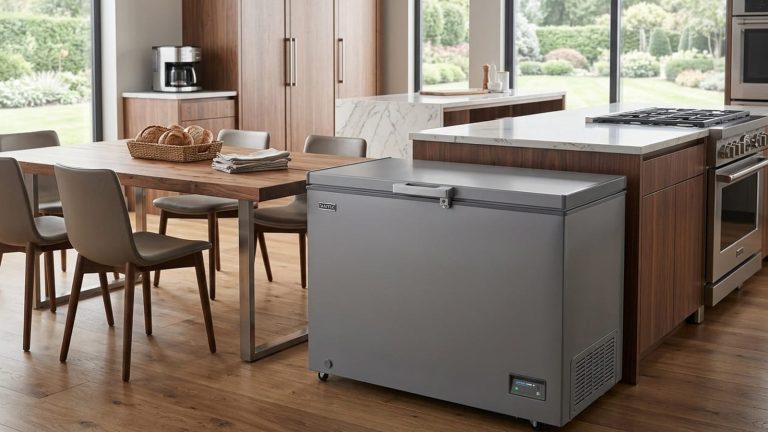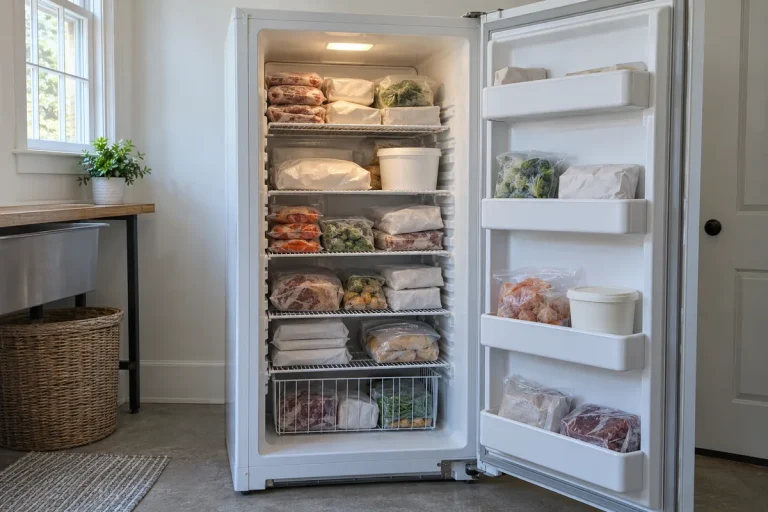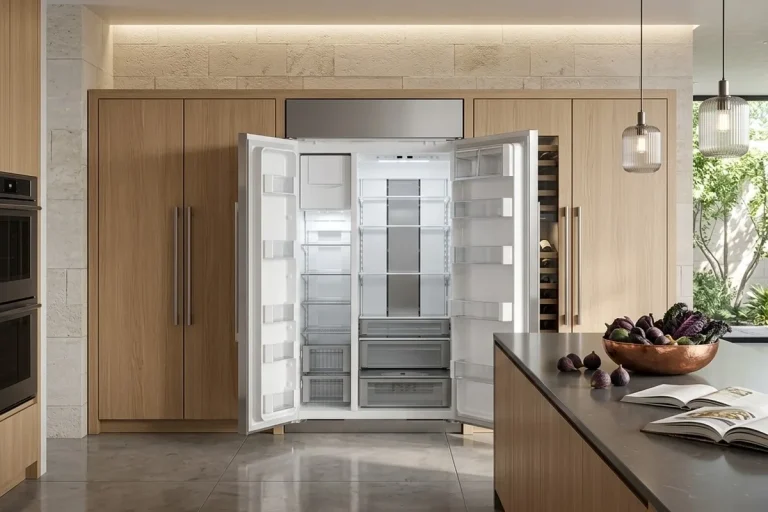
You step into the kitchen in socks and feel it before you see it: a cold, wet patch in front of the freezer. You wipe it up, and by evening it’s back. Water under your Electrolux freezer isn’t just a mess — it’s a sign something is backing up, overflowing or letting go, whether you have a standalone upright or the freezer drawer of a French-door refrigerator.
It’s unsettling, but it’s usually traceable. Leaks can range from harmless moisture during humid weather to steady drips that soak the floor, and they often show up in the sticky Georgia summer, when moisture plays a bigger role. The culprits? Usually a drain that’s backing up, a water line or fitting that’s seeping, or a door seal giving way — and ignoring them risks mold, warped floors and water near electrical parts.
This guide breaks down how leaks present (drip size, where the water shows up), the root causes, notes for a few popular models, the safe checks you can do yourself, and clear signals to call a technician before damage spreads.
Spot water where it shouldn’t be? Don’t just keep mopping — find the source. Our Electrolux freezer repair team offers same- or next-day visits across the Atlanta area.
How to Spot a Water Leak from Your Freezer
Water leaks from Electrolux freezers don’t always announce themselves with a flood — most start small and get worse if ignored. Where the water shows up says a lot:
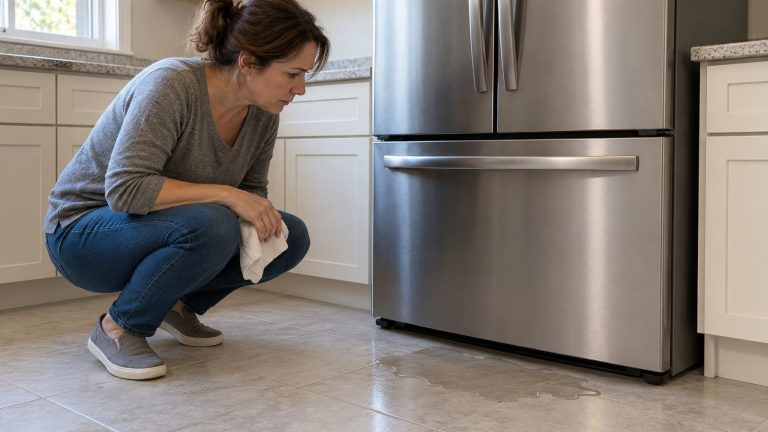
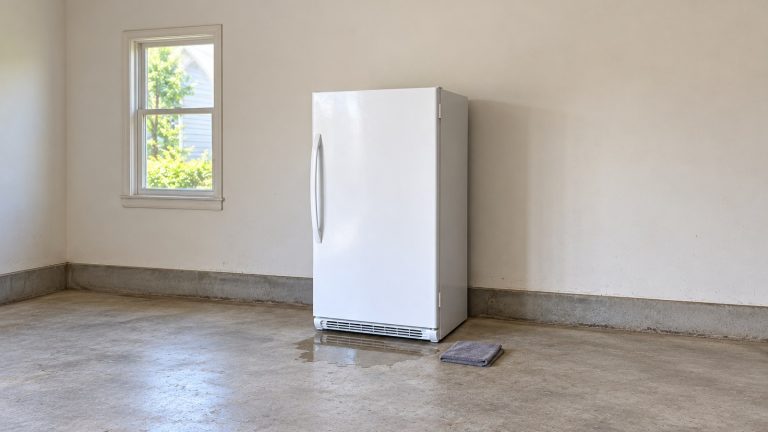
- Small puddle under the front — a little water collecting near the front feet. It can come from heavy condensation in humid weather or a drain that isn’t keeping up during defrost.
- Water trailing down the back — water running behind the unit onto the floor, often from the water supply line or its connection to the ice maker valve.
- Water or ice inside the freezer compartment — pooling on shelves or the bottom of the cabinet, often linked to a door seal letting in moist air, which then frosts and melts.
- Steady drip from the bottom — consistent drops from the base, pointing to a component in the water or drain system.
- Moisture on the outside of the door or between the doors — Electrolux notes this is normal in humid weather and should disappear when humidity drops. If it doesn’t, a door may be slightly open.
The amount and location tell you how urgent the fix is: a little condensation on a humid day is one thing, but a steady drip can damage a floor fast.
What’s normal: a frost-free Electrolux defrosts on its own. Electrolux’s refrigerator guide notes that you may hear water dripping into the drain pan during the defrost cycle, and a hissing or sizzling sound as water drips onto the defrost heater (the small heater that melts frost automatically). Water in the drain pan is part of how the appliance works. Water on your floor isn’t.
Common Causes Behind the Leak in Electrolux Freezers
Water doesn’t appear out of nowhere — it follows a path that’s gone wrong. These are the spots that most often turn a dry floor wet, along with what happens if they’re left alone.
Clogged defrost drain
Food particles or ice block the defrost drain, forcing meltwater to overflow inside the freezer or onto the floor. Over time, this leads to standing water, ice on the cabinet floor and potential mold.
Cracked, kinked or loose water line
On models with an ice maker, a cracked supply tube or a loose connection behind the unit drips steadily. Electrolux’s freezer guide is blunt about plastic: it recommends copper or braided stainless steel for the supply line, says plastic tubing “greatly increases the potential for water leaks,” and warns against self-piercing shutoff valves (quick-install valves that clamp onto a pipe). A line pinched when the unit is pushed back against the wall is another common one — Electrolux’s refrigerator guide asks you to make sure the supply line “does not kink when the refrigerator is pushed into place.”
Faulty water inlet valve
The water inlet valve — the valve that lets water into the ice maker — feeds it on every fill. A worn valve can seep even when it should be closed, leaving small, constant puddles at the back. Testing the valve means working behind a rear cover, so it’s a technician’s job.
Water filter not seated, or a damaged filter housing
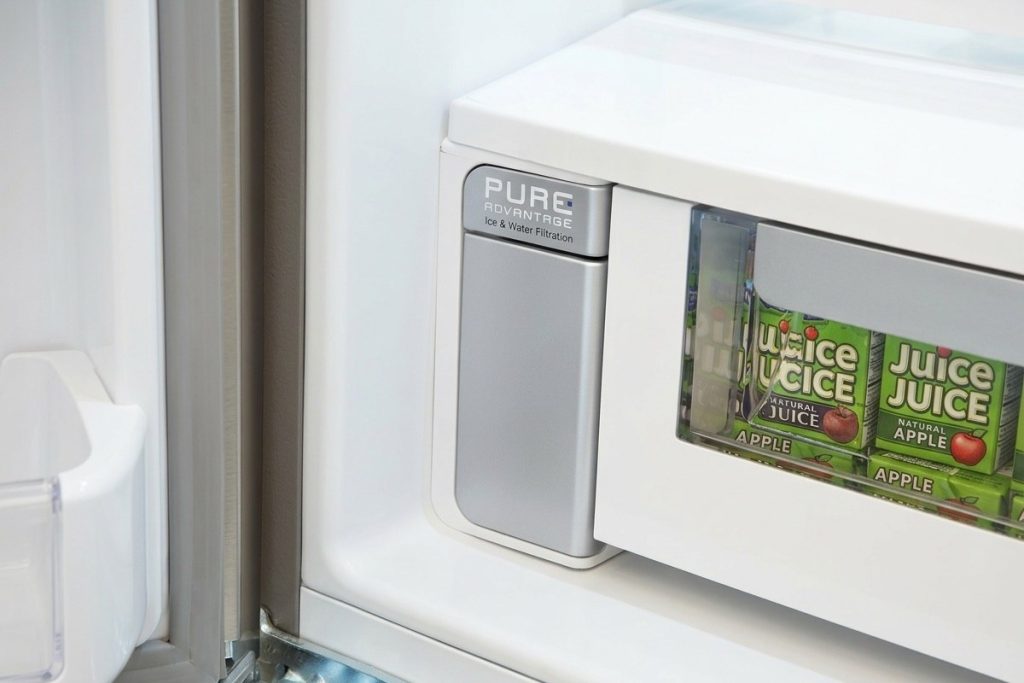
On refrigerator-freezers with a water filter, a filter that isn’t fully seated can leak at the housing. Electrolux’s refrigerator guide says to push a new filter in until it snaps into place and then check for leaks at the filter housing while you dispense water. A cracked housing is a part replacement.
Overflowing drain pan
The drain pan under the unit collects defrost water so it can evaporate. If drainage fails or the water arrives faster than it evaporates, it can spill onto the floor. The drain pan isn’t designed to be removed, so don’t try to pull it out and empty it.
Door seal letting in humid air
Warm, humid air that slips past a worn seal turns into frost, then into meltwater during defrost. Electrolux also notes that an unlevel cabinet can leave the door misaligned so it won’t “close or seal properly, causing cooling, frost or moisture problems.”
These issues get worse with humidity and frequent door openings. Ignoring them risks slippery floors, wood damage, or water near electrical parts.
Puddles appearing? Our Electrolux freezer repair technicians can trace the leak to its source.
Notes for Popular Electrolux Models
Leaks don’t hit every Electrolux freezer equally — models with ice makers, water filters and automatic defrost have more places for water to go. Here’s what to know about a few popular models:
- EI33AF80WS — current upright all-freezer with an ice maker. Its guide calls for a cold water line with normal household pressure (30 to 100 psi), a copper or braided stainless steel supply line at least 6 feet long so the unit can be moved out for cleaning, and no plastic tubing. It also says not to run the supply tubing where temperatures fall below freezing.
- EW28BS85KS8 — French-door refrigerator with a bottom freezer drawer, a water filter and an ice maker. Its guide covers the drain pan, the filter check described above, and a warning that matters if the refrigerator ever sits somewhere cold: if you store or move it in freezing temperatures, the water supply system must be completely drained, or it can leak when put back into service — and Electrolux asks you to contact a service representative to do that.
Knowing the model number before a visit helps the technician arrive with the right parts.
Safe Steps to Stop Minor Leaks Yourself
A small leak in your Electrolux freezer doesn’t always need a technician right away. These checks are safe, need no tools, and often tell you where the water is coming from.
Safety first: if water is near the plug, the outlet or the floor around them, don’t touch the plug while standing in water — switch off the circuit breaker first. Don’t take off back or bottom covers, and don’t reach behind or into a grille while the unit is running. If water is spraying from a line or fitting, call a plumber or a technician right away.
1. Wipe and identify the source
Dry everything thoroughly, inside and out. Lay dry paper towels in front of the unit and, where you can reach without moving it, along the sides and back edge, and check them after a few hours: water at the front points toward the drain or the drain pan; water at the back points toward the water line, the valve or the filter.
2. Check for ice inside
Look at the bottom of the freezer compartment. A sheet of ice there usually means meltwater isn’t draining. Don’t chip at it — clearing and testing a blocked drain belongs to a technician.
3. Inspect and clean the door seal
Look for tears or food bits in the gasket folds. Electrolux recommends cleaning gaskets with soap and water and a clean soft cloth — no bleach, abrasive cleaners or petroleum-based products. Then close the door on a strip of paper at several points; if it slides out easily, the seal isn’t gripping there. A torn or cracked gasket should be replaced.
4. Look for a kinked line
If the unit was moved or pushed back recently, the supply line may be pinched. Look without pulling the unit out: if you can see a sharp bend or a wet fitting, leave it alone and note it for the technician. Fittings and valves stay under house water pressure even when the freezer is off.
5. Check the filter (refrigerator-freezers)
If the leak started right after a filter change, the filter may not be seated. Follow your owner’s manual: Electrolux’s refrigerator guide says to push the filter in until it snaps into place, then dispense water and check the housing for leaks.
6. Keep the door closed and the unit level
A door that’s opened often or left ajar lets humid air in. If the cabinet rocks when you push on it, it needs leveling — Electrolux recommends two people, because the cabinet is heavy.
If water keeps coming, or it’s coming from the back of the unit, stop there and call a technician.
When to Bring in a Technician
Some leaks keep coming back or flow too heavily for home checks. These are the situations to call right away:
Water from the supply line, valve or filter housing
Steady drips from the water inlet valve, the filter housing or cracked tubing need the water supply shut off by a plumber or technician and the part replaced. Replacing plastic tubing with copper or braided stainless steel, as Electrolux recommends, is part of a lasting fix.
Ice or water inside that keeps coming back
Water or ice on the freezer floor that returns after you’ve dried it usually means a blocked or frozen defrost drain. Clearing it means reaching parts behind interior panels.
Water from under the unit
An overflowing or cracked drain pan, or a drain that empties beside the pan instead of into it — the pan isn’t removable, so this is a repair, not a cleanup.
Leaks tied to the ice maker or dispenser
Problems in the water line routing or valve that require checking pressure and flow.
Any sign of electrical risk
Water near wiring or the compressor area. Switch off the breaker and leave it to a technician.
Leak won’t quit? Trust our Electrolux freezer repair team — 15+ years of finding leaks at the source, with genuine OEM parts.
Why Homeowners Call Us
PRO Appliance Repair is a family-owned, insured team with 15+ years in appliance repair, including years of hands-on work on Electrolux freezers and refrigerators.
- EPA 608 certified, background-checked technicians — EPA 608 is the federal certification required to work with refrigerant.
- Genuine OEM parts for your Electrolux model.
- Our warranty covers parts and labor for up to six months.
- Same- or next-day service across the Atlanta area, most days.
And if a part doesn’t actually need replacing, we’ll tell you.
Conclusion
Water leaks from an Electrolux freezer are more common than you’d think, but they’re rarely the end of the appliance. Whether it’s a blocked drain, a worn valve feeding the ice maker, a filter that isn’t seated, or simple condensation from Georgia’s sticky air, most sources are straightforward to trace and fix.
Spotting the leak early — a slow drip or a sudden puddle — lets you act before floors warp, mold sets in, or water reaches electrical parts. The checks above help you find the source safely; when the water keeps coming from hidden lines or components, a technician with the right parts makes the difference between a quick fix and an ongoing mess.
Frequently Asked Questions
Why is water pooling under my freezer only during the summer?
Humidity. Electrolux notes that hot, humid weather increases frost buildup and sweating inside, and every door opening lets in moist air that becomes defrost water. A drain that’s partly blocked may keep up in winter and fall behind in summer. If the puddle keeps coming back, have the drain checked.
Is a little water normal after a defrost cycle?
Inside the drain pan, yes — Electrolux says you may hear water dripping into the pan during defrost. On the floor, no. Recurring water on the floor means the drain, the pan or a water connection needs a technician’s look.
My ice maker works fine but there’s water behind the unit — what’s leaking?
Most likely the supply line or a connection on it — especially after the unit was moved. Electrolux warns that plastic tubing greatly increases the potential for leaks and recommends copper or braided stainless steel. Don’t tighten fittings yourself; a technician will check the line, the connection and the inlet valve.
How do I know if the leak is from the water filter?
Timing is the clue: water that appears right after a filter change, or while you dispense water, points to the filter. Make sure it’s pushed in until it snaps into place, then dispense water and watch the housing. If it still leaks, the housing or the filter head needs replacing.
Can a bad door seal really cause water on the floor?
Yes. Warm, humid air gets in, turns into frost, and melts during defrost — and if drainage is slow, that extra water can overflow. A clean, undamaged gasket and a level cabinet keep the door sealing.
How soon can you come fix my Electrolux freezer leak in Atlanta?
Usually same- or next-day across the Atlanta area. Have the model and serial numbers ready and tell us where you see the water — front, back or inside. It helps our technician go straight to the likely source.
Disclaimer: PRO Appliance Repair is an independent repair company and is not affiliated with or endorsed by Electrolux AB. All trademarks belong to their respective owners.