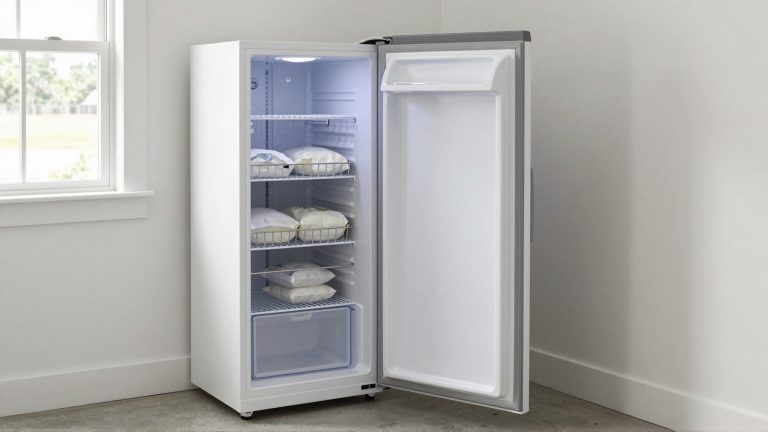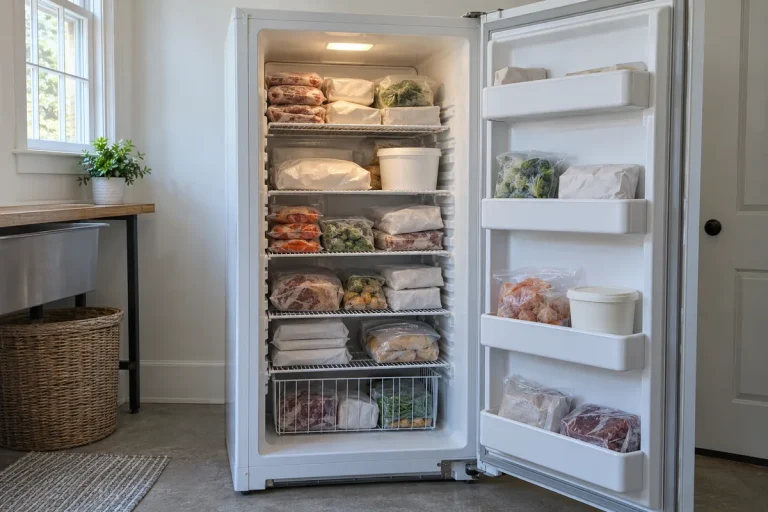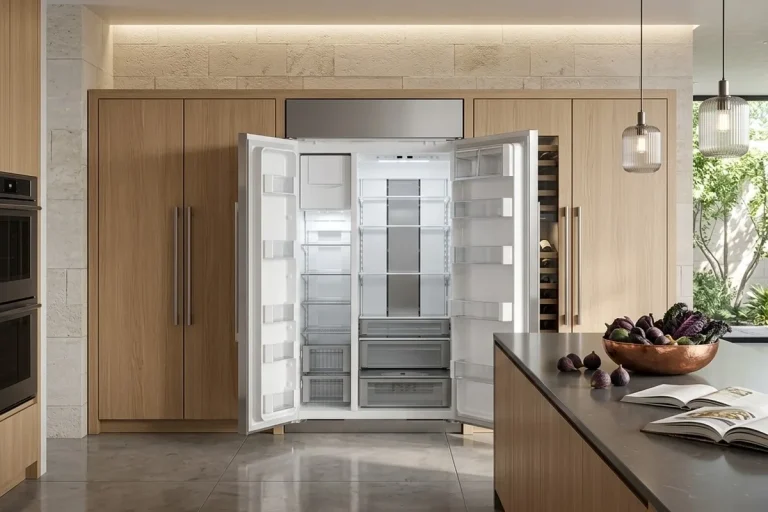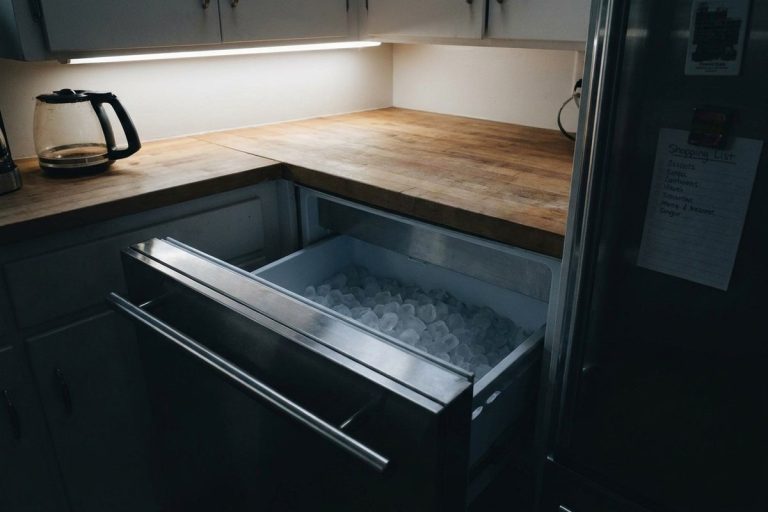

A freezer that isn’t freezing changes the way you use your kitchen right away.
You open the door expecting solid frost and firm packages. Instead, the ice cream is soft around the edges. Ice cubes are stuck together in a clump. Frozen vegetables bend instead of snapping. The freezer is running. It sounds normal. The results just aren’t there.
If you’re dealing with a Frigidaire freezer not freezing, here’s the distinction that matters most: cooling and freezing are not the same thing.
A freezer can still feel cold while failing to reach a proper freezing temperature. That gap — between cold and fully frozen — is where most of these problems begin.
In Frigidaire’s Gallery French door (FGHB) and side-by-side (FGSS) refrigerators, freezing performance usually slips gradually. It starts with lost efficiency. The freezer hovers above its target. Air circulates, but not strongly enough. Frost shows up in the wrong places. Food stays chilled, but not truly preserved.
At that stage, the problem is often very fixable. What decides the outcome is how quickly the cause is found — and whether the system keeps running under strain in the meantime.
Food softening and no time to troubleshoot? Our Frigidaire refrigerator repair team can find the cause and get your freezer back to temperature.
Cold Isn’t Frozen: What Proper Freezing Requires
A freezer can feel cold to your hand and still be failing.
For food to stay safely frozen, the compartment needs to hold about 0°F (−18°C). That’s Frigidaire’s suggested freezer setting, and its acceptable operating range for the freezer runs from −6°F to 6°F. At those temperatures, the water in food stays solid. Texture holds. Ice cubes stay separate. Meat keeps its structure.
Once the temperature drifts above that range — even a little — you start to see the signs:
- Ice cubes fuse together.
- Ice cream softens.
- Frost melts and refreezes unevenly.
- Moisture shows up inside packaging.
None of that means a total breakdown. It means the freezer is hovering above target.
In FGHB and FGSS models, freezing depends on three things happening consistently:
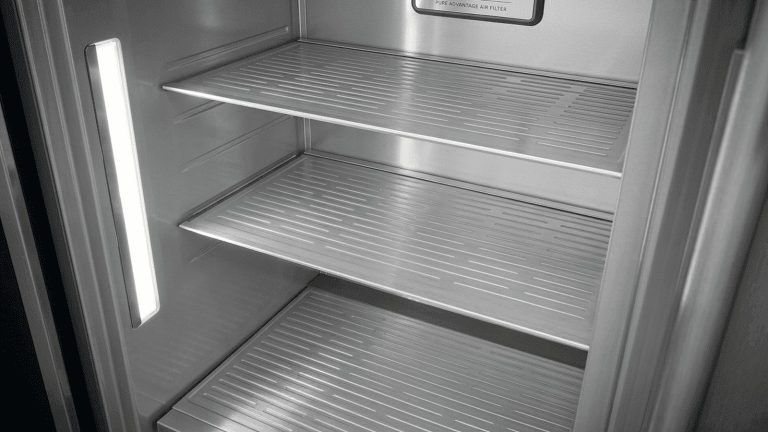
- Strong airflow inside the compartment
- Accurate temperature sensing
- Efficient heat removal from the system
If any one of those weakens, the freezer may keep running, but it won’t fully freeze. That distinction matters.
Before assuming a major failure, figure out whether you’re seeing a temporary wobble or a steady drift. Here’s a practical way to tell.
Quick Stability Check
Before you change settings or unplug anything, check the basics Frigidaire lists for a freezer that isn’t freezing:
- Is the freezer set to 0°F? That’s Frigidaire’s suggested setting.
- Has the door been opened a lot in the past 24 hours? Heavy door traffic and big grocery loads slow recovery.
- Was there a recent power interruption? Frigidaire says the unit needs 24 hours for the temperature to stabilize.
- Is the freezer overpacked? Frigidaire’s guidance is that food shouldn’t block the air vents, with space left around items for air to circulate.
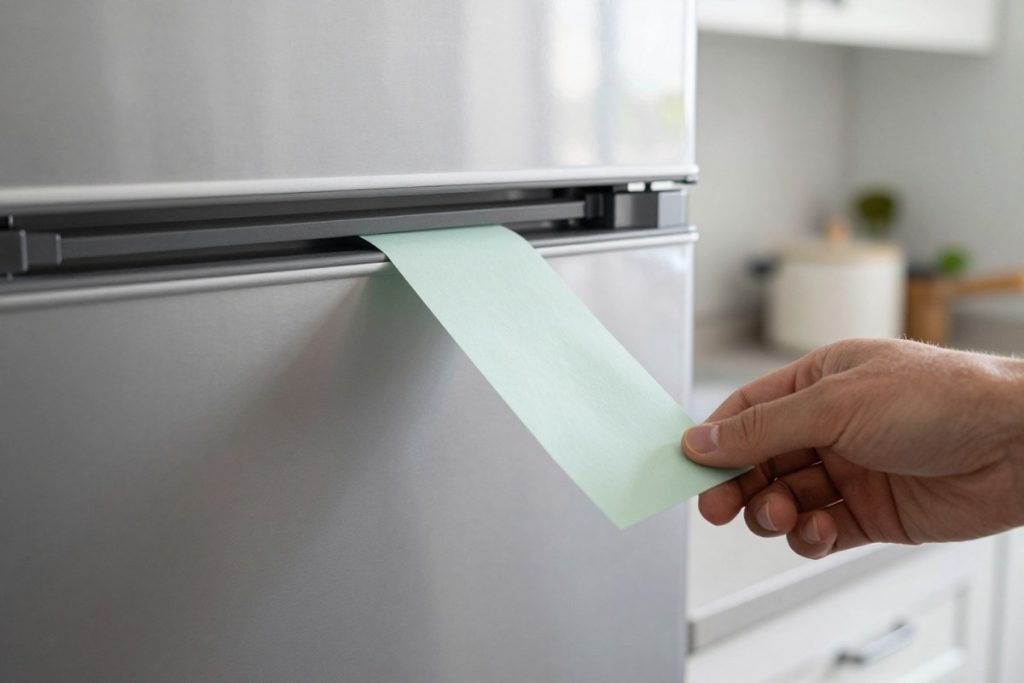
- Does the door pass the dollar bill test? Close the door on a dollar bill and tug. You should feel a bit of resistance. If it slides out easily, the seal isn’t holding.
- Where does it live? Frigidaire doesn’t recommend installing the unit where the temperature drops below 55°F — worth knowing for a garage or porch fridge.
If the freezer was recently adjusted or the power just came back, give it a full 24 hours.
If it’s still not freezing after that window, it’s no longer temporary. Frigidaire’s own advice at that point is to schedule service. That’s when you move from watching to diagnosing.
How Your Freezer Is Behaving
With a Frigidaire freezer not freezing, the symptoms follow recognizable patterns. The key is telling mild instability apart from a system-level decline.
Freezer Diagnostic Reference
| What you notice | What it usually means | Urgency | What to do next |
|---|---|---|---|
| Ice cream soft but the freezer still feels cold | Freezer hovering slightly above 0°F | Low–moderate | Confirm settings, check airflow and loading |
| Ice cubes clumped together | Temperature swinging up and down | Moderate | Check the door seal and internal vents |
| Frost building on the back interior wall | Airflow restriction or a defrost problem | Moderate | Clear blocked vents; book an evaluation if it keeps coming back |
| Freezer warm but refrigerator normal | Air distribution or evaporator fan problem | High | Professional diagnostic check recommended |
| Both freezer and fridge warming | System-wide cooling problem | High | Prompt service recommended |
| Clicking from the back, no recovery | Possible compressor strain | High | Stop adjusting settings; get a professional evaluation |
The urgency column isn’t meant to scare you — it reflects how fast each problem can grow.
Low–moderate issues usually come down to airflow or loading. High-urgency symptoms point to deeper mechanical strain.
If your freezer is still unstable after a full 24-hour stabilization period — especially in the high-urgency rows — waiting longer raises the risk of compressor damage. A precise diagnostic check protects the system and keeps you from paying for parts you don’t need.
FGHB vs. FGSS: Why Freezer Problems Show Up Differently
Frigidaire FGHB (French door) and FGSS (side-by-side) models work on the same refrigeration principle, but the freezer layout changes how trouble shows up.
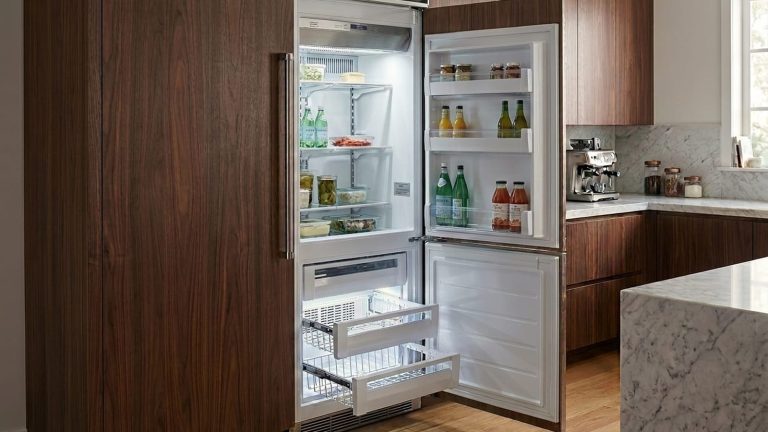
FGHB (French Door, Bottom Freezer)
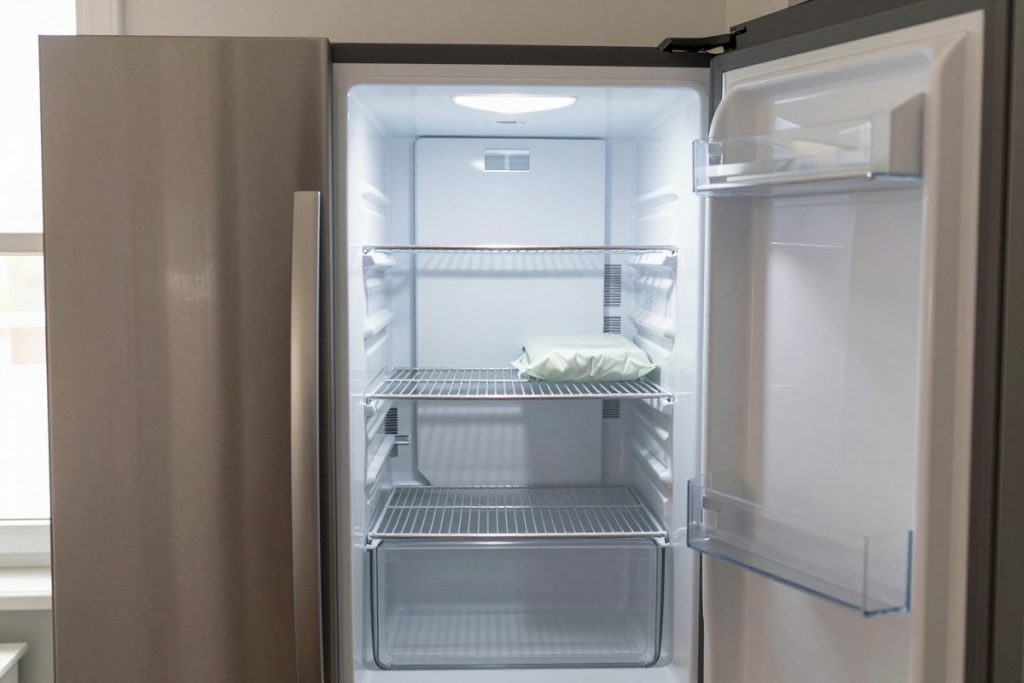
In FGHB models, the freezer is a lower drawer. Cold air works in a compact space, and circulation happens inside a tighter compartment.
When a freezer-not-freezing problem starts in these units, you’ll typically notice:
- Ice cream softening first
- Ice cubes clumping
- Frost forming unevenly along the back panel
- Items in one part of the drawer softening before others
Because the freezer is a self-contained drawer, airflow problems often create uneven freezing zones before a full failure.
If the freezer is warm but nothing has fully thawed, that usually points to airflow restriction or a sensor problem rather than an immediate compressor failure.
FGSS (Side-by-Side)
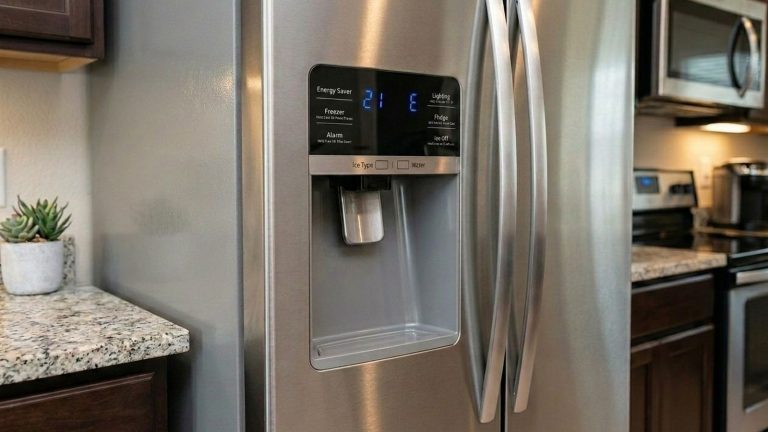
In FGSS models, the freezer takes up the entire left side. Air has to move through a tall, vertical space.
When freezing drops off in these units, the symptoms often look a little different:
- Upper freezer shelves soften first
- Ice maker output drops
- Frost may show up near the vents
- The refrigerator side may get unstable soon after
Because the freezer section is taller, a circulation weakness can affect several zones quickly.
If a warm freezer comes with an unstable refrigerator side, the problem is more likely system-wide.
Quick Comparison
| Symptom pattern | FGHB (bottom freezer) | FGSS (side-by-side) |
|---|---|---|
| First sign of trouble | Soft ice cream or uneven drawer freezing | Upper shelves warming first |
| Where frost appears | Back panel of the drawer | Near the upper vents |
| Airflow sensitivity | Compact, concentrated space | Depends on vertical air movement |
| Spillover to the fridge | Slower | Often sooner |
A bottom drawer freezing unevenly isn’t the same situation as a tall side-by-side losing its freeze from the top down.
When Model Differences Stop Mattering
If both the freezer and refrigerator are warming together, or the freezer still won’t recover after 24 hours at the right settings, the layout no longer matters much.
At that point, the problem is likely:
- Sealed-system strain
- Compressor performance decline
- Or a broader cooling problem
That’s when more dial-turning starts doing more harm than good. Colder settings just make a struggling system run longer.
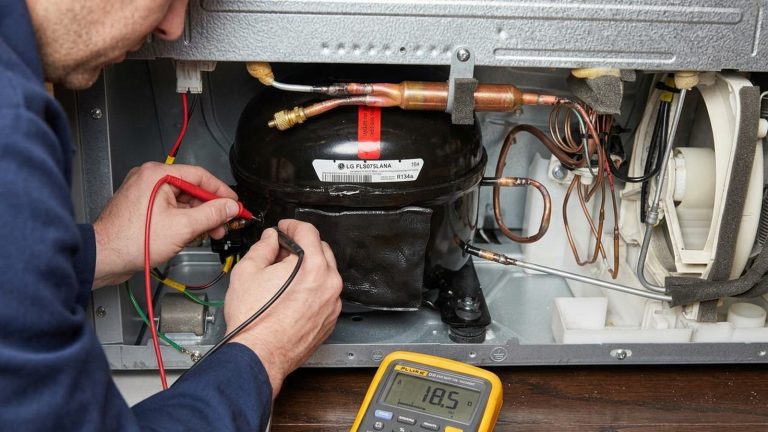
FGHB or FGSS freezer still unstable after the basic checks? The smartest next step is a professional diagnostic check. Our technicians test freezing performance at the component level and restore proper freezing before the strain turns into a major repair. We serve Atlanta and the surrounding Georgia area, with same- or next-day appointments available most days.
The Smart Owner Strategy to Keep Your Freezer Working Long-Term
Freezer performance usually weakens gradually. Smart owners catch that drift early.
Long-Term Freezer Stability Plan
| Strategy | What it involves | Why it matters |
|---|---|---|
| Seal and vent checks | Dollar bill test on the doors; keep vents clear of food | Stops small leaks and blockages before they affect freezing |
| Condenser care | Keep the condenser area and the vent cover at the back free of dust, following your manual; leave at least 1 inch from the wall | Helps the system release heat and eases the compressor’s workload |
| Sensible loading | Leave space around items so air can circulate | Keeps cold air reaching every shelf |
| Room check | Keep the unit out of spaces that drop below 55°F | Matches the conditions Frigidaire recommends |
| Diagnostic check | Component-level testing of airflow, sensors, and the sealed system | Confirms freezing efficiency before a failure develops |
| Early attention | Act on soft ice cream, clumped ice, or new frost patterns | Small fixes now prevent big repairs later |
This approach shifts freezer care from emergency repair to steady reliability. A freezer that reaches and holds 0°F is working the way it was designed to.
Final Thought
If your Frigidaire freezer isn’t freezing properly, the cause is mechanical, not mysterious.
Freezers lose performance for specific reasons: airflow restriction, a control problem, frost getting in the way, or system strain. Finding the cause early keeps the repair focused and keeps you from replacing parts you don’t need.
A freezer is designed to hold about 0°F. If it can’t, it needs an evaluation — not more adjustments.
When the free checks don’t fix it, our Frigidaire refrigerator repair technicians will find the exact cause. They’re EPA 608 certified and background-checked, they use genuine OEM parts, and our repairs come with a warranty of up to six months on parts and labor. We’re an independent repair company, not affiliated with Frigidaire.
FAQ
Why is my Frigidaire freezer not freezing but still running?
When the freezer runs but doesn’t freeze, the usual suspects are blocked vents, a weak evaporator fan, a frost buildup that’s choking airflow, or a temperature sensor or control problem. The compressor can keep running the whole time while the freezer never quite reaches 0°F. Start with the free checks — settings, vents, the door seal — then give it 24 hours.
What should the freezer temperature be for proper freezing?
Frigidaire’s suggested freezer setting is 0°F (−18°C), with an acceptable range of −6°F to 6°F. Above that, ice softens, food texture changes, and long-term storage suffers. If the freezer stays warm for more than 24 hours at the right setting, it needs a closer look.
Can dirty coils cause a freezer not to freeze?
Yes. Dirty condenser coils make it harder for the system to release heat. When heat doesn’t leave efficiently, freezing capacity drops and the compressor runs longer. Frigidaire notes that a vent cover clogged with dust chokes the airflow and makes the unit work harder. Unplug the refrigerator, follow your manual’s cleaning steps, and keep at least 1 inch of clearance from the wall.
Why are my ice cubes stuck together?
Clumped cubes usually mean the temperature is swinging — the cubes partly melt, then refreeze together. Frequent door openings, a weak door seal, or a freezer hovering above 0°F can all cause it. Run the dollar bill test and check that nothing is blocking the vents.
Is it safe to keep turning the freezer colder until it freezes?
Not as a fix. Check that it’s set to 0°F, then leave it alone for 24 hours. If the freezer can’t reach temperature at the right setting, a colder setting only makes a struggling system run longer — and adds wear to the compressor.
When is a professional diagnostic check necessary?
Book one if:
- The freezer stays unstable after you’ve confirmed the settings and waited 24 hours
- Frost keeps coming back
- Both the freezer and refrigerator start warming
- You hear clicking from the back and the freezer won’t recover
An accurate diagnosis prevents unnecessary part replacement and protects the sealed system from further damage.
Frigidaire is a registered trademark of its owner. We are an independent appliance repair company and are not affiliated with or endorsed by Frigidaire.