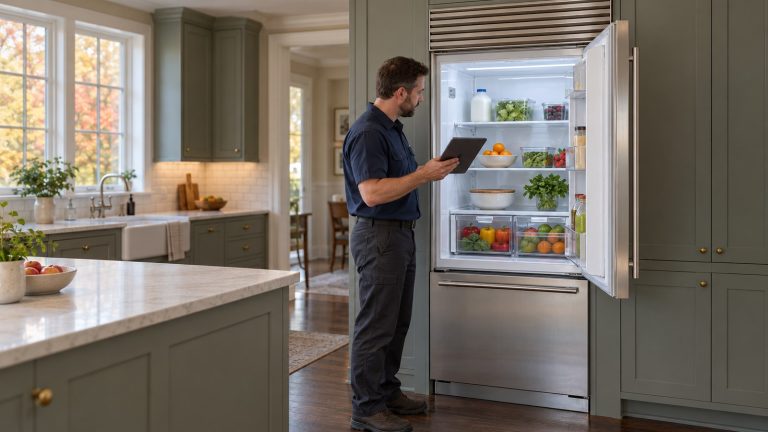

You notice the kickplate at the bottom of your Sub-Zero is gray with dust. The “Snooze/Refresh” reminder has been on the control panel for a week. Nothing is wrong yet — but you have a feeling this is how small problems start.
We believe owners should be able to take care of the basic upkeep of their Sub-Zero appliances without calling for service every time something small comes up. Some work will always require an experienced technician, but many routine tasks — cleaning the condenser, replacing the water filter and the air purification cartridge, inspecting gaskets and keeping the interior clean — are manageable for many people.
Before scheduling a service visit, it often makes sense to check whether the issue is related to regular maintenance. Taking care of those items yourself can save time, avoid unnecessary appointments, and help your appliance keep performing the way it should.
This article walks through the maintenance tasks Sub-Zero owners can reasonably do themselves — not as a substitute for professional service, but so you only need a service call when something has really failed. The steps follow Sub-Zero’s own care guide; they vary a little by model, so check your owner’s manual for details.
Already past simple upkeep? Our Sub-Zero refrigerator repair team offers same- or next-day visits across the Atlanta area.
Why Upkeep Matters
Sub-Zero refrigeration systems rely on steady airflow, controlled moisture and clean heat exchange. When those conditions are met, the appliance operates predictably. When they are compromised, the system compensates quietly, often for a long time, before a failure becomes visible.
From a repair perspective, preventive maintenance is not an extra. It is built into how the appliance is expected to be used. Sub-Zero’s own troubleshooting list for high temperatures, long run times or too much heat starts with one line: “Verify the condenser is clean.”
Most early problems on a well-built refrigerator are maintenance-related, not mechanical. Taking care of airflow, filtration and seals early prevents long-term strain on the system.
Cleaning the Condenser
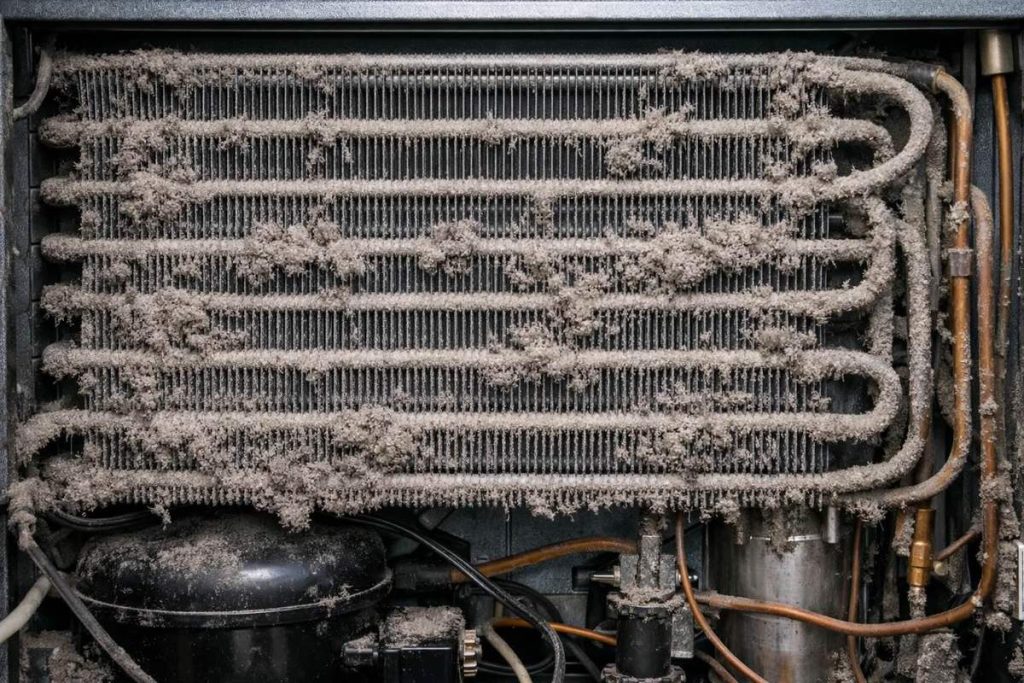
Among service technicians, cleaning the condenser (the coils that release heat, behind the vented kickplate at floor level) is regarded as the most important owner-level maintenance task. Dust, grease and pet hair reduce heat dissipation, forcing longer run cycles and higher operating temperatures.
The problem is not a sudden failure but gradual strain. Sub-Zero is direct about it: “Failure to clean the condenser could result in temperature loss, mechanical failure, or damage.”
How often: Sub-Zero’s Designer Series guide says to clean the condenser every six to twelve months, and its help page for undercounter models gives the same interval. In a home with pets or a lot of dust, lean toward the shorter end.
How Sub-Zero describes it (Designer Series):
- Turn power off at the control panel. If you’re unsure whether it’s off, switch off the circuit breaker too.
- Wear gloves — the condenser fins are sharp.
- Remove the kickplate by taking out its two mounting screws. Don’t remove any other panel.
- Use a soft bristle brush and a vacuum to remove dust and lint from the condenser.
- Put the kickplate back and turn the unit on.
It may take up to 24 hours for temperatures to return to normal after a condenser cleaning. If you’re not comfortable removing the kickplate, this is a quick job to have done on a service visit.
Keep the condenser on schedule. Our Sub-Zero refrigerator repair technicians can clean it and check the system at the same visit.
Water Filter Replacement and System Balance
Water filtration in a Sub-Zero affects more than taste. A filter that’s overdue restricts flow, and that often shows up later as slower or inconsistent ice production.
How often: in the Designer Series guide, the filter life cycle is about one year. “Snooze/Refresh” appears on the control panel when the filter needs replacing — the panel shows which part the reminder is for — and you can snooze it for 24 hours.
What Sub-Zero says to do: open the access door, turn the old filter a quarter turn counterclockwise and pull it out (a little water dripping is normal — wipe it up), remove the cap from the new filter, insert it and turn it clockwise, then follow the prompts on the control panel.
After a new filter: Sub-Zero says to clear air from the system. On dispenser models, dispense several glasses of water over about two minutes; on models without a dispenser, throw away the first two full containers of ice.
Ice-maker problems often show up before you notice any change in drinking water. Sub-Zero’s own ice troubleshooting list includes checking that the filter has been replaced within the last 12 months and installed properly.
Air Purification Cartridge and Food Preservation
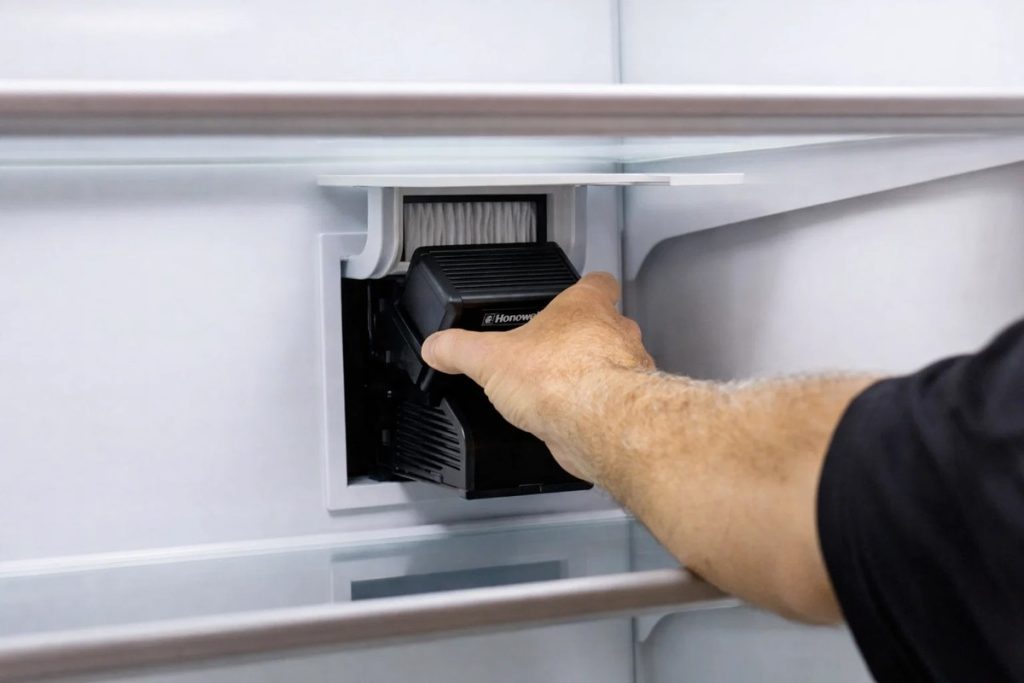
Sub-Zero’s air purification system works quietly in the background, which is why it’s easy to forget. According to Sub-Zero, it scrubs the air of ethylene (a gas many fruits and vegetables release that speeds up ripening and spoilage) and odors every 20 minutes.
When the cartridge reaches the end of its life, the system doesn’t fail loudly — it simply stops helping. Sub-Zero says the cartridge lasts approximately one year, and “Snooze/Refresh” appears on the control panel when it’s time.
What Sub-Zero says to do (Designer Series): slide the cover door on the back wall to the left, rotate the black cover down so the cartridge pops out, insert the new cartridge with the connector pointing down, close the cover, and follow the instructions on the control panel.
If the refrigerator starts to smell, replacing the cartridge is one of the first fixes Sub-Zero suggests, right after cleaning the unit.
Drain Problems and Interior Water
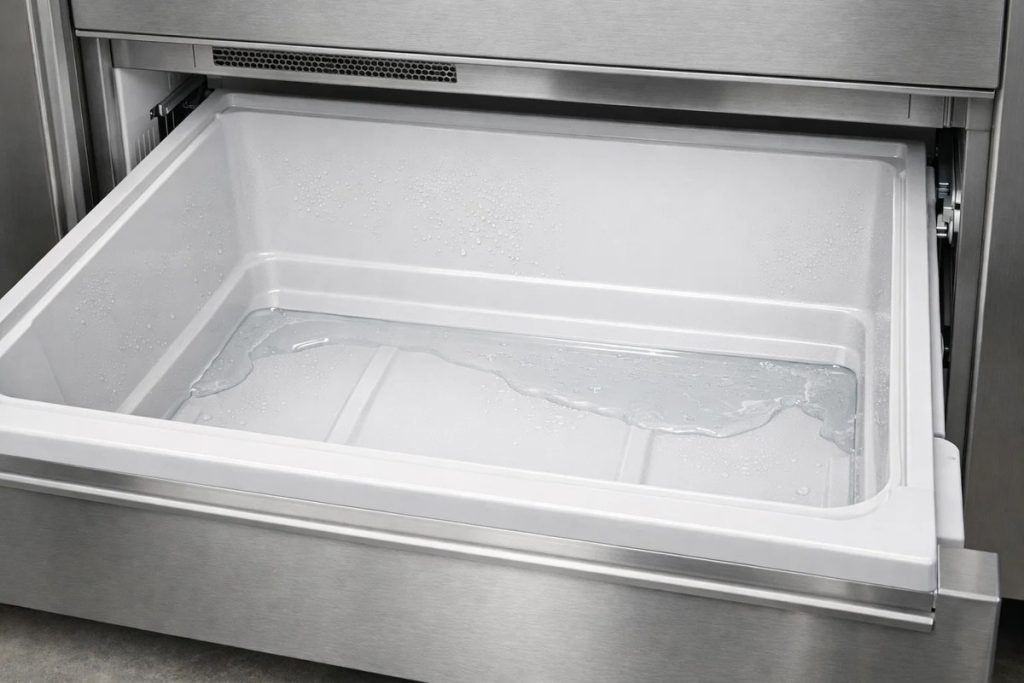
Interior water or ice is one of the clearer early signs that something needs attention. Sub-Zero’s help page on freezer frost lists a frozen freezer drain tube among the causes, along with a door left ajar, a torn gasket, a defrost element failure and an ice maker that isn’t filling properly.
Sub-Zero’s guides don’t give owners a procedure for clearing drains, so your part here is to notice and report:
- Look for water or ice under drawers, on shelves or on the bottom of the compartment.
- Check the door first. A door or drawer left ajar is the most common cause, and Sub-Zero notes that some condensation after the door has been open is normal — especially in warm climates.
- Call for service if it keeps coming back. A frozen or blocked drain tube needs a technician.
Door Gaskets
Door gaskets (the rubber seals around the doors) work every hour of the day and wear gradually. A compromised seal lets in moisture, increases frost and makes internal temperatures less stable.
Look over the gaskets when you clean, and check that doors and drawers close completely. Sub-Zero’s frost checklist includes verifying that the gasket has no rips or tears — and if it does, Sub-Zero says to have it serviced. Gasket neglect is rarely dramatic, but it adds up over time.
Cleaning the Inside
Keeping the interior clean is less about technique and more about restraint. Wash interior surfaces and removable parts with a mild solution of soap, water and baking soda, then rinse and dry thoroughly, keeping water off the lights and control panel.
Don’t use vinegar, rubbing alcohol or other alcohol-based cleaners on any interior surface. On the outside, use a nonabrasive stainless steel cleaner with a soft, lint-free cloth and follow the grain.
Frost Accumulation and Manual Defrosting
Sub-Zero refrigerators defrost on their own. When heavy frost appears, it usually points to airflow, a door that isn’t closing, or a seal problem rather than to something you should chip away.
Sub-Zero’s steps for frost or ice buildup start with the basics: verify the condenser is clean, the door or drawer is closing properly and hasn’t been left ajar, and the gasket has no rips or tears.
If icing is heavy, Sub-Zero says to turn the unit off and melt the ice with a hair dryer set on low and kept moving at all times, then wipe up the water. Before you start, keep the dryer and its cord away from the melt water and never leave it running unattended. Don’t use knives or scrapers — the evaporator and interior panels aren’t built for it. If frost comes back after that, it’s time for a technician.
What Owners Are Expected to Handle
Based on Sub-Zero’s guides, these are maintenance tasks you can do without a technician:
- Cleaning the condenser (every six to twelve months)
- Replacing the water filter (about once a year, or when prompted)
- Replacing the air purification cartridge (about once a year, or when prompted)
- Inspecting gaskets and checking that doors and drawers close
- Interior and exterior cleaning with the right products
- Watching for frost and water, and melting heavy ice the way Sub-Zero describes
Electrical diagnostics, sealed-system work, refrigerant handling, drain repairs and control board issues are jobs for a technician.
What Not to Ignore
Some issues are easy to dismiss because the refrigerator still runs. From a service perspective, these are early warning signs:
- The unit runs longer than it used to, even in mild weather
- One section cools differently than another
- Ice production slows or becomes inconsistent
- Frost appears where it normally hasn’t
- Water shows up under drawers or on shelves
These signs rarely correct themselves. When maintenance doesn’t change them, a professional diagnosis is usually the next step.
One more check before you book: if the temperature display shows 38 and 0 but the unit isn’t cooling, Sub-Zero says it may be in Showroom Mode — a store setting — and to contact Sub-Zero Customer Care.
Maintenance as Problem Prevention
Sub-Zero refrigerators aren’t low-maintenance appliances — they’re maintenance-dependent ones. When routine care is consistent, problems tend to be isolated and predictable. When it’s ignored, even a robust system wears faster than it should.
Why Homeowners Call Us
PRO Appliance Repair is a family-owned, insured team with 15+ years in appliance repair, including years of hands-on work on Sub-Zero refrigerators.
- EPA 608 certified, background-checked technicians — EPA 608 is the federal certification required to work with refrigerant.
- Genuine OEM parts (made by the original manufacturer) for your Sub-Zero model.
- Our warranty covers parts and labor for up to 12 months.
- Same- or next-day service across the Atlanta area, most days.
And if a part doesn’t actually need replacing, we’ll tell you.
Bottom Line
Most Sub-Zero issues don’t start as breakdowns. They start as small changes: longer run times, uneven cooling, ice that isn’t quite right. Routine maintenance can often correct those. When it doesn’t, guessing or repeated do-it-yourself attempts usually make things worse — that’s when it makes sense to have the unit checked properly before the problem grows.
Frequently Asked Questions
How often should I do Sub-Zero maintenance?
Use Sub-Zero’s intervals: clean the condenser every six to twelve months, and replace the water filter and the air purification cartridge about once a year, or when “Snooze/Refresh” appears. Check gaskets and wipe up spills whenever you clean.
Can do-it-yourself maintenance replace professional service?
No. Maintenance keeps the system healthy and makes preventable failures less likely, but it doesn’t replace a diagnosis or a repair when something has actually failed.
Is condenser cleaning really that important?
Yes. It’s the first item on Sub-Zero’s troubleshooting list for high temperatures and long run times, and Sub-Zero warns that skipping it can cause temperature loss, mechanical failure or damage.
What happens if I delay replacing the water filter?
A clogged filter restricts water flow, which can slow ice production. Sub-Zero’s ice checklist asks you to confirm the filter has been replaced within the last 12 months — and after any new filter, to clear the air from the system before judging the ice.
Can I clear the drain myself?
Sub-Zero’s guides don’t include a drain-clearing step for owners. Check that the door or drawer isn’t being left ajar and that the gasket is intact; if water or ice keeps coming back, a frozen or blocked drain tube needs a technician.
When should I call a professional?
If you notice temperature swings, repeated codes or messages, unusual noise, or frost and water that return after maintenance, it’s time for professional service. Have the model and serial numbers ready — they’re on the product rating plate.
Disclaimer: PRO Appliance Repair is an independent repair company and is not affiliated with or endorsed by Sub-Zero Group, Inc. All trademarks belong to their respective owners.