
A refrigerator that’s not cooling is one of the most frustrating and urgent appliance problems a homeowner can face. It puts your food at immediate risk of spoiling, and it can signal a repair that seems daunting. Before you panic, know that many refrigerator cooling problems have simple causes you can check yourself.
This guide walks you through the most common reasons a fridge stops cooling, from quick fixes like the temperature setting to more involved tasks like cleaning the condenser. We’ll keep it practical and safe, and we’ll point out which steps belong to a technician.
Prefer to hand it to a pro? Book refrigerator repair — we offer same- or next-day appointments.
First Steps: What to Check Before You Start
Before diving into detailed refrigerator troubleshooting, rule out the common, easy issues. If you’re wondering “why is my fridge warm?”, these checks might solve it in minutes:
- Check the power. Make sure the plug is pushed firmly into the outlet and the circuit breaker hasn’t tripped. If the interior light doesn’t come on, start here.
- Verify the setting. Someone may have bumped the control. Manufacturers’ defaults are close to each other: LG’s French door manual lists 37°F for the refrigerator and 0°F for the freezer, and Sub-Zero recommends 38°F and 0°F. On a numbered dial, the right number depends on the brand: LG says its top-freezer models ship at the middle setting (3), where a higher number is colder, while Sub-Zero recommends 4 to 6 on its dial models. Check your manual rather than guessing.
- Rule out demo or showroom mode. A refrigerator set up for a store display can light up and show temperatures without cooling. LG’s top-freezer manual describes a Demo Mode, and Sub-Zero says a unit showing 38° and 0° but not cooling may be in showroom mode.
- Allow time to cool. After installation, a setting change, a defrost, or a power outage, give it time. LG and Sub-Zero both say to allow 24 hours for the temperature to settle.
Safety First: Unplug Your Refrigerator
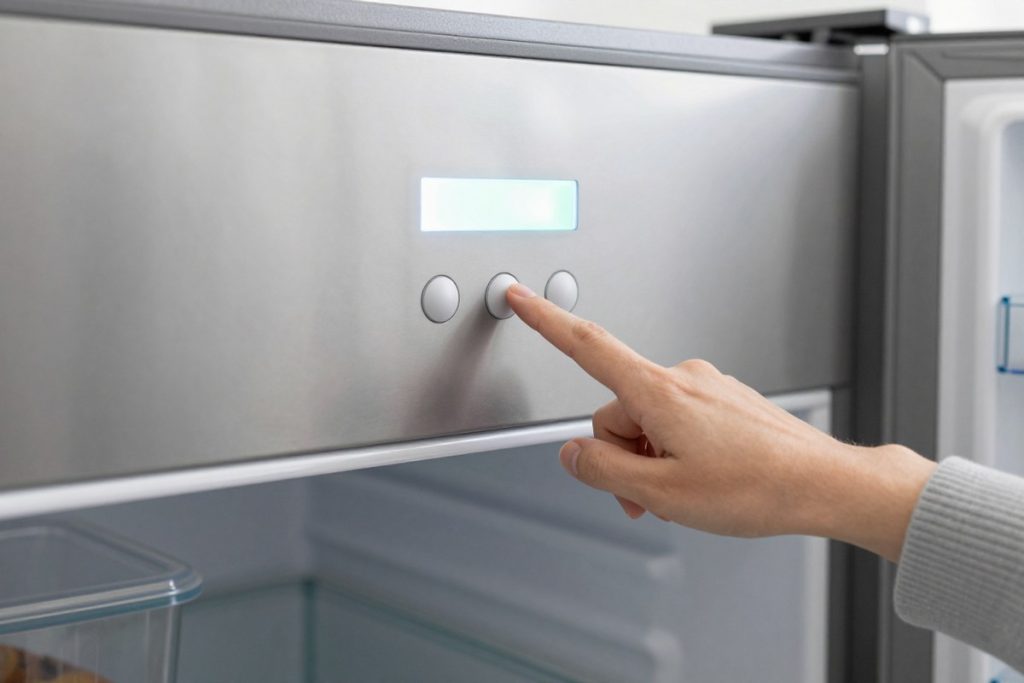
Before you clean or inspect anything beyond the settings, unplug the refrigerator or switch off its circuit. LG’s manuals tell owners to unplug or disconnect power before cleaning.
This prevents electric shock and protects the appliance’s parts while you work. It’s the first step for any safe DIY appliance check — and the reason we never recommend opening electrical compartments yourself.
How to Read the Signs: What Your Fridge Is Telling You
A warm refrigerator usually leaves clues, and careful observation is the first step in any refrigerator troubleshooting process. Pay attention to three things:
- Which part is warm. A cold freezer with a warm refrigerator points to air not moving between them. Both sections warm points to the cooling system itself.
- What you hear. Silence, a steady hum, or clicking every few minutes each narrow the list. Some sounds are normal: Sub-Zero says its variable-speed compressors always start at high speed, may whine, and slow down after about five minutes.
- What you see. Frost on the back wall, water under the crisper drawers, or a door that doesn’t close on its own each point to different causes.
Write down what you notice. It helps you check the right thing first, and it helps a technician diagnose faster if you call.
9 Common Reasons Why Your Refrigerator Is Not Cooling
When your fridge stops cooling, it’s easy to imagine the worst — but the cause is often simpler. Here are the most common culprits, from simple to complex.
1. Dirty Condenser Coils
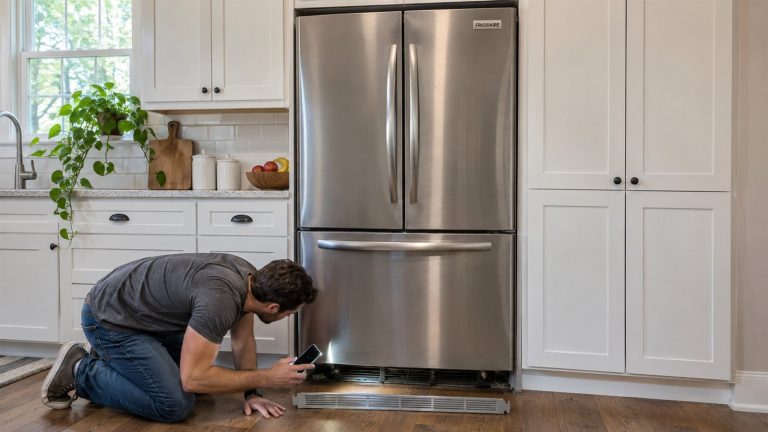
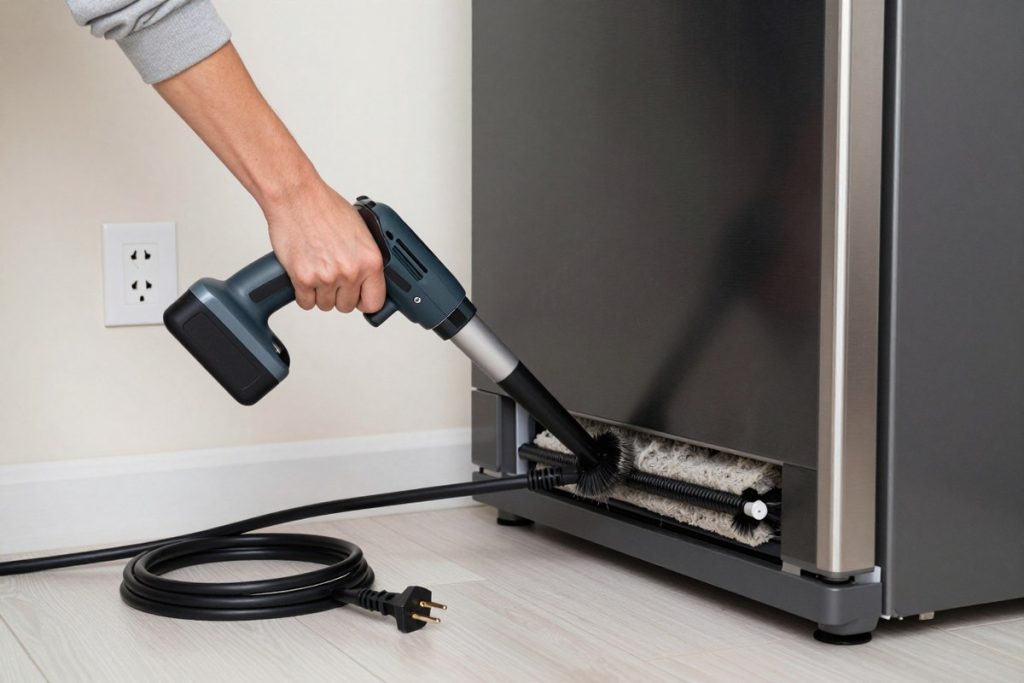
Think of the condenser as your refrigerator’s lungs — it releases the heat removed from inside. When it’s coated with dust and pet hair, the compressor works harder and longer, and cooling suffers. Depending on the model, the condenser is on the back or behind a front grille at the bottom or top. Sub-Zero warns that failing to clean it can cause temperature loss or mechanical failure. Some manufacturers limit what owners should do: LG, for example, says to clean the condenser cover and vents and not to remove the panel covering the coils.
2. Faulty or Dirty Door Seals
The gaskets around the door keep cold air in and warm air out. Over time they can crack, stiffen, or get dirty. When seals fail, warm room air sneaks in, the compressor runs constantly, and the fridge never gets properly cold. Clean them gently: Frigidaire says to wipe gaskets with soap and water and warns against cleaners containing petroleum products, and LG recommends a mild detergent in warm water.
3. Clogged Defrost Drain
During automatic defrost, melted frost runs through a drain to a pan under the unit. If the drain clogs, water backs up and freezes, ice builds on the back wall, and airflow drops. You may see water under the crisper drawers or frost where it shouldn’t be. How to clear it depends on the model: on many Sub-Zero built-in models, Sub-Zero says a clogged drain tube requires service to clear.
4. Faulty Evaporator Fan
This fan moves cold air across the evaporator and into the refrigerator section. When it fails, you’ll typically notice the freezer is still cold but the fridge is warm. The fan can fail from worn motor bearings, ice blocking the blades, or electrical problems, and you may hear unusual noises before it stops.
5. Broken Condenser Fan
On many refrigerators, a fan near the compressor cools the condenser and compressor. If it stops, they overheat, and the system struggles or shuts off to protect itself. This fan often fails because of obstructed blades, worn bearings, or electrical problems.
6. Malfunctioning Start Relay
On many standard compressors, the start relay helps the compressor get going. When it fails, the compressor may hum but not start, or you may hear clicking every few minutes. It’s an electrical part on the compressor, so testing and replacing it is a job for a technician.
7. Failed Compressor
The compressor is the heart of the refrigeration system, circulating refrigerant. When it fails, cooling stops completely. Compressors typically fail from age, electrical problems, or strain from other issues like a dirty condenser.
8. Refrigerant Leak
Your refrigerator relies on a precise amount of refrigerant. Even a small leak reduces cooling. Refrigerators use sealed systems, so any leak means a breach that needs professional attention. Leaks often develop at connection points or from corrosion, and handling refrigerant requires EPA 608 certification.
9. Electronic Control Issues
Today’s refrigerators are run by electronics. When the temperature sensors (thermistors) or the control board malfunction, the fridge may not know when to cool or how cold to get. That causes erratic temperatures, cooling cycles that don’t start, or complete shutdowns.
Not sure what’s causing it? Our technicians can pinpoint the issue — schedule refrigerator repair and get back to worry-free cooling.
How to Fix a Refrigerator That’s Not Cooling
Start from the top and work down — many issues are simpler than they seem.
| Issue | Quick Diagnosis | What to Do |
|---|---|---|
| Power problems | Interior light doesn’t come on | Push the plug in firmly, check the breaker, test the outlet with another device |
| Temperature setting | Display shows Off, or the setting is too warm | Set it to your manual’s recommended setting (often 37–38°F and 0°F) and wait 24 hours |
| Demo or showroom mode | Lights and display work, no cooling | Turn the mode off as your manual describes, or call the manufacturer’s customer care |
| Dirty condenser | Warm air around the fridge, dusty coils or vents | Unplug, then vacuum gently as your manual describes; don’t remove panels your manual says to leave in place |
| Faulty door seals | Gasket torn, stiff, or not sealing | Clean with soap and warm water; replace if cracked or torn |
| Clogged defrost drain | Water under the crisper drawers, ice on the back wall | Clear it only if your manual shows how; otherwise call for service |
| Evaporator fan failure | Freezer cold, fridge warm, no fan sound | A technician diagnoses and replaces the fan |
| Condenser fan issues | Fridge warm, fan near the compressor not spinning | Unplug and check for obstructions you can see; motor replacement is for a technician |
| Start relay problems | Compressor hums but doesn’t start; clicking | Don’t open the compressor’s electrical cover — call for service |
| Compressor failure | Everything warm; compressor silent or humming constantly | Professional diagnosis needed |
Rather leave it to the experts? Our technicians diagnose and fix cooling problems and offer same- or next-day appointments.
What Affects the Cost of Warm Fridge Repair
Repair cost depends on what actually failed. Cleaning a condenser or replacing a door gasket is usually a smaller job than replacing a fan motor, and a control board, a compressor, or a refrigerant leak is the most involved. Your refrigerator’s brand, age, and how hard the part is to reach also matter.
That’s why we diagnose first and give you a clear, upfront quote before any work begins — no surprises. If your refrigerator is still under the manufacturer’s warranty, check that first; for example, Sub-Zero’s residential warranty covers parts and labor for two years.
When to Call a Professional to Fix a Refrigerator Not Cooling
Many troubleshooting steps are DIY-friendly, but some problems need expert hands. Electrical parts and sealed refrigerant systems can be dangerous. It’s time to call if:
- the compressor hums but doesn’t start, or stays completely silent;
- you notice electrical smells, burning odors, or visible wiring damage;
- there’s evidence of a refrigerant leak, like oily spots or hissing;
- a fan isn’t spinning even with nothing blocking it;
- the same problem keeps coming back after temporary fixes;
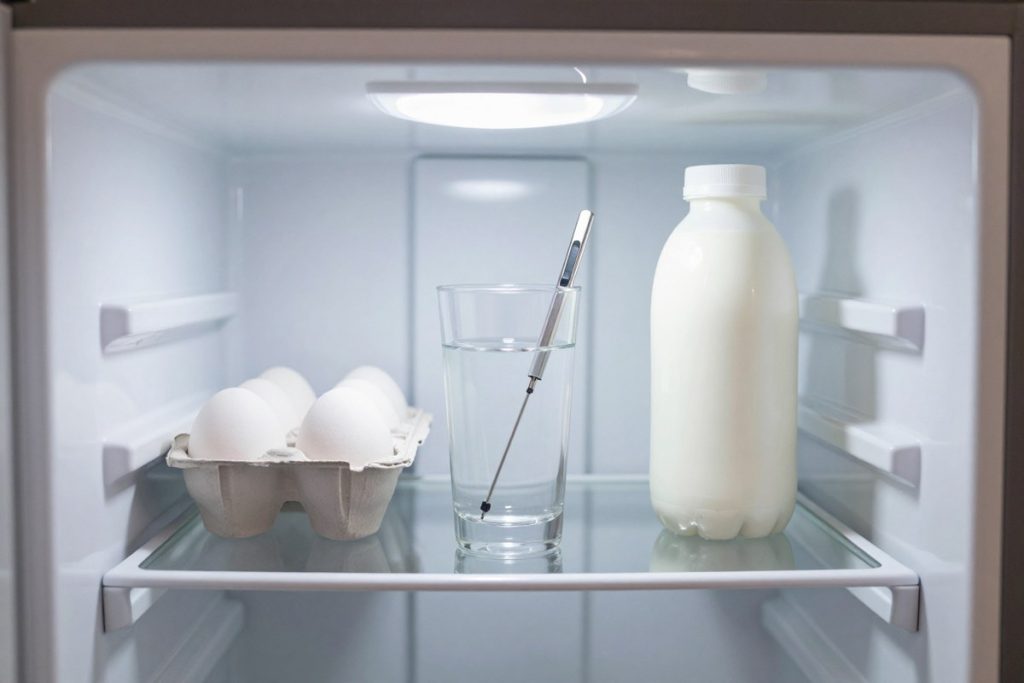
- the refrigerator is above 40°F — the FDA’s guideline is to keep refrigerated food at 40°F or below, so move perishables first;
- you feel uncomfortable with any step.
Repairs attempted without training can create safety hazards and cost more later.
Conclusion: From Warm to Wonderful
A refrigerator not cooling can feel overwhelming, but the solution is often simpler than you’d think. Whether the cause is a dusty condenser, a faulty seal, or a failed part, the path to a fix follows a clear order.
Start simple: power, settings, demo mode, the condenser, and the door seals — then give it 24 hours. For everything beyond that, our technicians are EPA 608 certified and background-checked, we’re family owned and insured, we use genuine OEM parts, and our repairs come with a warranty of up to six months on parts and labor (up to 12 months on Sub-Zero).
FAQ
Why is my freezer cold but my refrigerator warm?
That usually means cold air isn’t moving into the refrigerator section — often the evaporator fan, frost blocking the airflow, or a control problem. Check that nothing blocks the vents inside, then call a technician if it doesn’t recover in a day.
What temperature should my refrigerator be?
Follow your manual. LG lists 37°F for the refrigerator and 0°F for the freezer as defaults on its French door models, and Sub-Zero recommends 38°F and 0°F. After any change, wait 24 hours before adjusting again.
How long does a new refrigerator take to get cold?
Give it about 24 hours. LG and Sub-Zero both tell owners to allow 24 hours for a new setting to take effect.
Can I clean the condenser myself?
Usually yes, with the power off. Use a soft brush and vacuum as your manual describes. Some manufacturers, like LG, say to clean only the cover and vents and not to remove the panel over the coils.
My compressor clicks but the fridge stays warm. What is it?
Clicking every few minutes with no cooling often points to the start relay, the compressor, or the controls. These are electrical parts, so don’t open the compressor’s cover. Call for service.
How warm is too warm for the food inside?
The FDA’s guideline is to keep refrigerated food at 40°F or below. If the refrigerator stays warmer than that, move perishables to another cold place and call for repair.