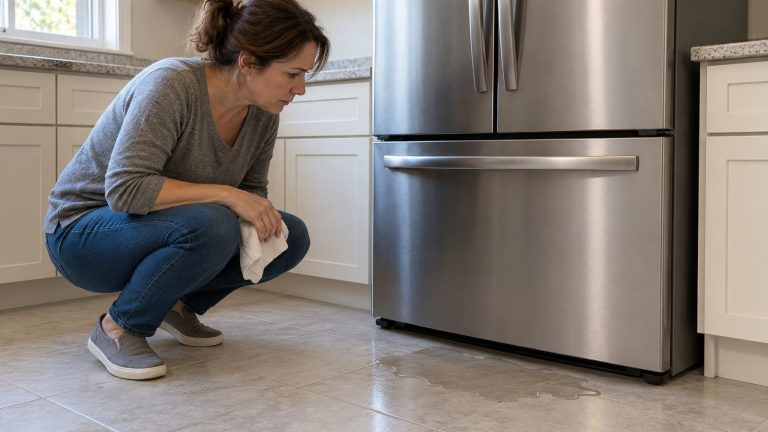
There’s a sinking feeling when you open the freezer and find your ice cream soft, your frozen vegetables starting to thaw, or that bag of chicken looking suspiciously wet around the edges. Every hour your GE freezer runs too warm, food safety drops, the compressor works harder, and a small problem has more time to become a bigger one. Our technicians see this every week across metro Atlanta: what starts as “it’s only a little soft” can end up as a repair that would have been simpler if it had been caught early.
GE refrigerators with a freezer compartment, especially the popular French-door models with a bottom freezer drawer and the bottom-freezer models, are reliable when they’re set up and used the way GE describes. Summer heat, humidity, frequent door openings and a crowded freezer can still push them past what they can recover from. In this guide, we’ll walk you through how these freezers make cold, the most common reasons they stop freezing properly, the signs to catch early, the simple things you can check at home, and when it’s time to call before you lose a whole freezer’s worth of groceries.
Not freezing properly? For fast, accurate GE freezer repair across metro Atlanta, reach out to our team. We’ll find the cause and get it freezing solid again.
How Your GE Freezer Makes Cold: A 60-Second Briefing
Let’s quickly walk through how a GE freezer actually keeps things frozen. It’s simpler than it sounds, and knowing the basics helps you spot trouble early.
The heart of the unit is the sealed system: a closed loop of tubing filled with refrigerant. The compressor (the motor near the back at the bottom) squeezes the refrigerant, making it hot and high-pressure. It then flows to the condenser, releases heat, cools down, and turns into a liquid.
That liquid moves to the evaporator coils behind the freezer wall. There, it expands, absorbs heat from the air, and turns back into gas, pulling warmth out of your food and keeping everything frozen.
Key players that keep this loop working right:
- Evaporator fan motor pushes cold air from the coils through the freezer and, on most models, on into the fresh food side. If the fan is blocked or stops, cold air just sits in one spot.
- Defrost system is a heater and controls that melt frost off the evaporator coils on a schedule the refrigerator decides for itself. GE describes adaptive defrost on these models rather than a fixed clock, and a defrost cycle that takes about 30 minutes. If defrost stops working, ice builds up on the coils and blocks airflow.
- Temperature sensors (thermistors) tell the control how cold each area is. When a sensor reads wrong, the control makes the wrong decisions about cooling and defrost.
Next, let’s look at how “not freezing properly” actually shows up in real life.
The Symptom Checker: What “Not Freezing” Really Looks Like
When a GE freezer isn’t freezing properly, it doesn’t always go from “perfect” to “room temperature” in one dramatic step. Use this quick checker to match what you’re experiencing.
First, get a real number. GE presets the freezer at 0°F and the refrigerator at 37°F, and on many models the display shows the set temperature, not a measurement. Put an appliance thermometer in the freezer, between packages, and read it after the door has been closed for a while.
| Scenario | What You Notice | Urgency | Likely First Suspect |
|---|---|---|---|
| Completely not freezing | Food is soft or thawed, ice cream is liquid, meat packages are squishy, freezer feels close to room temperature | Emergency: protect the food and call | Cooling system turned off, the refrigerator in showroom mode, a failed fan or compressor, or a sealed system problem |
| Weakly freezing | Frozen items are cold but not rock-hard, ice cream is scoopable but grainy, packages have frost crystals | Act soon | A door or drawer that isn’t sealing, blocked airflow, heavy frost on the coils, or a weak evaporator fan |
| Cycles between cold and warm | The thermometer reads well below freezing at some times and noticeably warmer at others; food has ice crystals and soft spots | Urgent | A defrost problem, a sensor reading wrong, or frequent long door openings |
| One section warm, rest okay | The front of the drawer is softer than the back, or one basket is colder than the other | Check soon | Packages blocking the air openings, a basket not seated in its slides, or partial fan trouble |
If your freezer matches “completely not freezing,” or the temperature keeps swinging, don’t wait. Keep the doors closed, protect the food, and call.
The Root Cause Investigation: Why Your GE Freezer Is Losing Its Cool
Once you’ve matched your symptoms, the next step is figuring out what’s actually going wrong. These are the causes we see most often on GE freezers, roughly in the order we check them.
- Settings, power and modes. It sounds too simple, but GE’s troubleshooting chart starts here. If the controls are set to OFF, the refrigerator won’t cool; GE says to set the controls to a lower temperature setting. A tripped breaker or a loose plug does the same thing. GE also lists showroom mode as a reason the refrigerator doesn’t operate; the fix is to unplug the refrigerator and plug it back in.
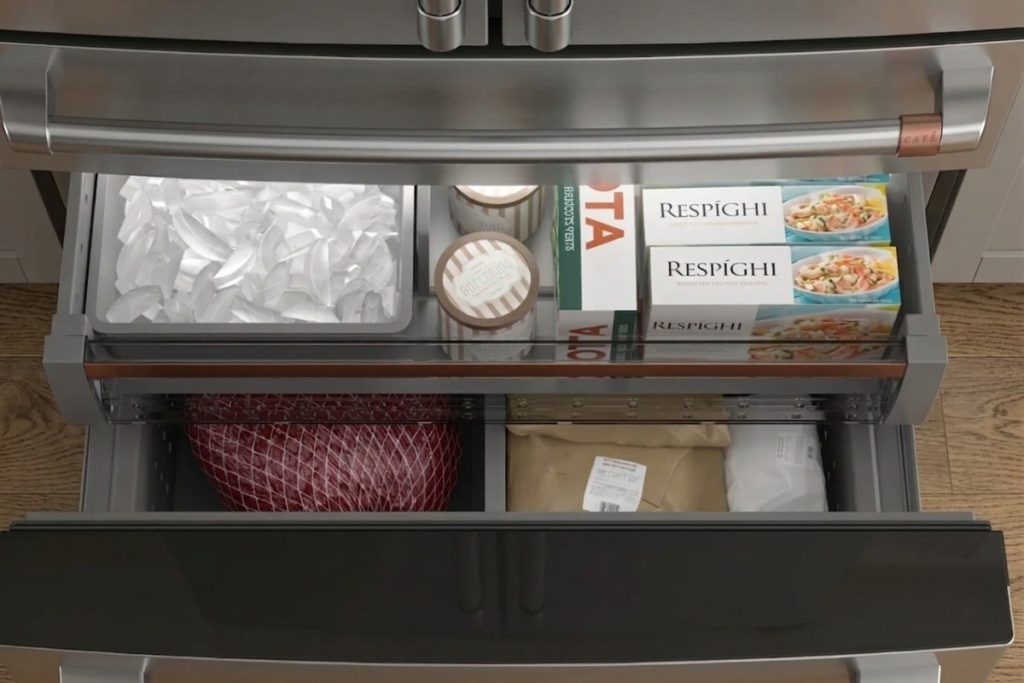
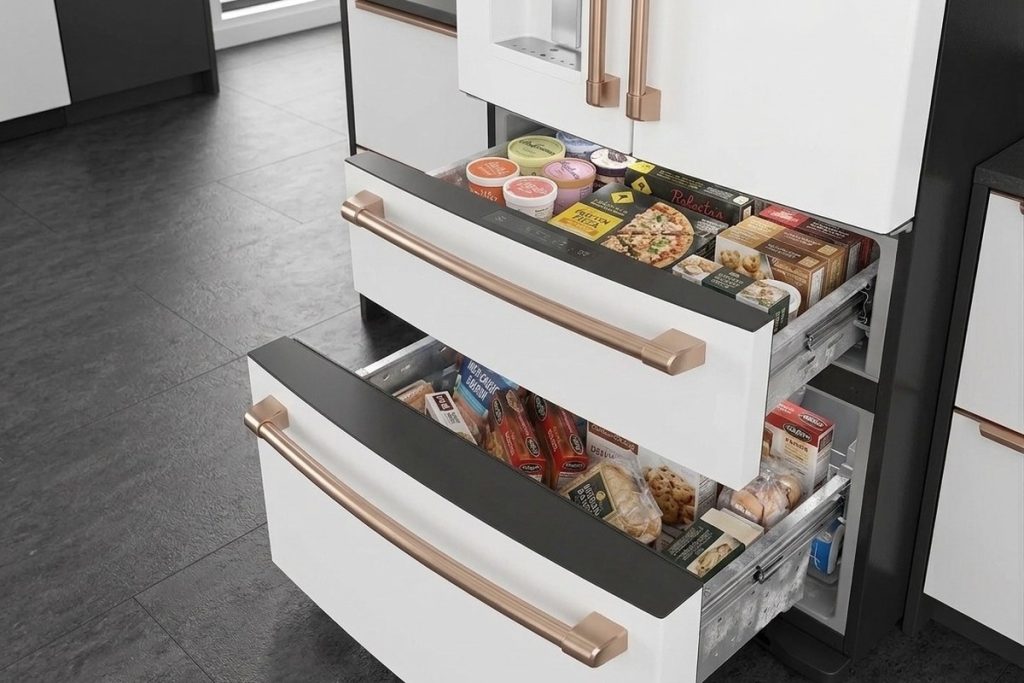
- Door or drawer not sealing. Warm, humid air sneaks in through gaps, overworks the system, and raises temperatures. GE’s manual is direct about it: frost inside the freezer typically indicates that the door is not properly sealed or has been left open. On bottom-freezer drawers, a basket that isn’t fully seated in its slides or a package sticking out can hold the drawer open just enough to matter.
- Blocked airflow. The evaporator fan pushes cold air through openings in the freezer and up into the fresh food side. If packages are piled against those openings, cold air stays trapped near the coils: the back of the drawer freezes solid while the front stays soft. GE recommends not placing food directly in front of the air flow vents of the refrigerator air tower, because it blocks the air flow.
- Defrost system ice buildup. When the defrost heater, its sensor, or the control behind them stops working, ice grows thick on the evaporator, blocks airflow, and turns the freezer into a weak cooler. You’ll often see heavy frost on the back panel or on packages near it.
- Temperature sensor gone bad. A sensor that reads wrong can make defrost run too seldom or too long, or make the control cool the wrong amount. This one isn’t something you can see; a technician tests it.
- Evaporator fan failure. A fan that has stopped, or is jammed by ice, leaves the coils cold and the freezer warm.
- Compressor, start components or sealed system. These are less common, but they’re the serious end of the list: the compressor running constantly without cooling, clicking without starting, or signs of a refrigerant leak.
GE freezer acting up? Give our team a call. We’ll trace it and have it back to a solid freeze.
What Makes It Worse? Heat, Humidity & Your Habits
Hot, humid summers team up with everyday freezer habits to create trouble. Here’s what turns small issues into big “not freezing properly” problems faster.
- Humidity adds frost. Moisture in the air freezes on the evaporator coils, and every door opening brings more of it in. The defrost system clears it, but if anything in that system is weak, ice builds up and blocks airflow.
- Heat makes the compressor work harder. GE’s own chart lists hot weather and frequent door openings as a reason the motor runs for long periods, and calls it normal. It’s also why a borderline problem shows up in summer first.
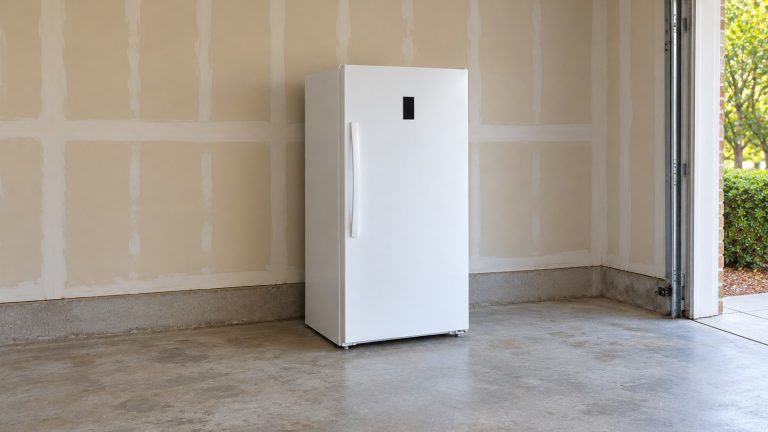
- The wrong location. GE’s installation instructions for these refrigerators say not to install them where the temperature will go below 60°F, because the refrigerator won’t run often enough to maintain proper temperatures, or above 100°F, because it won’t perform properly. They also say to keep the refrigerator out of direct sunlight. An unconditioned garage in summer or winter can be outside that range. (GE does build garage-ready upright freezers, which are a different product with their own limits.)
- Frequent door opens and overloading. Kids grabbing snacks, a drawer left slightly open, or a freezer packed so tightly that the vents are covered. Warm air gets in, and the system can’t recover. GE notes that motor run time increases when large amounts of food are added; that’s normal, as long as the freezer catches up.
Heat doesn’t cause most of these failures. It accelerates them. Keep the doors and drawers closing fully, the vents clear, and the space around the refrigerator open, and most GE freezers stay happy.
Which GE Models See “Not Freezing” Most Often?
Not every GE refrigerator struggles equally with freezing issues. Some designs show up more often because of how they’re built and how people use them.
Here are the ones we see most frequently with temperature problems:
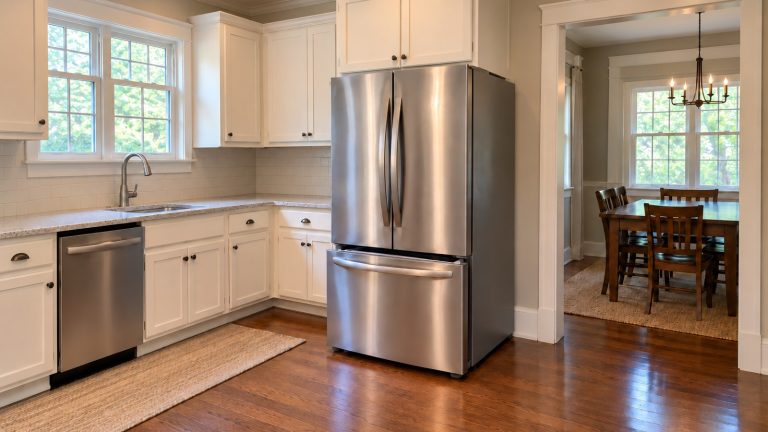
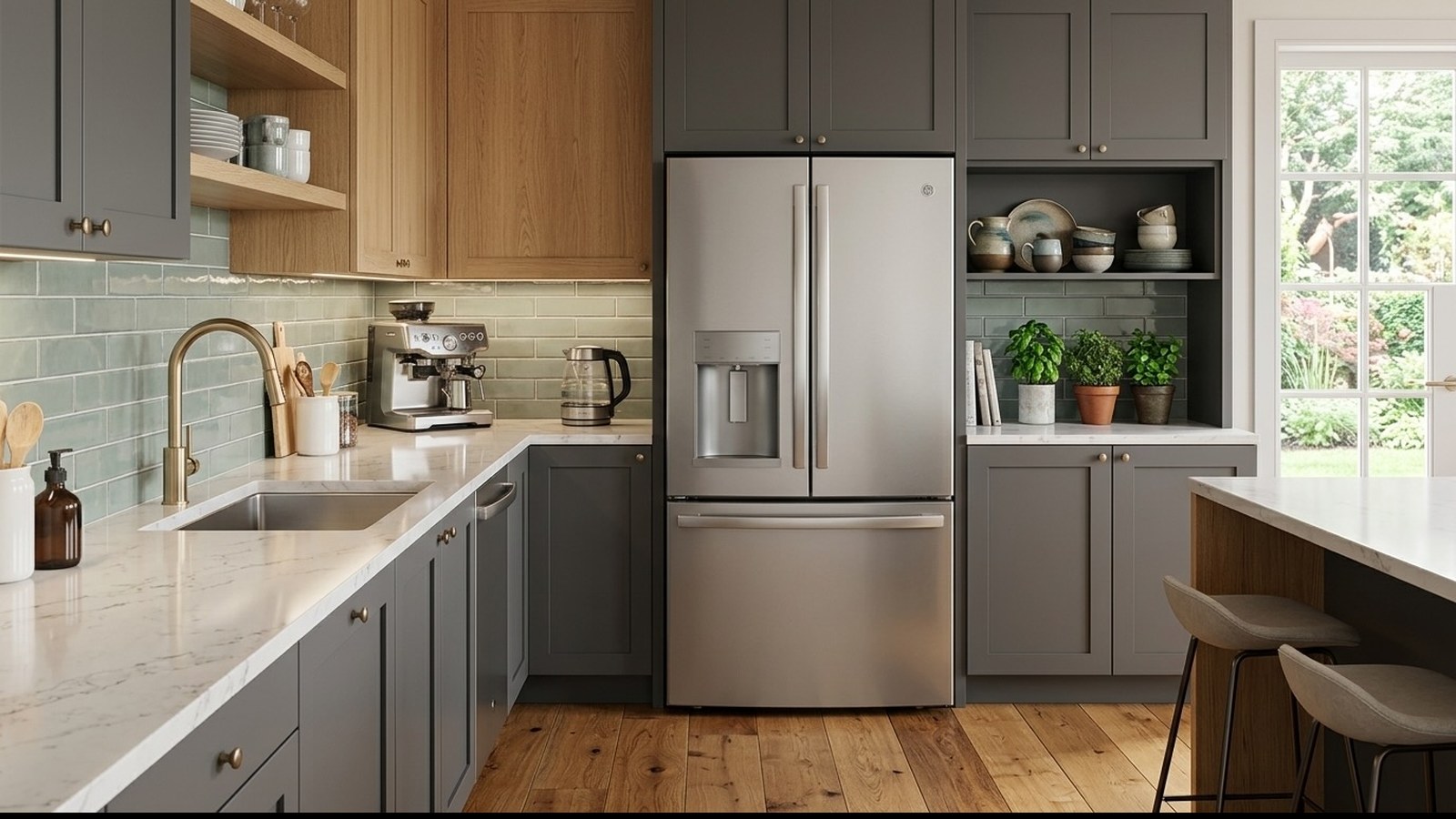
- GFE28GYNFS: a GE 27.7 cu. ft. French-door refrigerator with a bottom freezer drawer. It’s one of the most common. The freezer drawer gets opened constantly, packages end up in front of the vents, and humid air comes in with every opening.
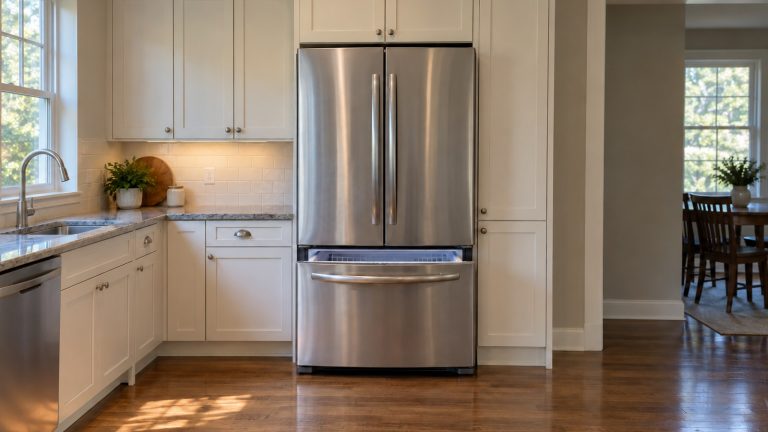
- PYE22KYNFS: a GE Profile 22.1 cu. ft. counter-depth French-door refrigerator.
- GE bottom-freezer models such as GNE27JYMFS. GE’s troubleshooting chart for these lists warm weather, frequent door openings and a door left open as the first causes of a warm freezer compartment.
- Monogram and Café refrigerators have their own designs and electronics. The same basic checks apply, and the diagnosis should be made against the documentation for the exact model.
In our experience, French-door refrigerators with a bottom freezer drawer top the list because the drawer is opened constantly, the vents get blocked, and humid air keeps the defrost system busy.
Can You Fix It? A Safe DIY Action Plan
Most mild “not freezing properly” cases in GE freezers respond well to some basic at-home troubleshooting. No special tools are needed beyond an appliance thermometer, a flashlight, and patience. Go step by step and stop if you hit a red flag.
- Check the settings and the display. Confirm the freezer is set to the recommended 0°F (GE’s preset) and that the cooling system isn’t turned off. If the refrigerator is in showroom mode, GE’s fix is to unplug it and plug it back in. If you just changed the setting, GE says to allow 24 hours for the temperature to stabilize. For warm weather or frequent door openings, GE’s chart suggests setting the control one step colder.
- Check the door and drawer seal. Make sure nothing is holding the drawer or door open: a package, an ice bag, or a basket out of place. On a freezer drawer, GE’s support article for a drawer that isn’t sealing suggests wiggling the lower basket to make sure it’s fully seated in its slides, checking that the gasket sits in its groove by running a finger or a pen along the edge, and checking that the gap between the drawer and the cabinet is the same at the top and the bottom. Clean the gasket with a soft cloth and the solution GE’s manual gives for cleaning inside the refrigerator: about a tablespoon of baking soda to a quart of warm water. Rinse and wipe dry. A gasket that’s torn, flattened, or won’t stay in its groove needs replacing.
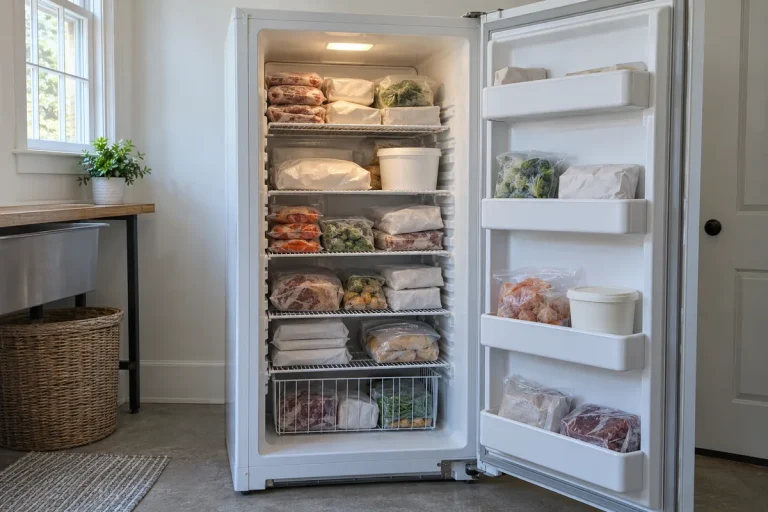
- Clear the vents and rearrange the food. Move packages away from the air openings, and don’t pack the freezer so tightly that air can’t move between items.
- Listen for the fan. With the door open for a moment, listen near the back of the freezer for the fan. No fan sound at all while the freezer is warm is a useful clue for your technician.
- Look for frost. A little frost inside packages is normal, according to GE. Heavy frost on the back panel, or ice crystals on many packages, usually means warm air is getting in or the defrost system isn’t clearing the coils. GE’s manual says to clear frost inside the freezer with a plastic spatula and a towel, then check that no packages keep the door from closing. Don’t chip at ice with anything sharp.
These steps fix or explain many of the “weak freezing” cases we see. If you hit a red flag, stop. You’re looking at parts like sensors, fans or the defrost system, and those need testing.
Red Flags: When It’s Time to Call a Technician
You’ve done the safe home checks — settings, seal, vents and frost — and the freezer is still not freezing properly. That’s when you stop the DIY work and let a technician take over. Here are the clear red flags to watch for:
No improvement after 24 hours
- Temperatures stay warm or keep swinging after you’ve corrected the settings, the seal and the airflow. GE’s own stabilization time is 24 hours; past that, the cause is usually a sensor, a fan, the defrost system, or the cooling system itself.
Heavy or recurring ice buildup
- Thick frost returns quickly on the back panel after it’s been cleared, even with the door and drawer sealing well. The defrost system isn’t clearing the coils, and that needs testing, not more scraping.
No evaporator fan sound
- You open the door, the freezer is warm, and there’s no fan noise and no air movement from the openings. A stopped or iced-in fan is trapping the cold, and that’s not a DIY fix.
Compressor runs constantly or clicks but doesn’t cool
- GE notes that a compressor may click or chirp while trying to restart, and that this can take up to five minutes. Repeated clicking that never ends with cooling, or non-stop running while the freezer stays warm, points to a start component or a sealed system problem.
Oily spots, hissing, or unusual smells
- Signs of a refrigerant leak point to the sealed system. GE’s warranty treats the sealed system (compressor, condenser, evaporator and tubing) as its own category of repair, and refrigerant work needs EPA 608 certified handling.
Uneven freezing with one section completely warm
- The back of the drawer is cold but the front stays soft even with the vents clear, or the freezer is cold and the fresh food side is warm. That points to airflow inside the cabinet, a fan, or frost blocking the air path.
These signs mean parts testing, part replacement, or sealed system work. Done wrong at home, it can damage the refrigerator.
When we arrive, we:
- Confirm the settings, the mode, and the actual temperatures with our own thermometer.
- Test the sensors and the evaporator fan.
- Check the defrost system: the heater, its sensor, and the control that runs it.
- Inspect the seal, the drawer slides and the air openings.
- Check the compressor and the sealed system if the tests point there.
- Replace failed components with genuine OEM parts.
We bring the common fans, sensors, heaters and controls for the models we see most, so many “not freezing” repairs are finished in one visit, with the freezer back to a solid freeze.
Seeing red flags? Book GE freezer service and we’ll get it diagnosed properly.
The Cost of Waiting: What Happens If You Ignore the Problem
Letting a GE freezer run too warm might feel like “it’s only a little off,” but in our experience, it snowballs quickly, especially in hot weather.
Here’s what we’ve seen happen when people wait too long:
- Food spoils. Ice cream turns to soup, meat edges thaw, and frozen meals pick up freezer burn. A single weekend can wipe out a full freezer of groceries.
- The compressor runs longer. A freezer that can’t reach its setting keeps the compressor running, which means more wear and more electricity.
- Ice buildup gets worse. Frost that isn’t cleared blocks airflow completely, turning a weak freezer into one that barely cools.
- A small repair becomes a bigger one. A fan or a defrost part is a routine fix. A compressor that has been running hard for weeks is not.
We’ve had customers lose entire freezers full of holiday prep or bulk buys because they hoped “it’ll cool down on its own.”
Conclusion
A GE freezer that’s not freezing properly is more than a minor headache. It’s a ticking clock on your food and your budget. What starts as slightly soft ice cream or a few thawed packages can quickly turn into spoiled groceries and a much bigger repair if it’s left unchecked.
The good news is that most of these issues, from a drawer that isn’t sealing or blocked vents to defrost system ice buildup or a faulty temperature sensor, are completely fixable when they’re caught early. The simple checks we walked through handle a surprising number of cases.
Still not freezing right? Don’t let it drag on. Contact us for reliable GE freezer repair with PRO Appliance Repair. We’re family-owned and insured, with same- or next-day service on most days across metro Atlanta. Our EPA 608 certified, background-checked technicians use genuine OEM parts, and our repairs carry a warranty of up to six months.
Related guides
- GE freezer too warm: what to check and when to call
- GE freezer door won’t close: why it happens and how to fix it
FAQ
Here are the most common questions we get from homeowners when their GE freezer isn’t freezing properly:
My GE freezer is only slightly warm. Is it really a problem?
Yes. Freezer food is safest at 0°F, which is also GE’s recommended freezer setting. Check with an appliance thermometer rather than the display, which on many models shows the set temperature. If it stays above 0°F after 24 hours with the door closed, the cause is usually a seal, blocked airflow, frost on the coils, or a weak fan.
Why did my GE freezer stop freezing after a power outage?
GE’s chart says that after an extended power outage it’s normal for the freezer to cool before the refrigerator does, and that both compartments can take 24 hours to reach their set temperatures. If the freezer is still warm after that, or the display is off or acting strangely, check the breaker and then call for a diagnosis.
Can I keep my GE refrigerator in the garage?
Check the installation instructions for your model. For the French-door and bottom-freezer refrigerators in this guide, GE says not to install them where the temperature will go below 60°F or above 100°F. GE makes garage-ready upright freezers for spaces like that.
How do I know if the door seal is causing the warm temperatures?
GE’s manual says frost inside the freezer typically indicates the door isn’t sealing or has been left open. Check that nothing is holding the drawer open, that the basket is seated in its slides, and that the gasket sits in its groove all the way around, then clean the gasket with warm water and baking soda, the cleaning solution in GE’s manual.
Can a dirty water filter make the freezer stop freezing?
No. The water filter affects water flow and ice production, not the cold air in the freezer. GE says to replace the filter when water flow slows or ice production drops. A freezer that isn’t freezing is usually about the seal, airflow, frost, a fan, a sensor or the cooling system.
My freezer freezes some things but not others. What’s going on?
Uneven freezing usually means blocked vents or a basket that’s out of place, so cold air isn’t reaching every part of the drawer. Move packages away from the air openings and give it 24 hours.
PRO Appliance Repair is an independent repair company and is not affiliated with, sponsored by, or endorsed by GE Appliances. Brand and model names are used only to identify the appliances this page is about and remain the trademarks of their respective owners.