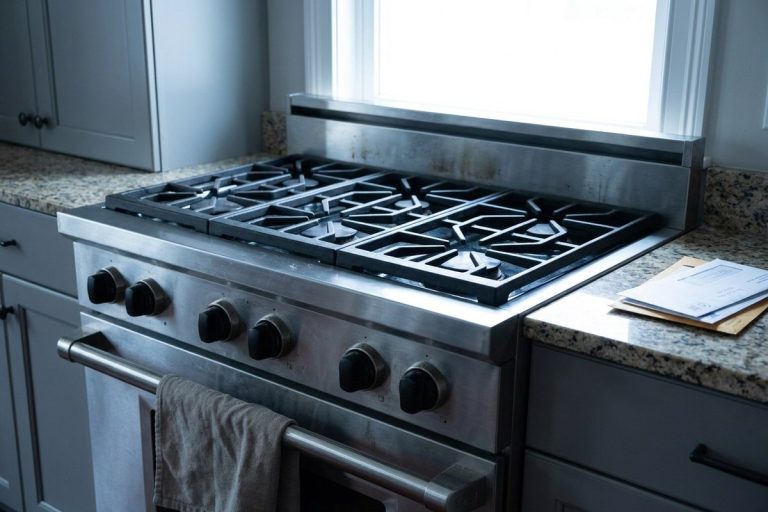
That tiny gap adds up. A loose GE freezer door might seem like a minor annoyance — the door still closes, right? But that tiny gap is quietly draining your wallet. Every time warm, humid air sneaks in, your compressor runs longer and harder. Electric bills creep up in summer, food thaws prematurely, and ice cream turns into soup.
In our years fixing appliances across metro Atlanta, we’ve seen one pattern repeat: a lot of “my freezer runs all the time” calls trace back to the door — very often to a door gasket worn out from normal use, heat and humidity. It’s not a dramatic breakdown. It’s a slow, expensive leak that most people ignore until the energy statement arrives.
In this article we’ll break down how the door seal works, why it wears out, how to catch the problem early, three quick checks you can do today, and clear signs it’s time to call pros like us. If the door won’t physically shut at all, start with our guide to a GE freezer door that won’t close.
The Anatomy of a GE Freezer Seal: More Than Just Rubber
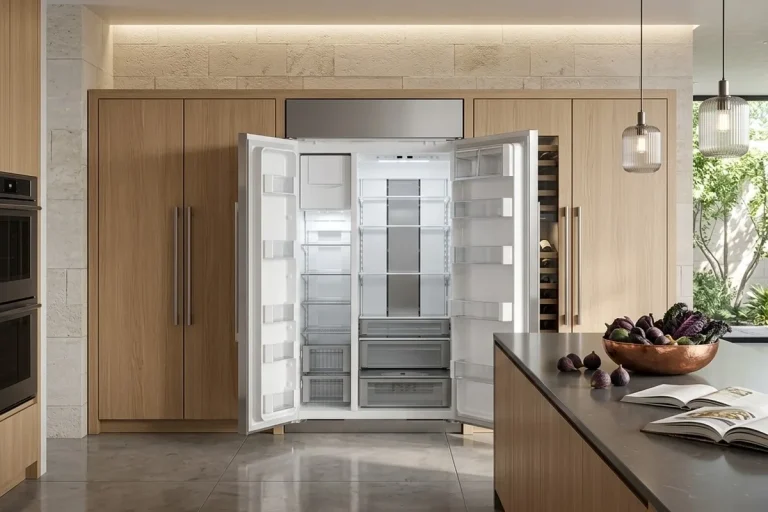
The gasket that runs around your GE freezer door isn’t simple rubber — it’s a carefully designed system meant to create an airtight barrier. When it works properly, it keeps cold air locked in and humid room air out. Understanding its parts helps explain why a small failure can snowball into big energy waste.
Here’s what makes up a typical GE freezer door seal:
- The Magnetic Core. Embedded inside the gasket is a flexible magnetic strip. It pulls the door firmly against the metal frame once closed, creating consistent contact all around the perimeter. Without strong magnetism, even a perfectly shaped gasket won’t hold tight.
- The Flexible Bellows. The accordion-like folds allow the gasket to compress and expand slightly as the door opens and closes. These bellows absorb minor misalignments and keep contact even if the door isn’t perfectly square. Over time, they can harden or crack from repeated flexing.
- The Attachment Lip. A thin lip holds the entire gasket on the door. GE describes the gaskets on its French-door refrigerators as “magnetic gaskets that slide into a groove retaining channel.” If this lip stretches, tears, or pulls out of the groove, the whole seal loses tension and fails to seat properly.
- The Outer Rubber/Plastic Skin. The visible black or gray material that touches the frame. It has to stay flexible at freezer temperatures, but heat, sunlight, harsh cleaners and age make it brittle, yellow, or prone to tearing.
When any of these components degrade, the seal weakens — and door seal replacement becomes the only reliable long-term fix. Patching or stretching rarely lasts because the magnetic pull and bellows flexibility can’t be restored DIY-style.
Why Good Seals Go Bad: Heat, Humidity and Everyday Wear
GE freezer gaskets are built tough. But heat, humidity, and everyday habits team up to accelerate wear. Here are the biggest culprits we’ve seen repeatedly in service calls:
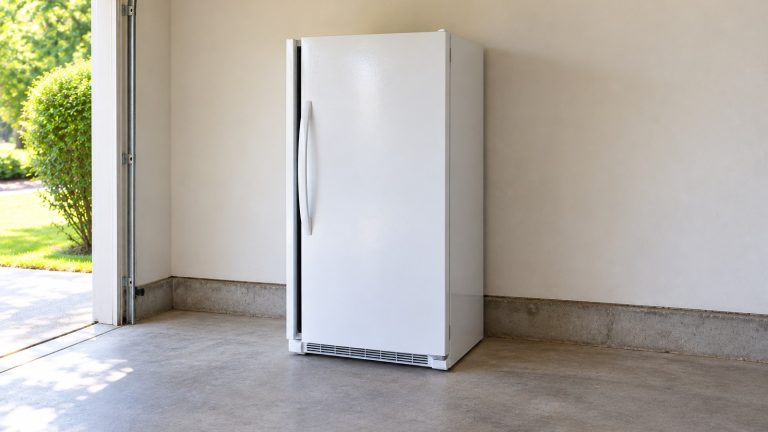
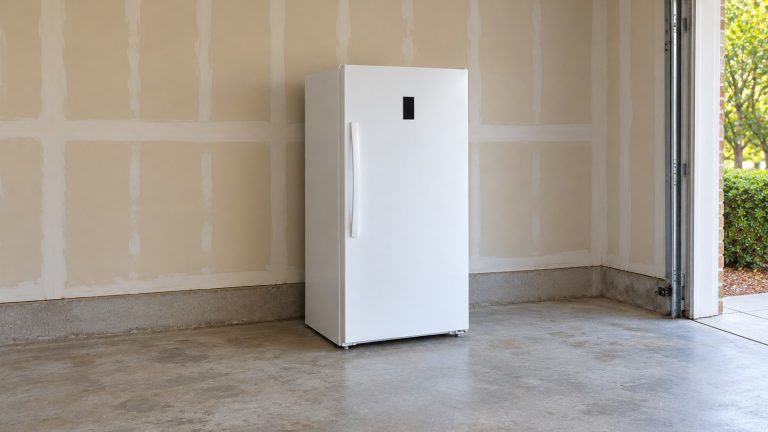
- Heat and sunlight. Freezers in garages or sunlit kitchens take the hardest hit. GE’s upright freezer manual says to keep the freezer “out of direct sunlight” and not to install it “where the temperature will go below 0°F or above 110°F.” A gasket that bakes in a hot garage becomes brittle and loses its ability to compress evenly.
- High summer humidity. Metro Atlanta’s muggy air carries moisture in every time the door opens. GE notes that hot, humid weather “increases internal rate of frost buildup.” When the seal is weak, that moisture freezes right along the door line.
- Household cleaners and kitchen grease. Spraying cleaners directly on the door or wiping with harsh chemicals is hard on rubber and plastic. GE warns: “Do not apply harsh cleaners,” because “certain cleaners will damage plastic.” Grease from cooking splatters builds up, hardens, and prevents a clean seal against the frame.
- Mechanical stress from overloaded door shelves. Heavy items in door bins (juice jugs, frozen dinners) pull on the door over months and years. This constant tug can loosen the hinges and stretch the gasket unevenly, leading to a door gasket worn in specific spots first. GE’s upright manual adds: “To allow the door to close and seal properly, DO NOT let food packages extend past the front of the shelves.”
By the time most owners notice cold air leaking, the damage is already advanced. Regular inspection can catch it early — before the compressor starts running overtime and your power bill spikes.
When the leaky seal has already let the temperature climb, see our GE freezer too warm guide for the wider picture.
The Symptom Detective: How to Spot a Failing Seal
Don’t wait for frost to cover the entire door frame — catch the problem when it’s still small. Here are the most common signs we hear about, explained simply:
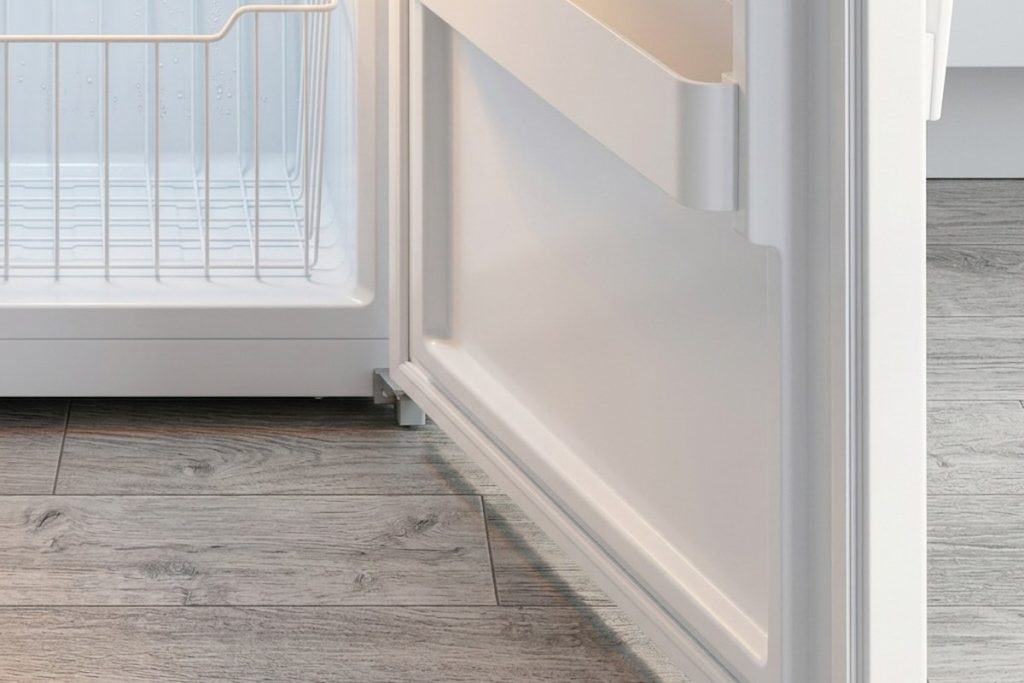
- If the door won’t swing shut on its own, or seems closed but then drifts open slightly — for this problem on its uprights, GE lists two causes: “Legs need adjusting” and “Package holding door open.” On some freezers, a cracked closing cam at the bottom hinge does the same — a part GE’s manuals don’t describe; we find it in the field.
- If you can pull a dollar bill out easily from any side of the door (especially the top or bottom corners) without much resistance — the seal is weak there. A healthy gasket should hold the bill with a steady drag.
- If the gasket looks yellowed, cracked, or hardened like old leather — that’s classic door gasket worn. The rubber has lost its flexibility from heat cycles and age, so it no longer compresses to fill tiny gaps.
- If moisture keeps forming on the outside of the cabinet, or frost builds up inside along the door — cold air is escaping and humid air is getting in. GE’s upright manual describes a door that “may not be seating properly, causing cold air from inside the freezer to meet warm moist air from the outside.”
- If the freezer runs almost constantly — poor sealing forces the compressor to overwork. GE lists “Door left open” first among the reasons a freezer “operates too long.” Warm side walls, though, are normal: GE says they “can be as much as 30°F warmer than room temperature.”
These clues rarely appear all at once. Usually one or two show up first. The sooner you notice them, the cheaper and easier the fix tends to be. For food safety, the FDA says “The freezer temperature should be 0° F (-18° C).”
For an accurate diagnosis, book GE freezer repair with our team — same- or next-day service on most days across metro Atlanta.
The Quick-Fix Corner: 3 DIY Checks Before You Call
Before picking up the phone, spend a few minutes on these simple checks. In many homes we’ve visited, one of them restores a decent seal — or at least confirms the problem is deeper. Do them in order.
Before you start: GE’s rule is “Unplug the freezer before making repairs or cleaning.” Never chip ice with a knife or any metal tool — GE warns it “may puncture the freezer liner and then the flammable refrigerant tubing behind it.” Taking the door off is a technician’s job: on GE uprights, it means disconnecting wiring under the top hinge cover.
- The Dollar Bill Test. Close the freezer door on a dollar bill or strip of paper at several spots around the perimeter (top, bottom, sides). Try to pull it out slowly. (It’s our shop check, not a GE step.)
- If it slides out easily anywhere — the door seal is weak and not gripping properly.
- If it resists firmly every time — the seal is still making good contact (for now). Repeat the test monthly; it’s the fastest way to track wear.
- The Level Check. Grab a carpenter’s level and place it on top of the freezer, front to back.
- Don’t aim for perfectly level. GE’s manual says to “Adjust the plastic leveling feet in front 1/2 bubble higher so the door closes easily when left open.” Then test it: open the door about halfway and let go — it should close by itself.
- Uneven floors make the door hang crooked, creating gaps on one side. GE’s answer for a cabinet that isn’t solid on the floor: adjust the legs “or use shims for uneven floor.” We’ve fixed many “leaky seal” complaints just by re-leveling — no parts needed.
- The Visual & Touch Inspection. Unplug the freezer, open the door wide and run your fingers along the entire gasket. Look closely under good light.
- Feel for hard, cracked, or torn sections, corners included.
- Clean it the GE way. Inside its upright freezers, GE uses “warm water and baking soda solution,” not detergent, bleach or ammonia. Then: “After cleaning the door gaskets, apply a thin layer of petroleum jelly to the door gaskets at the hinge side.”
- If the gasket is sagging downward in spots (especially the bottom), heavy door loads may have caused door sagging over time — and no amount of cleaning will fix the gap.
If any of these checks reveal a clear issue and simple adjustments don’t help, stop there. Attempting to stretch, glue, or heat-gun the gasket often makes things worse long-term — we’ve seen plenty of DIY attempts turn a simple gasket job into a bigger repair.
When DIY Isn’t Enough: Signs You Need a Technician
If the three quick checks above don’t restore a solid seal — or if the problem comes back within days — it’s time to stop DIY experiments. Some issues go beyond what cleaning, leveling, or gentle reshaping can fix, and forcing things can bend hinges or tear the gasket further.
Here are the clear red flags we see most:
- Visible deformation or cracks in the plastic around the hinges — this usually means hinge misalignment from years of door stress. Adjusting the legs won’t correct it; the door alignment needs a technician. GE’s line: “Hinge Broken — This will require service.”
- The door sags noticeably even after correct leveling — heavy door loads may have bent a hinge or loosened its screws, causing ongoing door sagging. GE warns: “Do not overtighten the hinge screws,” and on uprights they sit next to wiring. That’s technician work; no new gasket alone can bridge that gap.
- The gasket’s grip feels weak along its length — the door no longer snaps onto the cabinet in the last inch. That’s a replacement, matched to your model number.
- After trying the dollar bill test and adjustments, you still feel cold air leaking or see frost buildup in the same spot — the root cause is structural, not just surface wear.
Conclusion: Seal the Deal on Your Energy Bills
A tight, reliable freezer door seal isn’t just a convenience — it’s the foundation of efficient operation. When it fails, you pay more for electricity, risk food spoilage, and keep your GE freezer’s compressor running longer than it should.
The good news: most door sealing problems are straightforward to diagnose and fix — especially if caught early. Whether it’s a worn gasket, a freezer that isn’t level, misaligned hinges, or a broken closing cam, timely action saves money and prevents bigger headaches.
Browse all of our appliance repair guides for more step-by-step fixes.
Related guides
Don’t let a small gap keep draining your wallet.
Return your GE freezer to peak performance. Book GE freezer repair with PRO Appliance Repair. We’re family-owned and insured, with same- or next-day service on most days across metro Atlanta. Our EPA 608 certified, background-checked technicians use genuine OEM parts, and our repairs carry a warranty of up to six months.
FAQ
Can I repair a torn GE freezer gasket with glue or tape?
No — glue or tape won’t restore the flexibility or magnetic pull. It may hold for a week or two, but the seal will fail again quickly, especially in humid weather. A proper door seal replacement is the only lasting solution.
How often should I replace the door gasket on a GE freezer?
There’s no fixed schedule — GE’s manuals don’t give a gasket a lifespan. Replace it when it fails the checks: cracks, hard spots, or a bill that slides right out. Regular dollar bill tests help catch wear before it becomes severe.
Why does my GE freezer door still not close properly after I replaced the gasket?
The new gasket alone can’t fix hinge misalignment, a freezer that isn’t level, or a closing cam broken on models that have one. Check the leveling first; then a technician needs to realign the door and replace worn hinge parts.
Is it normal for the gasket to turn yellow over time?
Yellowing is common from age, grease buildup, and kitchen cleaners. It’s often a sign the rubber is hardening — don’t ignore it, as a stiff gasket can leak before visible cracks appear.
My GE freezer is in the garage — does that make the seal wear out faster?
It can. Garage temperatures swing hard between seasons, and sun through a window bakes the rubber. GE’s upright manual sets the limits: not “below 0°F or above 110°F,” and “out of direct sunlight.”
Can I prevent door seal problems on my GE freezer?
Keep the gasket clean the way your manual says, avoid overloading door shelves, keep an upright’s front 1/2 bubble higher, and minimize door openings in hot weather. GE’s own tip: “Organize and label food to reduce door openings.”
PRO Appliance Repair is an independent repair company and is not affiliated with, sponsored by, or endorsed by GE Appliances, a Haier company. GE is a trademark of the General Electric Company; brand and model names are used only to identify the appliances this page is about.