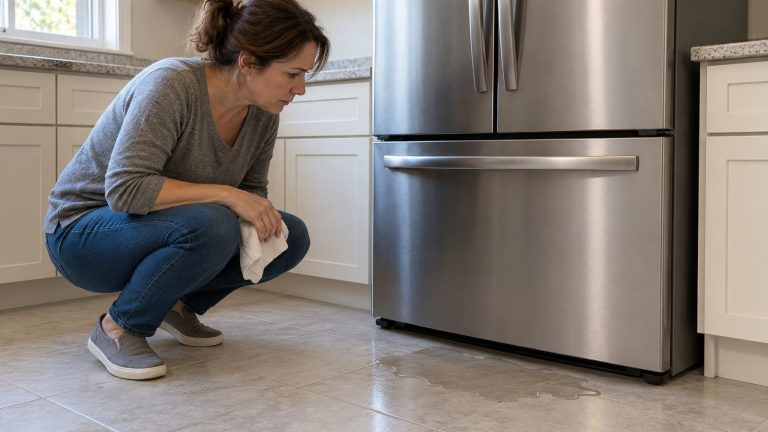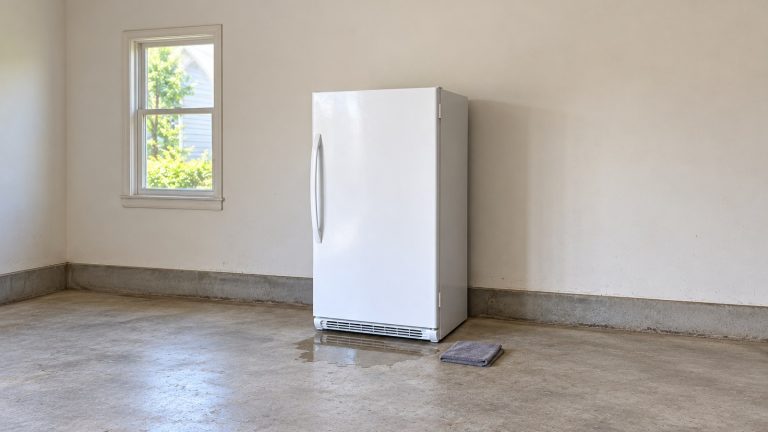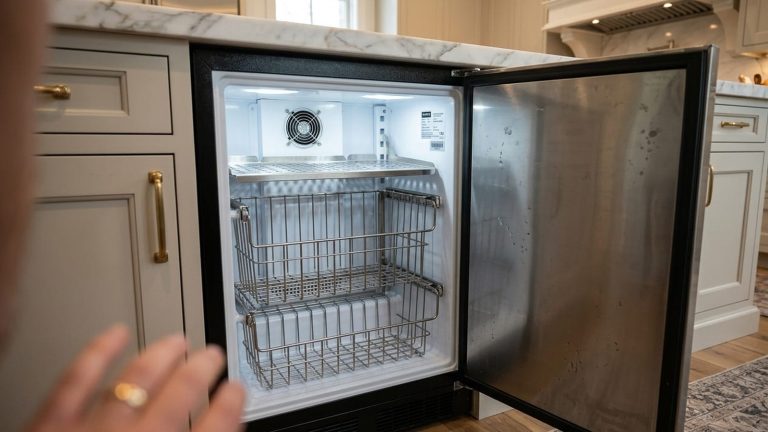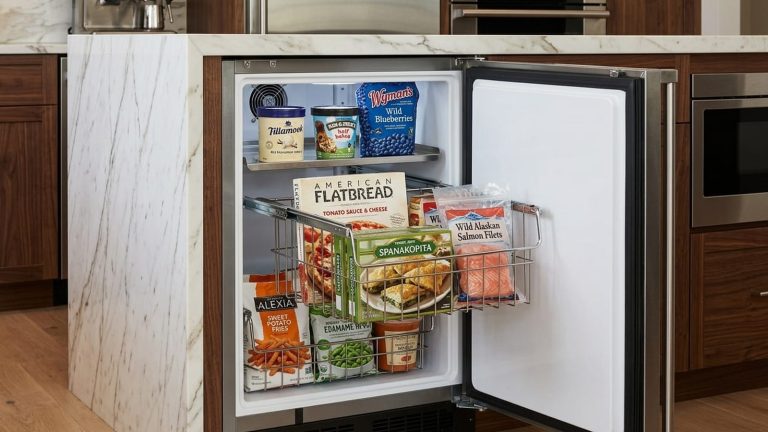
You open the kitchen cabinet next to your Marvel freezer and the floor is wet. Again. It’s tempting to grab a towel, wipe it up, and forget about it — it’s just a small puddle, after all. That’s completely understandable. It’s also exactly how a simple repair turns into new flooring and a mold cleanup.
Water from a leaking Marvel undercounter freezer rarely stays where you can see it. It can creep under the unit and soak into the subfloor, reach the electrical parts in the base, or sit inside a cabinet enclosure long enough for mold to start before anyone notices. And sometimes the water isn’t really the problem at all — it’s a sign of something else, like a door that isn’t sealing or a defrost part that isn’t doing its job.
So before you can fix a Marvel freezer water leak, you need to know where the water is coming from. That’s the whole idea behind this guide. Water on the floor outside the unit has different causes than water sitting inside on the cabinet floor, and both are different again from moisture gathering at the door. Each location is a clue, and we’ll show you how to read those clues one by one.
We’ll cover the difference between a true leak and normal condensation, walk through the five most common causes of a Marvel freezer leaking water, give you a simple checklist for finding the source, and explain which steps are safe for you and which belong to a technician.
Water under your Marvel and no idea why? Our Marvel freezer repair team will trace the leak to its source and fix it properly.
> Safety first. If water has reached an outlet or the power cord, or it keeps spreading, don’t step into it or reach under the unit. Keep away and call a qualified technician or electrician. If you smell burning or see smoke, leave the area and call 911. Marvel’s own guides warn never to repair or service the unit before disconnecting the main electrical power.
Diagnosing the Water: Condensation, Humidity, or a True Leak?
Not every drop of water near a Marvel freezer means something is broken. Some moisture is simply part of how a freezer works. Knowing the difference saves you from needless worry — and from chasing the wrong problem.
Normal exterior condensation happens when the outside surface of the unit is cooler than the air around it, and moisture from that air settles on the cabinet. It’s especially common in Atlanta’s warm, humid summers. It looks like a light sweat on the outside panels. Marvel’s troubleshooting table covers exactly this: when the unit develops condensation on its outside surfaces, it’s exposed to excessive humidity, and the moisture goes away as humidity drops. That’s not a leak. But if outside condensation is heavy enough to drip onto the floor day after day, or shows up in dry weather, it’s worth having a technician take a look.
Frost or moisture inside, on shelves or walls. Marvel’s troubleshooting table links frost on internal surfaces to one thing first: make sure the door is closing and sealing properly. When frost from that warm, moist air melts, you get water inside — on the cabinet floor or near the door. Standing water inside the cabinet, or puddles on interior shelves with no obvious reason, isn’t normal.
A true leak comes from a specific source: the defrost drain path, the drain pan, or a door seal letting in enough warm, humid air to make real runoff. True leaks are usually consistent — the water comes back to the same spot after you wipe it up.
One sound you don’t need to worry about: Marvel lists it as normal to hear water dripping or running into the drain pan while the unit is in its defrost cycle. A sound of water during defrost isn’t a leak. A puddle is.
The table below matches where you see water to the most likely cause:
| Where is the water? | Most likely cause |
|---|---|
| Puddle on the floor directly under the unit | Drain pan overflowing or a problem somewhere in the drain path |
| Water pooling inside on the cabinet floor | Defrost water not leaving the cabinet — usually a blocked drain path |
| Moisture or drips at the door frame or hinge area | Door not closing or sealing properly, letting warm, humid air in |
| Wet spot on the floor at the back of the unit | Drain path or drain pan problem toward the rear |
| Light moisture on the outside of the unit | Normal condensation in humid conditions — check the front grille and room if it’s heavy |
Once you know where the water shows up, you’re already halfway to the answer. The five causes below explain what’s behind each of those locations.
Five Reasons Your Marvel Freezer Is Leaking — and What Each Looks Like
Cause 1: Blocked Defrost Drain Path
This is the most common reason water pools inside a Marvel freezer, and it’s the first thing to suspect when you find water on the cabinet floor.
Marvel undercounter freezers defrost automatically to keep frost from building up on the evaporator. During each defrost cycle, frost melts off and the water runs out of the cabinet to a drain pan in the base of the unit. That’s the normal path, and Marvel’s parts lists for its undercounter freezers include the drain pan for exactly this reason.
When that drain path gets blocked — by ice, by debris, or by a slow buildup of particles — the defrost water has nowhere to go. It backs up inside and collects on the cabinet floor. If the blockage is bad enough, the water eventually finds its own way out through the bottom of the cabinet and shows up on the floor under or in front of the unit.
What it looks like: water pooling at the back of the cabinet floor, or a thin layer of water across the whole bottom. Sometimes you’ll also see ice forming at the bottom of the cabinet — that’s backed-up water refreezing when the defrost cycle ends.
Here’s where we disagree with a lot of online advice. You’ll often read that you can clear the drain yourself with a turkey baster and warm water. Marvel’s guides don’t describe any drain-clearing procedure for owners, and they’re clear on two related points: never use sharp objects to speed up defrosting, and never splash or spray water on the appliance, because doing so can cause an electrical shock. Pouring or squirting water into a running freezer, with electrical parts in the base, is a risk we don’t recommend taking. A blocked drain path is a job for a technician, who will disconnect power, find where the blockage is, and check why it formed in the first place.
Cause 2: Door Not Closing or Sealing Properly
A door that doesn’t seal is the second most common source of Marvel freezer water leaks, and it leaves a recognizable pattern: water near the door frame, on the bottom shelf close to the front, or dripping at the hinge side.
Here’s how it happens: a damaged or hardened door gasket, or a door that doesn’t quite close, lets warm, humid air into the freezer. That air hits the frozen surfaces inside and turns into frost almost immediately. When the frost melts, the water drips and pools — usually near the door, where the air got in. In Atlanta’s humidity, even a small gap is enough to make visible water inside.
The link is direct. Marvel’s troubleshooting table answers frost on internal surfaces with “Ensure the door is closing and sealing properly.” If the door doesn’t close with that familiar pull of a magnetic seal, or the door alert keeps sounding, the door is a very likely cause of the water you’re seeing.
You can check the gasket yourself. Run your hand slowly around the door frame with the door closed, feeling for sections that seem softer, flatter, or less springy than the rest. Then try the paper test: close the door on a sheet of paper and pull it out. Steady resistance all around means the seal is doing its job. If the paper slides out easily anywhere, that part of the gasket isn’t sealing.
Also look for anything stopping the door — a container, a bag, or a basket that has shifted. Marvel advises keeping the door’s closing path clear.
For a full door diagnosis — how to test it, why gaskets fail, and when replacement is needed — see our Marvel freezer door not sealing guide.
Cause 3: Humidity, Heat, and a Blocked Front Grille
This cause is different from a door problem in one important way: the unit itself is fine. The trouble is the conditions around it.
Many guides tell you a Marvel undercounter freezer needs 3 to 6 inches of space at the sides and back. That’s not what Marvel says. Marvel’s installation section says ventilation is required from the bottom front of the appliance. Cabinets and countertop can be built right around the unit as long as the front grille stays unobstructed. The openings in that grille let air flow through the condenser, and Marvel warns that blocking them increases energy use and reduces cooling. Marvel also doesn’t recommend custom-made grilles, since they can restrict airflow.
Marvel also recommends a spot out of direct sunlight and away from heat sources, with a room temperature between 55°F and 100°F for the unit to perform to spec. A freezer next to an oven, in a hot garage, or behind a blocked grille is working against its surroundings — and that shows up as more condensation, both inside and out.
In Atlanta, this cause is easiest to spot in summer, when humidity stays high for weeks. A unit with a bit of condensation in winter can start dripping in July. The fix usually doesn’t involve any parts at all:
- Make sure nothing blocks the front grille at the bottom of the unit — no rugs, toe-kick trim, baskets, or shoes.
- Brush or vacuum lint and dirt from the front grille. Marvel suggests doing this at least once or twice a year.
- Keep door openings short and less frequent during the most humid part of the day.
- Make sure the unit isn’t next to a heat source or in direct sun.
If the condensation keeps coming back after all of that, a technician can tell whether the problem is just the environment or a sign of something more.
Cause 4: Temperature Settings and Defrost Problems
Every defrost cycle produces a normal amount of water that the drain path is built to handle. When something in the defrost system or temperature control isn’t working right, the pattern changes — and so does the amount of water.
The signs that point here are temperature problems alongside the water: the freezer reads warmer than its set point, you find soft or partly thawed food, or the temperature swings in ways that don’t match how often the door is opened. If frost builds up and then melts in the wrong places, there’s more water than the drain path can handle — and if the drain is even a little slow, it backs up.
Marvel’s parts lists for its undercounter freezers include a defrost heater and a defrost thermostat. Marvel’s guides describe the defrost schedule in the service section, which is written for technicians — it’s not a setting for owners to change. If a defrost part fails, frost can build up on the evaporator and then melt off all at once, or not drain properly.
What you can safely check: make sure the set temperature hasn’t been changed by accident, and that the door hasn’t been left open for long stretches. Marvel’s guide for the MLFZ224 freezer says the door alert sounds if the door has been open for more than 30 minutes. If the setting is right and the water keeps coming back with warm readings, that’s a professional diagnosis. Testing defrost parts and the control means removing panels and working with live components — it’s not an owner check.
Cause 5: Overfilling the Unit
Packing a Marvel undercounter freezer too full blocks the airflow inside the cabinet. When air can’t move around the items inside, some spots get colder and others stay warmer. That uneven cooling can create frost in places the defrost cycle doesn’t reach well. When that frost melts — during defrost or when the door stands open — water ends up in unexpected spots inside the cabinet.
The fix is simple: take some items out, leave room between them for air to move, and keep the air vents inside the cabinet clear. Don’t let packages press against the back wall or block the door from closing.
Overfilling is usually easy to spot. If the door closes only with a push, if items are visible in the gap at the door frame, or if you have to rearrange things every time to shut it, the unit is probably too full. And a door that can’t close fully brings you right back to Cause 2.
Found the source but the fix goes beyond wiping up and clearing the grille? Our technicians handle Marvel freezer leak repair across Atlanta and Georgia, with same- or next-day appointments available most days.
Finding Your Marvel Freezer Leak: A Three-Zone Inspection Checklist
Go through this checklist in order, starting with the easiest zone. You’re looking for visible signs — standing water, ice in odd places, wet surfaces — not testing anything with tools. It’s a visual check, and it takes about ten minutes. Read the safety note at the top of this page first: if water is near an outlet or the cord, skip the checklist and call for help.
Zone A — Around the Outside of the Unit
- ☐ The floor in front of and under the unit. Use a flashlight from the front. Is water pooling toward the front, under the middle, or does it seem to come from the back? Water toward the front often means defrost water is overflowing and running forward. Water from the back points to the drain path or the drain pan. Don’t pull the unit out of its cabinet to look — an undercounter unit is heavy, its legs are set for that opening, and moving it is a job for a technician.
- ☐ The front grille. Is the grille clean and open, or is it blocked by lint, a rug, or trim? Water seeping out from under the grille usually comes from the drain pan area. Note it — but leave removing the grille and checking the pan to a technician.
- ☐ The outside panels. Is there a light sweat on the outside of the cabinet? On a humid day, that’s the normal condensation Marvel describes. Heavy, dripping condensation is worth noting.
Zone B — Inside the Unit
- ☐ The cabinet floor. Is there standing water on the bottom of the freezer? Water here almost always means defrost water isn’t leaving the cabinet the way it should. Look toward the back for ice or debris, but don’t chip at it and don’t pour water in.
- ☐ The back wall. Is the back wall wet, or is frost or ice forming lower than usual — at the bottom or in a back corner? That can mean water is backing up before it reaches the drain pan.
- ☐ The door frame and bottom shelf near the door. Water or frost gathered near the front — especially on the bottom shelf closest to the door — points to warm air coming in past the door. Check the gasket along the bottom and the hinge side, where wear usually shows up first.
Zone C — The Door and the Load
- ☐ The paper test. Close the door on a sheet of paper at several points around the frame. Any spot where it slides out easily is a spot where warm air gets in.
- ☐ Anything in the door’s way. Check that no container, bag, or shelf item stops the door from closing fully.
- ☐ How full the unit is. If the freezer is packed tight, take some items out and see whether the water stops over the next few days.
Write down what you found in each zone. That record helps a technician get straight to the cause instead of starting from zero.
What You Can Fix — and What Needs a Technician
Part A: Safe Steps for Owners
- Wiping up and watching. Dry the area, then check over the next day or two where the water comes back. That’s the most useful thing you can tell a technician.
- Keeping the front grille clear and clean. Remove anything blocking the bottom front of the unit and vacuum lint from the grille. Marvel suggests cleaning it once or twice a year. Before cleaning with soap and water, disconnect power, as Marvel’s guide directs.
- Clearing the door’s path and reducing the load. Move items that keep the door from closing, take out extra packages, and leave space for air to move inside.
- Checking the setting and the room. Make sure the temperature setting wasn’t changed by accident, the unit isn’t in direct sun or next to a heat source, and the room stays within Marvel’s recommended 55°F to 100°F.
- Cleaning the gasket. Gently wipe the gasket with a mild soap and water solution so it can seal well. Disconnect power first.
Part B: Repairs That Need a Professional
- Clearing a blocked drain path. Marvel’s guides don’t give owners a drain-clearing procedure, and they warn against sharp objects and against splashing water on the appliance. A technician will disconnect power, clear the blockage, and find out why it formed — so it doesn’t come back in a week.
- Checking or replacing the drain pan. The drain pan sits in the base of the unit. Reaching it means removing parts of the unit, and a cracked pan needs the correct replacement part for your model.
- Replacing the door gasket or adjusting the door. If the door seal is the source, a technician can confirm it, fit the right gasket for your model, and check the hinges and leveling. Marvel says the unit should be level from side to side and front to back, and getting there means tilting a heavy unit — a two-person job best left to a pro.
- Diagnosing defrost and control problems. If temperature swings are making extra defrost water, finding the cause means testing the defrost heater, defrost thermostat, and control — professional diagnostic work.
- Any sealed system or refrigerant problem. If the leak comes with warm temperatures that a door or defrost problem doesn’t explain, the cooling system itself may be involved. Refrigerant work requires EPA 608 certification — it’s never a DIY job.
One more thing worth taking seriously: if a Marvel freezer has been leaking for weeks — especially inside a cabinet — water may have reached parts of the base or the cabinet around it. In that case, ask the technician for a full look at the base and the surrounding cabinet, not just a quick fix of the drain.
Still finding water under your Marvel after all of this? Book Marvel freezer repair with our Atlanta team, and we’ll find the source and fix it right.
Conclusion
The most important thing you can do about a Marvel freezer leaking water is to stop treating the symptom — wiping up puddles without finding where they come from — and follow the water back to its source. The three-zone checklist in this guide does exactly that. Water on the cabinet floor points to the defrost drain path. Moisture at the door points to the gasket or a door that doesn’t close. Water seeping out under the front points to the drain pan area. Once you know the zone, the five causes narrow it down.
Some of what you find, you can handle yourself: clearing and vacuuming the front grille, freeing the door’s path, taking out extra items, checking the setting and the room. Others — a blocked drain path, a cracked drain pan, a worn gasket, a defrost or control fault — are professional repairs, and doing them right the first time is worth the visit.
Timing matters too. Water damage adds up. A slow drip that’s been running for two weeks does far more harm to a cabinet floor than the same drip caught on day two. And a leak that looks small can point to a bigger problem — a defrost part, a control, or the cooling system — that only gets more expensive the longer it waits.
When you’re ready for help, our EPA 608 certified, background-checked technicians bring 15+ years in the field and genuine OEM parts, and our repairs come with a warranty of up to six months. We’re a family-owned, insured, independent repair company, not affiliated with Marvel.
Frequently Asked Questions
There’s water on the cabinet floor inside my Marvel freezer, but the floor under the unit is dry. What’s causing it?
Water inside with no water outside almost always means defrost water isn’t leaving the cabinet — the drain path is blocked, so the water collects inside instead of reaching the drain pan. Wipe it up and look toward the back for ice or debris, but don’t chip at it or pour water in: Marvel warns against sharp objects when defrosting and against splashing water on the appliance. Have a technician clear the drain path and check why it blocked.
My Marvel undercounter freezer is dripping at the front bottom. Is that normal?
No. Water coming out at the front bottom isn’t normal operation. It most often means the drain pan in the base has overflowed or the drain path has a problem, and the water is running out under the front grille. Hearing water drip into the drain pan during defrost is normal — Marvel lists it among normal operating sounds. A puddle isn’t. Since checking the pan means removing parts of the unit, call a technician.
My new Marvel freezer has condensation on the outside. Is it defective?
Probably not. Marvel’s troubleshooting table says outside condensation means the unit is exposed to excessive humidity, and the moisture goes away as humidity drops. Make sure the front grille at the bottom isn’t blocked, the unit isn’t in direct sun or near a heat source, and the room stays between 55°F and 100°F. If heavy condensation keeps dripping onto the floor, or shows up in dry weather, have a technician take a look.
The floor under my Marvel freezer is wet, but I can’t see any water inside. Where should I look first?
Start at the front grille and the floor in front of the unit, using a flashlight. Water seeping out from under the front often comes from the drain pan area; water that seems to come from behind points to the drain path or pan toward the rear. Don’t pull an undercounter unit out of its cabinet yourself — it’s heavy and leveled for that opening. A technician can safely reach the drain pan and connections.
Do Marvel undercounter freezers need space at the sides and back?
Not the way many guides claim. Marvel’s installation section says ventilation is required from the bottom front, and cabinets and countertop can be installed right around the unit as long as the front grille stays clear. Keep the grille unobstructed and clean, and avoid custom-made grilles that can restrict airflow.
My Marvel freezer started leaking after a stretch of hot, humid weather in Atlanta. Is the weather really causing this?
Partly. High humidity puts more moisture on and in any freezer, especially when the door opens or the seal is weak. With a good seal and a clear front grille, a humid week may cause some extra sweating on the outside, but not an actual leak. If water is pooling inside or on the floor, the humidity has most likely exposed a weak spot — a door seal or a slow drain path. Check the gasket with the paper test, and call a technician if the leak continues once the weather dries out.