Quick Diagnosis Checklist — answer these before scrolling further:
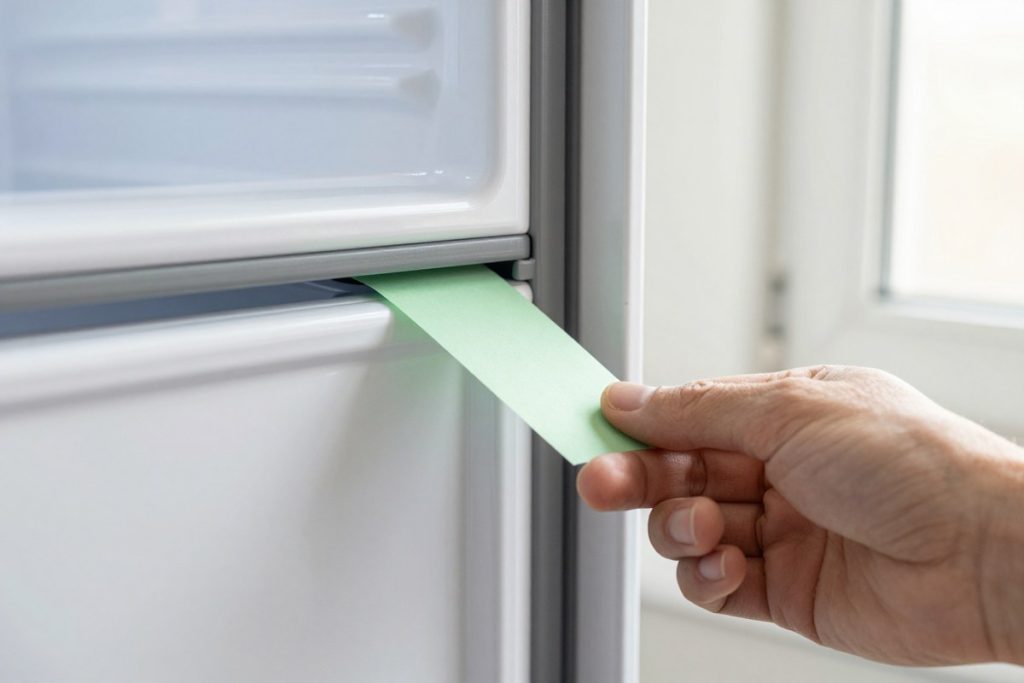
- Does a dollar bill slide out easily when you close the door on it? Think gasket issue.
- Is there visible frost or ice along the door frame? Think seal failure or ice buildup.
- Does the door hang slightly crooked or not sit flush? Think hinge or leveling problem.
- Did the door recently start popping open on its own? Think leveling or the closing hardware at the bottom hinge.
- Did you just defrost or deep-clean the freezer? The gasket may be folded or pushed out of place.
If the door won’t physically shut at all, that’s a related problem — start with our guide to a Kenmore freezer door that won’t close.
If you answered yes to any of these, you’re in the right place. Let’s figure out exactly what’s going on.
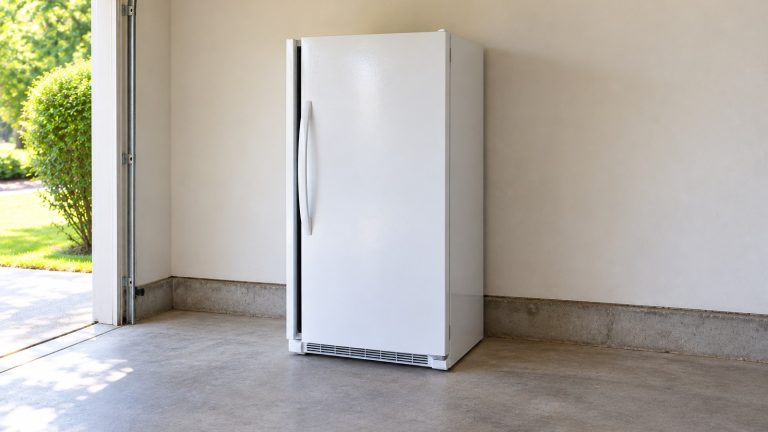
Your Kenmore freezer door works on a simple principle: a flexible rubber gasket runs around the entire door perimeter, and an embedded magnetic strip pulls it snug against the cabinet frame every time you close the door. When that seal is solid, cold air stays in, warm air stays out, and your freezer runs efficiently. When it’s not — even a small gap — you get frost creeping along the door frame, the compressor running longer than it should, and eventually, food that isn’t staying as frozen as it should be.
In our experience, Kenmore freezer door sealing problems are among the most common freezer calls we get across metro Atlanta. And the frustrating part? Most of them could have been caught earlier. The good news is that several of these fixes are genuinely DIY-friendly — if you know what you’re actually dealing with. And if you’d rather hand it off from the start, our Kenmore freezer repair team can take it from here.
Before you check anything: Unplug the freezer before you clean the gasket, touch hinge screws, or deal with ice. Never chip ice with a knife or any sharp or metal tool — Kenmore warns it can damage the refrigerant tubing. Taking the door off is a technician’s job: on many Kenmore uprights, it starts with laying the freezer on its back and unplugging a wire connector.
Why Your Kenmore Freezer Door Isn’t Sealing
There are five root causes that cover the vast majority of cases. Before you order any parts or pick up a screwdriver, run through these to identify which one applies to your situation.
Worn or Damaged Door Gasket
This is the most common culprit, and it gets more likely the older the freezer is. The door gasket — that flexible rubber strip around the door edge — gradually loses its elasticity. It hardens, develops cracks, or flattens out in spots where it’s been compressed for years. Once the rubber stiffens, the magnetic strip inside it can no longer pull the gasket flush against the cabinet. Kenmore’s troubleshooting tables describe the problem gasket in four words: “dirty, worn, cracked, or poorly fitted.”
The dollar-bill test: Close the freezer door on a dollar bill. If you can pull it out without any resistance, the gasket isn’t creating enough pressure at that spot. Run this test at multiple points around the door — top, sides, bottom corners. Corners are where a worn door gasket shows up first. (It’s our shop check, not a Kenmore step — but it’s free.)
Misaligned or Bent Door Hinges
Hinge misalignment is something a lot of people overlook because the door still opens and closes — it just doesn’t sit quite right. Over time, especially if the door shelves are loaded heavy, the hinges take on stress they weren’t designed for. The top hinge tends to pull away from the cabinet slightly; the bottom hinge can bend downward.
The visual check is straightforward: close the door and look at the gap between the door edge and the cabinet frame. If it’s uneven — wider at the top or bottom — door alignment is your issue, not the gasket itself. Replacing the gasket on a misaligned door won’t fix anything.
Broken Closing Cam or Door Stop
Here’s one that rarely gets mentioned in generic repair guides. On many uprights, a small plastic closing cam at the bottom hinge assembly gives the door a slight inward push as it swings shut, helping it seat against the gasket. When the closing cam is broken, the door swings to “closed” position but doesn’t actually press into the seal — it just rests there loosely. Kenmore’s guides don’t describe this part; it’s something we find in the field.
You’ll notice this as a door that seems closed but pops open slightly when you walk past it or when the compressor vibrates. It’s a small part, but it gets misdiagnosed as a gasket problem constantly.
Freezer Not Level — The Hidden Culprit
An unlevel freezer causes the door to hang open by gravity. Even a slight tilt toward the front is enough to prevent a proper seal. Kenmore is direct about it: if the freezer isn’t leveled, “the door may be misaligned and not close or seal properly, causing cooling, frost, or moisture problems.” This is particularly common with Kenmore upright freezer models installed on slightly uneven garage floors or basement slabs.
Check it with a carpenter’s level placed on top of the unit, front to back. The freezer should be very slightly tilted backward (toward the wall) — Kenmore sets the front half a bubble higher “so that the door closes easily when left halfway open.” If it’s tilting forward, the door will always want to drift open.
Frost or Ice Buildup Around the Seal
This one works both ways. A failing gasket lets warm, humid air in, so frost forms along the door frame — but once that frost builds up enough, it physically prevents the door from closing fully, making the seal even worse. It’s a feedback loop. Kenmore also notes that frost tends to build faster on the upper part of the freezer, because warm, moist air comes in when the door opens.
If you see a ridge of ice along the door frame, don’t just try to force the door shut — and don’t chip at it. Unplug the freezer and follow Kenmore’s defrost steps: a plastic scraper for soft frost; for hard, glazed frost, deep pans of hot water on the freezer bottom with the door closed — Kenmore says it softens in about 15 minutes. Then plug it back in and test the seal. If the gasket holds after defrosting, the ice was the cause. If it still fails the dollar-bill test, the gasket itself needs attention.
How to Fix a Kenmore Freezer Door That Won’t Seal
Work through these in order — start with the easiest fixes before anything that involves new parts.
When the leaky seal has already let the temperature climb, see our Kenmore freezer too warm guide for the wider picture.
Fix 1 — Clean the Gasket and Check Its Shape
Difficulty: Easy | Cost: nothing
Before assuming the gasket needs replacement, try this. A dirty or sticky gasket can’t seat evenly, and one that’s been compressed in the same position for years can develop a permanent “set” — it no longer springs back to its original shape. Cleaning is the part you can safely do yourself; reshaping a gasket with heat isn’t something we recommend.
Steps:
- Unplug the freezer. Mix warm water with a mild detergent — the cleaning mix Kenmore names for the cabinet and for door gaskets. Wipe down the entire gasket, paying attention to the corners and the hinge side, and wipe the cabinet surface it touches too.
- Dry the gasket and the frame with a soft cloth.
- Skip the hair dryer. Kenmore doesn’t call for heat here, and electric heat next to a wet freezer is a risk we don’t take.
- Skip the petroleum jelly, too. Kenmore’s 795-series refrigerator guide warns against cleaners containing petroleum on plastic parts; for sticking gaskets, it calls for a thin coat of appliance polish or kitchen wax after cleaning.
- Plug the freezer back in and re-run the dollar-bill test.
This works surprisingly well on gaskets that are still flexible but dirty or sticky. It won’t help a gasket that’s cracked, hardened, or has lost its magnetic pull — for those, Kenmore’s word is “replaced.”
Fix 2 — Replace the Door Gasket (What It Involves)
Difficulty: Moderate to hard | Who: a technician
Door seal replacement is the most common repair for this issue. Kenmore’s freezer guides say it plainly: worn, cracked or poorly fitting gaskets “should be replaced.”
Finding the right part: The model and serial numbers are on the serial plate. Several Kenmore guides put it on the upper left wall inside the freezer on upright models, or on the left exterior wall on chest models. Use the full model number when you look up the part or the Use & Care Guide — Kenmore’s website searches its guides by model number. This matters because gaskets are matched to the model, and a gasket that’s close but not exact rarely seals.
Who should do the swap: We’d hand this one to a technician: the old gasket has to come out without damaging the door liner, and the new one has to seat evenly all the way around, corners included. A gasket that’s fitted unevenly leaks just like a worn one — Kenmore lists “poorly fitted” right next to “worn” for a reason.
Fix 3 — Tighten or Replace Door Hinges
Difficulty: Easy to check, hard to replace
If the door alignment check showed an uneven gap, start with the hinges.
Steps:
- Unplug the freezer and take the heavy items off the door shelves.
- Check all hinge screws — both top and bottom. Loose screws are often the entire problem. Kenmore wants them secure “to prevent hinge slippage.” Tighten them and recheck the door position. On many uprights, the top hinge sits under a plastic cover.
- If the door still sags with tight screws, don’t shim it yourself. Kenmore’s guides don’t describe shimming a hinge, and those screws carry the full weight of the door.
- If a hinge is visibly bent or cracked, replacement is the only fix — and the door has to come off, which Kenmore’s steps begin by laying the freezer on its back and unplugging the door’s wire connector. That’s technician work. Kenmore upright hinges are not universal; they’re matched by model number.
Fix 4 — Check the Closing Cam
Difficulty: Easy to check
On models that have one, the closing cam sits at the bottom hinge.
Steps:
- Open the door fully and look at the bottom hinge assembly. The closing cam is the small angled plastic piece that the door rides over as it closes.
- Look for cracks, chips, or flat spots where it should have a raised profile.
- Close the door slowly and feel whether it pulls itself shut in the last few inches. That’s the cam working correctly.
If it’s cracked or broken, the fix is a new cam from the parts list for your full model number. A technician can confirm your model has one before you order anything.
This is one of the most underrated checks in freezer door repair. If your door seems to close but doesn’t quite “catch,” this is worth checking before anything else.
Fix 5 — Level the Freezer
Difficulty: Easy | Cost: nothing
For upright Kenmore freezers: Make sure all bottom corners rest firmly on a solid floor. Place a carpenter’s level on top, front to back, and adjust the plastic leveling feet in front so the front sits half a bubble higher. Kenmore’s goal is a door that “closes easily when left halfway open” — so open it halfway, let go, and watch. If the floor itself is uneven or weak, Kenmore says to level it with wood or metal shims under the freezer, or brace the floor that supports it. Don’t tip or rock a loaded freezer to get at the feet; if they won’t turn, that’s a call for us.
For Kenmore chest freezers: Chest freezers rely on the lid’s own weight to seal. If the unit isn’t level side-to-side, the lid may rest unevenly on the gasket. Kenmore’s chest guide gives the same warning it gives for uprights — a freezer that isn’t level can “force the cabinet out of square” — and its fix is metal or wood shims between the foot pads and the floor.
Need a Hand With Your Kenmore Freezer?
Worked through these steps and the door still won’t seal — or you’d rather have a technician handle it from the start? We offer same- or next-day Kenmore freezer repair on most days across metro Atlanta, with genuine OEM parts and a warranty of up to six months.
5 Signs Your Kenmore Freezer Gasket Needs Replacing
Structured for quick reference — if you’re seeing two or more of these, the gasket is likely past its useful life:
- Visible cracks or tears — especially at the corners or along the hinge side. Even a hairline crack breaks the seal.
- Fails the dollar-bill test — no resistance when you pull the bill out with the door closed.
- Frost buildup along the door frame or on your food — a classic sign that warm air is getting in at the seal line. Kenmore’s refrigerator guide ties frost on frozen food to a door that isn’t closing properly or is opened often.
- Freezer running constantly — the compressor compensates for the cold lost through a leaking seal. Kenmore: “Leaks in the door seal will cause freezer to run longer.” Your energy bill will reflect it.
- Condensation on the exterior door surface — Kenmore lists moisture on the outside of the freezer when the door isn’t seating, “causing the cold air from inside the freezer to meet warm moist air from outside.” If it’s happening consistently, the seal isn’t holding.
Kenmore’s guides don’t give a gasket a fixed lifespan, so judge yours by these signs, not by the calendar.
When to Call a Professional
DIY is great for the checks above. But there are situations where it’s the wrong call:
- The door frame is bent or cracked — no gasket will seal against a warped frame. This requires structural repair or door replacement.
- You’ve replaced the gasket and it still leaks — the problem is likely hinge misalignment or a bent frame, not the gasket.
- Multiple components are failing simultaneously — gasket, hinge, and closing cam all at once usually points to a door that’s been stressed (dropped, overloaded, or impacted).
- The freezer is under warranty — check your coverage before doing any DIY work. Older Kenmore freezer guides list one year (some add five years on the sealed system); Kenmore’s current warranty page lists two years on freezers from the date of sale, with proof of sale. Check your own document.
- You’re not seeing improvement after leveling and gasket cleaning — at that point, a technician can do a proper door alignment check and identify what’s actually causing the gap.
Kenmore Freezer Repair — We’re Ready When You Need Us
Whether it’s a straightforward door seal replacement or a more involved hinge and alignment repair, we’re available same- or next-day on most days. Reach out today — we’ll get your freezer back to holding temperature.
Conclusion
A Kenmore freezer door that won’t seal properly isn’t just an inconvenience — it’s a slow drain on your energy bill and a risk to everything stored inside. The good news is that most cases come down to one of five fixable causes: a door gasket worn past its useful life, hinge misalignment, a closing cam broken at the bottom hinge, leveling issues, or ice buildup physically blocking the seal.
Start with the dollar-bill test to confirm you actually have a seal problem, then work through the fixes in order — from the free ones (cleaning, leveling) to the part replacements (gasket, hinges, cam), which belong with a technician. Most Kenmore upright freezer owners can rule out the simple causes in an afternoon. If you hit a wall, or if the door frame itself is the issue, that’s when a professional assessment saves you time and prevents a misdiagnosis.
Get the seal fixed, not guessed. Book Kenmore freezer repair with PRO Appliance Repair. We’re family-owned and insured, with same- or next-day service on most days across metro Atlanta. Our EPA 608 certified, background-checked technicians use genuine OEM parts, and our repairs carry a warranty of up to six months.
FAQ
My Kenmore freezer door feels like it’s closing, but frost keeps building up along the frame. What’s going on?
This is a classic sign of a partial seal failure. The door may be making contact with the gasket but not compressing it fully — often due to a flattened gasket section or slight hinge sag. Run the dollar-bill test around the full perimeter to find where the gap is.
A new gasket went on my Kenmore Elite freezer, but it still doesn’t seal on the hinge side. Is it the wrong part?
Possibly — gaskets are matched to the full model number. But more likely, the hinge-side gap is a door alignment issue. The hinge-side gasket is always under more compression stress; if the door isn’t hanging perfectly straight, no gasket will seal that side properly. Kenmore’s Elite guide starts with level and the floor.
How do I know if my freezer’s closing cam is the problem versus the gasket?
If the door passes the dollar-bill test when you hold it firmly closed but pops open slightly when you just let it swing shut, the closing cam is the likely culprit. A bad gasket fails the dollar-bill test regardless of how firmly the door is held.
My Kenmore chest freezer lid has frost on one side only. Is that a gasket problem?
Not necessarily. Check level first — Kenmore’s chest fix is shims between the foot pads and the floor. In our experience, uneven frost on one side also points to lid warping rather than gasket failure. Check whether the lid sits flat across its full width — if it rocks or shows daylight on one side, the lid itself is the issue.
Can I use any brand of replacement gasket, or does it have to be genuine?
Aftermarket gaskets exist, but fit can be inconsistent — and Kenmore lists a “poorly fitted” gasket as a cause in its own right. We use genuine OEM parts ordered by the full model number from the serial plate.
What is the dollar-bill test and what does it tell you?
Close the freezer door on a dollar bill — if it slides out without resistance, the gasket isn’t creating enough pressure at that point. Run this test at multiple spots around the door to pinpoint exactly where the seal is failing.
PRO Appliance Repair is an independent repair company and is not affiliated with, sponsored by, or endorsed by Kenmore or Transform SR Brands LLC. Brand and model names are used only to identify the appliances this page is about and remain the trademarks of their respective owners.