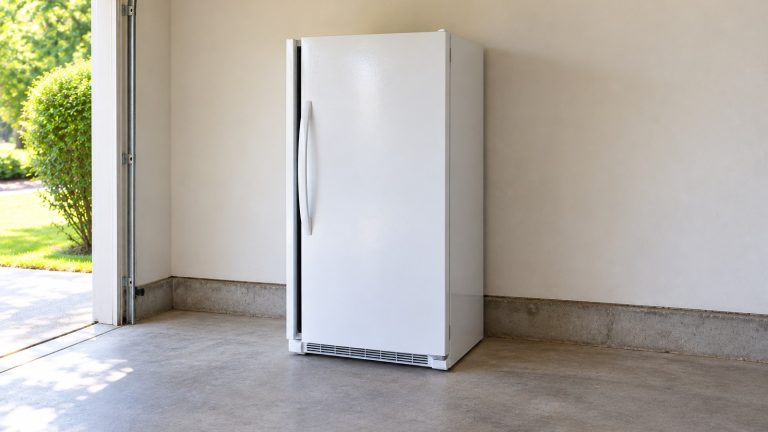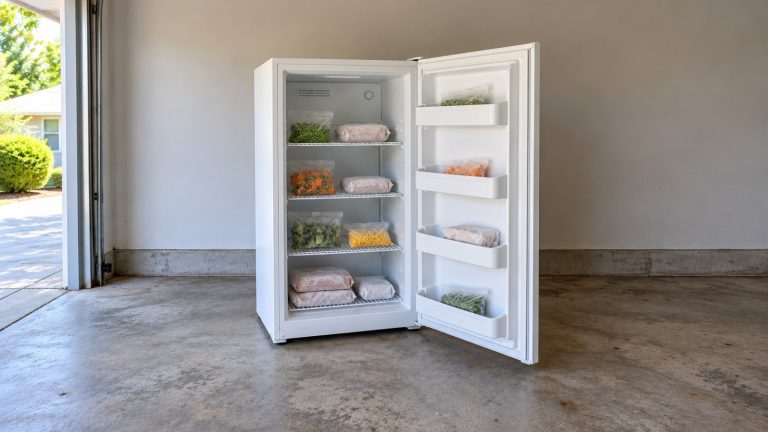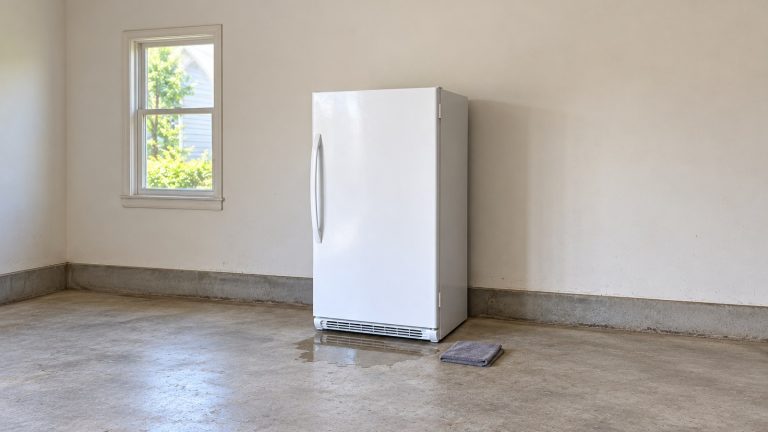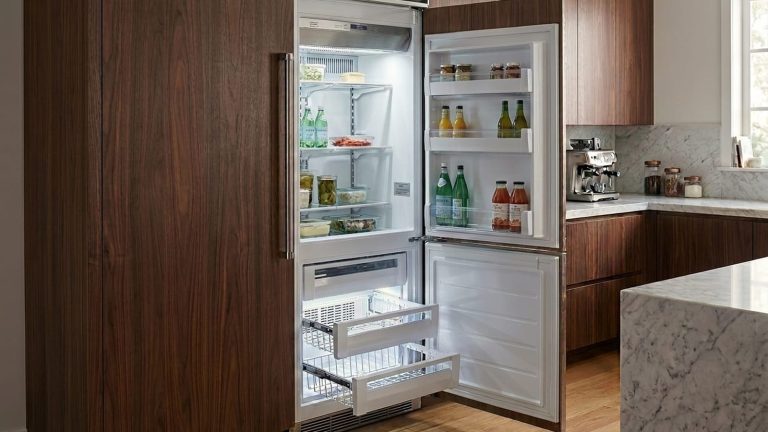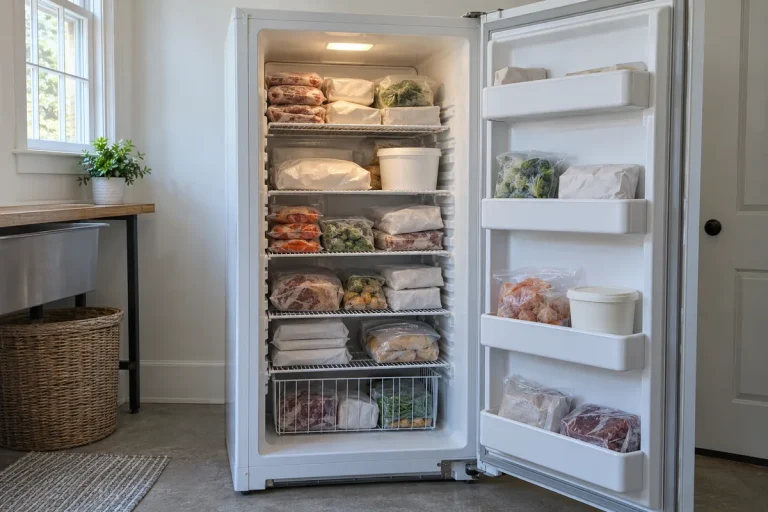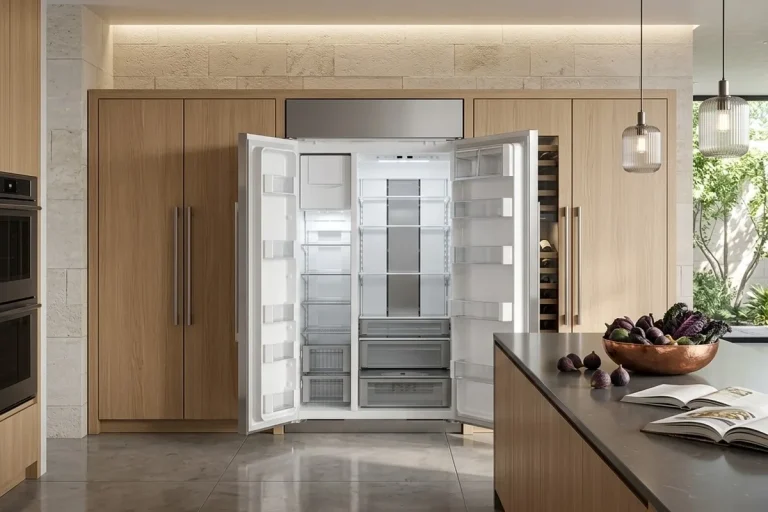
Is your freezer still somewhat cold but not reaching the right temperature? That’s a different problem — see our guide on a Kenmore freezer that’s too warm for a targeted diagnosis. This article is for freezers that have stopped freezing entirely, are barely cold, or have food thawing out.
When a Kenmore freezer stops doing its one job, the clock starts ticking — both on your food and on the underlying component. The good news: a handful of causes cover most cases, and the first few cost nothing to check. That means a systematic approach gets most people to the answer quickly, without replacing parts at random.
Work through this guide from the top. The first checks are free and take minutes. The more involved repairs come later — and those belong with a technician. If you’d rather hand it off now, our Kenmore freezer repair team takes these calls across metro Atlanta.
Before you check anything: Only do the checks this guide marks as yours. Don’t remove any panel or cover, don’t touch wiring, and never reach behind or into a grille while the freezer is running. The sealed refrigerant system is off-limits: Kenmore’s chest guide warns that damaged tubing “may allow flammable refrigerant gas leakage.” And to defrost, Kenmore says to always unplug the unit first.
Quick Troubleshooting Checklist — Try These First
Before anyone pulls panels or orders parts, run through these five checks. In our experience, they settle a good share of “not freezing” calls without any further diagnosis:
- Is the freezer getting power? Open the door — does the interior light come on? If not, check the outlet with another device, then check the circuit breaker. A tripped breaker is a surprisingly common culprit, especially after a power fluctuation. Kenmore’s table for a freezer that “does not run” adds one more suspect: a temperature control turned to OFF.
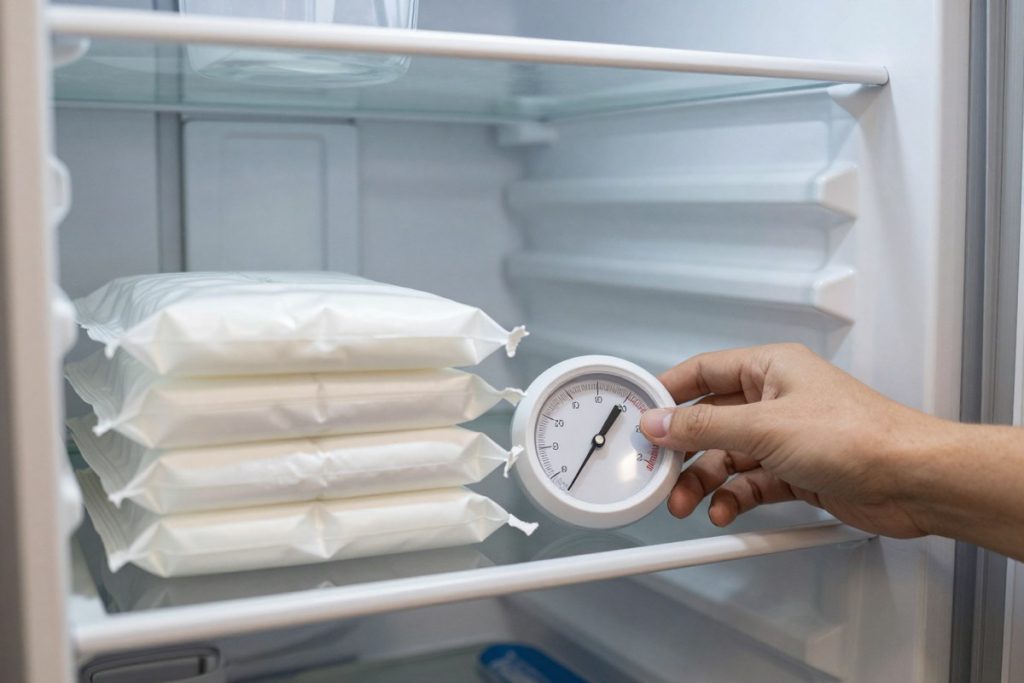
- Is the temperature set correctly? The target is 0°F (−18°C) — the freezer temperature the FDA recommends, and the one Kenmore’s 795-series refrigerator guide names for normal ice production. Dial controls can get bumped accidentally and don’t show degrees, so use an appliance thermometer. Turn the control one step colder and allow several hours between adjustments, as Kenmore asks. On electronic models, look for DEMO on the display: in Demo mode, Kenmore says, “the freezer compartment will not become cold.”
- Is the door sealing completely? A compromised door gasket lets warm air in continuously, overwhelming the cooling system. Do the dollar-bill test: close the door on a bill and try to pull it out. If it slides free without resistance, the seal is compromised.
- Are the condenser coils clean, and can the freezer breathe? Dirty condenser coils are one of the most overlooked causes of cooling failure. When coils are caked with dust, heat can’t dissipate — the compressor overheats and shuts down. The Kenmore freezer guides we checked don’t give a cleaning schedule, though; if your own guide describes condenser cleaning, follow it exactly or have a technician do it. What they do ask for is air: a 3-inch (75 mm) space on all sides of an upright and a room no hotter than 110°F (43°C).
- Is the freezer overpacked? Blocking the interior vents prevents cold air from circulating. Kenmore also says not to line shelves with foil, wax paper or paper towels — “Liners interfere with cold air circulation.”
If all five check out and the freezer still isn’t cooling, move to the full diagnosis below.
Why Your Kenmore Freezer Isn’t Freezing — All Possible Causes
1. Power Supply Issues
Start here, always. A freezer that appears dead — no light, no hum, no response — may simply have lost power.
Check in this order:
- Power cord fully seated in the outlet
- Outlet functional (test with a lamp or phone charger)
- Circuit breaker not tripped
- GFCI outlet not tripped (some kitchens and garages route freezer outlets through GFCI breakers — Kenmore’s Elite freezer guide says to avoid a GFCI altogether)
- Power cord not damaged or pinched behind the unit — look, but don’t drag a running freezer out
After a power outage: Surges can damage the start relay or the electronic control board even if the freezer appears to power back on. If the freezer runs but doesn’t cool after an outage, the relay is one of the first things a technician tests.
2. Defective Start Relay
The start relay is a small component plugged into the side of the compressor. Its job is to give the compressor the electrical kick it needs to start each cooling cycle. When it fails, the compressor clicks and gives up — you’ll hear a brief hum followed by a click, repeating every few minutes. Some clicking is normal, though: Kenmore’s 795-series guide says the defrost control clicks when a defrost cycle begins and ends.
The rattle test — for a technician: The relay sits on the compressor body, behind the rear access panel. A technician unplugs the freezer, pulls it away from the wall, removes the panel, and pulls the relay straight off. A rattle means it’s failed; no rattle doesn’t fully clear it, so it also gets a meter test.
This is one of the most cost-effective repairs in appliance service. On Kenmore uprights, the start relay is among the first components to test when the compressor runs intermittently but the unit won’t hold temperature.
3. Cold Control Thermostat Not Working
The cold control thermostat monitors the interior temperature and signals the compressor and fan motors to run. If it’s stuck in the open position, the compressor never receives the call to start — the freezer sits at room temperature with no cooling at all. Check the knob first: Kenmore notes that turning the control to OFF turns off the compressor but not the light, so a freezer can be lit and still not cool.
Test — for a technician: With the freezer unplugged and the wiring disconnected, the thermostat is tested for continuity at the coldest setting. A working thermostat shows continuity; an open circuit means it’s failed.
4. Faulty Thermistor (Temperature Sensor)
The thermistor is a small sensor that feeds real-time temperature data to the electronic control board. If it sends incorrect readings — or no readings at all — the board won’t call for cooling even when the freezer is warm.
Test — for a technician: Resistance should change smoothly as temperature changes. A thermistor that reads the same resistance regardless of temperature, or shows an open circuit, needs replacement.
This is more common on electronically controlled models (795-series, Elite models) than on dial-controlled uprights.
5. Defrost System Failure
Frost-free Kenmore freezers run automatic defrost cycles to prevent ice from accumulating on the evaporator coils. When the defrost system fails — whether it’s the heater, the bi-metal thermostat, or the defrost timer — frost accumulates unchecked. Over days, it encases the evaporator coils completely, blocking all airflow. The compressor runs, but cold air can’t circulate.
Symptoms: Heavy frost on the back wall inside the freezer, the unit gradually getting warmer, and the freezer running almost constantly.
How to confirm — for a technician: The rear interior panel comes off. If the evaporator coils are buried in a solid block of ice, the defrost system has failed. A full defrost will temporarily restore cooling — but if the frost returns, the underlying component needs replacement. The heater, the bi-metal thermostat and the timer are each tested with a meter.
Defrost system failure can also cause water leaks during defrost cycles. Manual-defrost models are different: Kenmore says to defrost them once 1/4 to 1/2 inch of frost has built up — unplugged, with a plastic scraper, never a sharp or metal tool.
6. Evaporator Fan Motor Failure
The evaporator fan motor circulates cold air from the evaporator coils throughout the freezer compartment. If it fails, the coils get cold but the rest of the freezer doesn’t — you’ll notice the area near the back panel is colder than the front.
Diagnostic: Close the freezer door and listen. On many frost-free models, you should hear the fan running; opening the door stops it, and closing it again restarts it within a few seconds. No sound after closing can mean the fan has failed or is frozen over.
To confirm — for a technician: The rear interior panel comes off and the fan blade is spun by hand. If it spins freely but the motor doesn’t run, the motor has failed. If it won’t spin, it’s frozen in ice — defrost first, then retest. If the freezer is also making unusual noises, see our guide to a Kenmore freezer making loud noise.
7. Condenser Fan Motor Failure
The condenser fan draws air across the condenser coils and over the compressor to dissipate heat. When it fails, the compressor overheats and shuts down via thermal overload — the freezer runs in short bursts, then stops cooling entirely. Not every Kenmore freezer has one: many shed heat through their outer walls, and Kenmore says those walls can run as much as 30°F warmer than the room. That’s normal.
Location: Where there is one, it’s at the bottom rear of the unit, next to the compressor, behind the rear lower access panel.
Check: With the freezer running, listen for the fan at the back — without reaching behind or into the grille. If the compressor is running but the condenser fan isn’t, the motor has likely failed; a technician confirms it with a meter.
8. Failed Electronic Control Board
The main control board governs every function: compressor cycling, fan operation, defrost timing, temperature display. When it fails, the freezer may stop cooling entirely, behave erratically, or show error indicators. Kenmore’s Elite freezer guide lists “SY” “CE” and “SY” “CF” on the display as operational errors and says to contact a service technician; a display alternating between the temperature and “Hi” means the freezer temperature is too high.
Visual inspection — for a technician: The board sits behind a cover on live wiring. The technician looks for burn marks, swollen capacitors, or corrosion at the connectors. Visible damage is a clear indicator. If the board looks clean but the freezer still isn’t responding, the board may have failed internally — harder to confirm without substitution testing.
9. Failed Compressor
The compressor is the heart of the sealed system. When it fails, nothing gets cold — the freezer sits at room temperature regardless of settings. A failed compressor typically presents as: no hum from the back of the unit, the unit is completely room temperature, and the start relay tests fine. On a Kenmore Elite model with a display, rule out Demo mode first.
Compressor replacement requires EPA-regulated refrigerant handling — Kenmore’s Elite freezer guide says refrigerant should be removed by a qualified service technician. This is not a DIY repair.
10. Sealed System Leak (Refrigerant)
If the compressor runs, the fans run, the defrost system is intact, and the freezer still won’t get cold — a refrigerant leak in the sealed system is the likely explanation. The compressor is pumping, but there’s nothing to pump.
Signs: Partial frost on only one section of the evaporator coils (where refrigerant enters), oily residue near the compressor or condenser coils, and a freezer that gets slightly cool but never reaches 0°F.
Sealed system repair requires EPA 608 certification and specialized equipment.
Kenmore Freezer Not Freezing? We Can Take It From Here
If you’ve worked through the checklist and the freezer still isn’t cooling — or you’d rather have a technician run the diagnosis — PRO Appliance Repair handles Kenmore freezer repairs across metro Atlanta, same- or next-day on most days, with genuine OEM parts and a warranty of up to six months.
How to Fix a Kenmore Freezer That Won’t Freeze (Step-by-Step)
Work from cheapest and easiest to most complex. Steps 1 and 2 are yours; from Step 3 on, it’s the order a technician works in.
Step 1 — Verify Power and Temperature Settings
Check the outlet, the breaker, and the temperature control. Aim for 0°F (−18°C) on an appliance thermometer. If the freezer has been off or unplugged, give it time: Kenmore allows 4 hours for a freezer to cool down before loading food, and some of its troubleshooting tables say 24 hours after it’s been disconnected — a fully loaded freezer can take that long to reach target temperature from room temp.
Step 2 — Check the Condenser Area and Airflow
If your Use & Care Guide describes condenser cleaning, follow it exactly or have a technician do it. Kenmore’s 795-series refrigerator guide, for example, says to vacuum the condenser cover and vents — and “Do not remove the panel covering the condenser coil area.” Then check the 3 inches of space around the cabinet. This alone can restore cooling if the compressor was shutting down from overheating.
Step 3 — Start Relay Test (Technician)
The relay is pulled from the compressor, checked for a rattle, and tested with a meter. If it fails either test, it’s replaced.
Step 4 — Thermostat and Thermistor Tests (Technician)
The cold control thermostat is tested for continuity at the coldest setting. The temperature sensor (thermistor) is measured at room temperature and compared to the spec in your model’s service manual — a flat reading indicates failure.
Step 5 — Defrost System Inspection (Technician)
The rear interior panel comes off and the evaporator coils are inspected. Heavy frost or a solid ice block confirms defrost system failure. Only the failed component gets replaced — not all three at once without testing.
Step 6 — Evaporator and Condenser Fan Motor Checks (Technician)
You can listen for fan operation with the door closed. Each motor is then tested with a meter — no continuity means the motor has failed.
Step 7 — Control Board Inspection (Technician)
The board is inspected for burn marks, swollen capacitors, or corroded connectors. If the board looks intact but all other components test fine, the board may have failed internally.
Kenmore Freezer Not Freezing After a Power Outage
Power outages are a specific scenario worth addressing separately — we see a jump in calls after big storms across metro Atlanta.
What to do right away:
- Keep the door closed. Kenmore says frozen foods will stay frozen for at least 24 hours if the freezer is kept closed.
- Check the circuit breaker — reset it if tripped. If it keeps tripping, Kenmore’s 795-series guide says to contact an electrician.
- Make sure the temperature control hasn’t been bumped and the display isn’t showing DEMO.
- Give it several hours to stabilize before deciding anything is broken.
If the freezer still won’t cool after the power comes back: A power surge may have damaged the start relay or the control board. If the relay is fine and the board shows burn marks or the freezer behaves erratically, the board is the likely casualty.
Power surges can also damage the thermistor — a less obvious failure that causes the board to receive incorrect temperature data and never call for cooling.
Kenmore Freezer Not Freezing — Who Handles Each Repair at a Glance
| Repair | Who does it |
|---|---|
| Power, breaker, control setting, Demo mode | You |
| Door seal check and gasket cleaning | You |
| Condenser coil cleaning | You, only as your guide describes — or a technician |
| Start relay | Technician |
| Thermostat | Technician |
| Thermistor / temperature sensor | Technician |
| Fan motors (each) | Technician |
| Defrost heater | Technician |
| Defrost timer | Technician |
| Control board | Technician |
| Compressor | Technician only |
| Sealed system repair | Technician only |
Kenmore Freezer Not Freezing by Model Type
Kenmore Upright Freezer (253 Series)
The 253-series uprights are the most common Kenmore freezer we see. Some are frost-free; others are defrosted by hand — your guide says which. The most frequent causes of cooling failure on these models:
- Defrost system failure (frost-free models) — the heater or bi-metal thermostat fails, ice encases the evaporator coils, airflow stops
- Start relay failure — more common as units age
- Sealed system issues — partial coil frosting (one side only) is the telltale sign
On frost-free 253-series models, the evaporator coils and defrost components are behind the rear interior panel — a technician’s job.
Kenmore Chest Freezer
Chest freezers have simpler mechanics than uprights — the chest models in the Kenmore guide we checked are defrosted by hand, which eliminates the entire automatic defrost system as a variable. The primary suspects when a chest freezer stops cooling:
- Compressor failure — no hum from the unit, completely room temperature
- Start relay — same rattle test applies, done by a technician; often the fix on units that click but won’t start
- Cold control thermostat — if the compressor won’t run at all despite power being confirmed
Chest freezers are generally easier to diagnose precisely because of their simpler design.
Kenmore Elite Refrigerator Freezers (795 Series)
This model type generates plenty of service calls in our experience. The 795 series includes Kenmore Elite bottom-freezer refrigerators, and their guide gives owners a few facts worth knowing:
- The freezer control runs from −6°F to 8°F (−21°C to −13°C); Kenmore says to wait 24 hours after a change before adjusting again.
- Demo Mode “disables all cooling in the refrigerator and freezer sections.”
- Cold air circulates from the freezer to the fresh food section through vents in the dividing wall, so don’t block them.
When the compressor runs (warm and vibrating) but both sections warm toward room temperature while the fans operate normally, the sealed system is the likely suspect. That’s a sealed system repair that requires EPA-regulated equipment and professional service.
Kenmore Side-by-Side Refrigerators
Side-by-side models typically share a single cooling system, with the cold air made on the freezer side. The damper control regulates how much of that air flows into the refrigerator side — so when a damper sticks, it’s usually the refrigerator that warms up, not the freezer.
When the freezer stops cooling but the refrigerator section is still somewhat cold, common causes are:
- Evaporator fan failure — cold air doesn’t move off the coils
- Defrost system failure — ice blocks the evaporator, and the freezer feels it first
- Compressor or sealed system — a weakening system often shows in the freezer first
Start with frost on the freezer’s back wall and the evaporator fan before assuming a compressor issue.
When to Call a Professional
Only the first checks in this guide are owner work: power, settings, the door seal, airflow, and whatever your own guide gives you without tools. Everything else belongs with a technician — these especially:
- Compressor failure — requires EPA-regulated refrigerant handling; not a DIY repair.
- Sealed system leak — same requirement; also requires leak detection equipment.
- Kenmore Elite 795-series refrigerators — compressor and control board faults are complex to diagnose correctly without specialized tools.
- Control board failure you can’t confirm — substitution testing is the only reliable method.
- Post-power-outage failures with multiple symptoms — surge damage can affect several components simultaneously; systematic professional diagnosis is faster than replacing parts one at a time.
Repair or replace? If the repair is a big share of what a comparable new freezer would cost and the unit is old, replacement is often the smarter decision. Get a clear diagnosis first. And check your warranty: Kenmore’s warranty page lists two years on freezers from the date of sale, with proof of sale, while older Kenmore guides list one year, some with five years on the sealed system. Read your own document.
Kenmore Freezer Repair — We’re Ready When You Need Us
We diagnose and repair Kenmore freezers of all types across metro Atlanta, same- or next-day on most days — and we trace the cause before we replace anything.
Conclusion
A Kenmore freezer that stops freezing is almost always traceable to one of a handful of causes — and the most common ones are also the cheapest to fix. Start with the free checks: power, temperature setting, Demo mode, door seal, airflow. Then a technician moves to the start relay before considering anything more involved.
For frost-free upright models, defrost system failure is the most likely culprit when the freezer gradually gets warmer over days. For Kenmore Elite 795-series refrigerators, check the setting, Demo Mode and the vents first.
The sequence in this guide is ordered by complexity for a reason: many people find their answer in the first two steps. If the freezer still isn’t cooling after all ten causes, the sealed system is the remaining explanation — and that’s where a technician with EPA 608 certification and the right equipment makes the difference.
Get the cause found, not guessed. Book Kenmore freezer repair with PRO Appliance Repair. We’re family-owned and insured, with same- or next-day service on most days across metro Atlanta. Our EPA 608 certified, background-checked technicians use genuine OEM parts, and our repairs carry a warranty of up to six months.
FAQ
My Kenmore freezer is running — I can hear it — but nothing inside is freezing. What’s most likely wrong?
A freezer that runs but doesn’t cool is one of the most common situations we see. The most likely causes, in order: defrost system failure with ice blocking the evaporator coils, evaporator fan motor failure, or a failing compressor that’s running but not pumping refrigerant effectively. First rule out the control setting and Demo mode. Heavy frost on the back wall is a strong hint; confirming it means removing the rear interior panel — a technician’s job.
My Kenmore upright freezer has heavy frost on the back wall inside, but the food isn’t frozen. Is that a defrost problem?
On a frost-free model, very likely — that’s the classic defrost system failure pattern. That frost is ice that should have melted during automatic defrost cycles, and it’s now blocking airflow across the evaporator coils. If a full defrost brings cooling back and the frost returns, the defrost heater, bi-metal thermostat, or timer has failed. On a manual-defrost model, Kenmore says to defrost at 1/4 to 1/2 inch of frost.
My Kenmore Elite French door refrigerator’s freezer stopped cooling. The compressor feels warm and is vibrating, but nothing is getting cold. Is this fixable?
Often, yes — but rule out Demo Mode first; Kenmore’s 795-series guide says it disables all cooling. If that’s not it, a compressor that runs warm without producing cold points to the sealed system, which needs professional sealed system repair. Get a clear diagnosis and estimate, and compare it to replacement before committing.
How long should a Kenmore freezer last before needing major repairs?
Kenmore’s guides don’t give a lifespan. What they give is warranty terms: older guides list one year on the freezer and, on some models, five years on the sealed system; Kenmore’s current warranty page lists two years on freezers. For an older freezer, weigh the repair estimate against replacement once you have a diagnosis.
My Kenmore side-by-side freezer isn’t freezing, but the refrigerator side is still somewhat cold. Does that narrow it down?
Somewhat. On most side-by-side designs, the cold air is made on the freezer side, so a warm freezer with a still-cool refrigerator usually points to airflow at the source: frost blocking the evaporator, or an evaporator fan that’s stopped. A weakening sealed system can also show in the freezer first. The damper mostly controls the refrigerator side, so it’s a less likely cause.
My Kenmore freezer never got cold after delivery or a move. Could it be a setting?
It could. Kenmore’s Elite freezer guide says that in Demo mode, DEMO appears on the display and the freezer “will not freeze food contents” until Demo mode is turned off. Also give it time: Kenmore allows 4 hours to cool down completely before use. Still warm after that? It’s time for a technician.
PRO Appliance Repair is an independent repair company and is not affiliated with, sponsored by, or endorsed by Kenmore or Transform SR Brands LLC. Brand and model names are used only to identify the appliances this page is about and remain the trademarks of their respective owners.