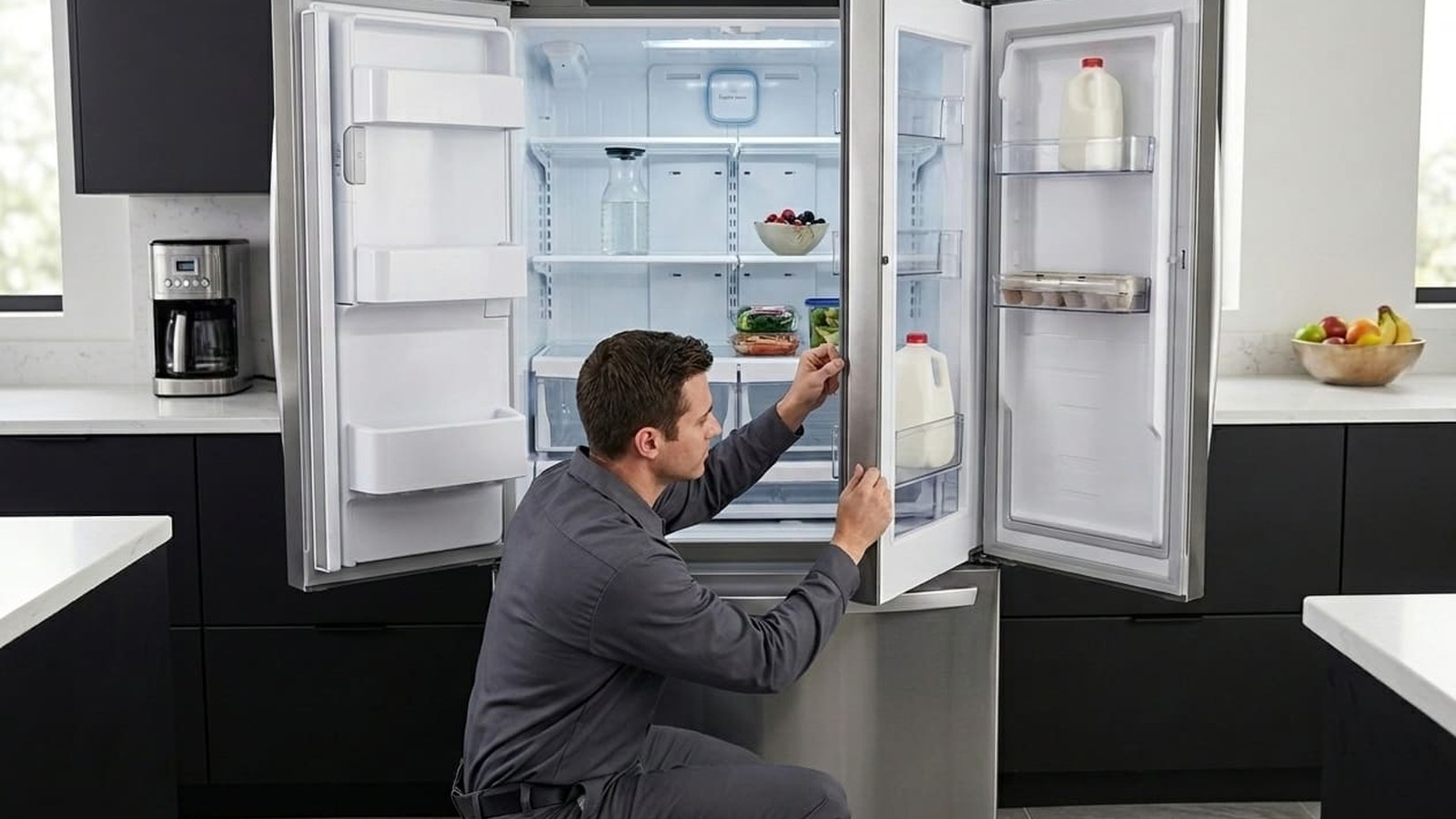
When your LG Door-in-Door refrigerator starts acting up — the door won’t close, the seal feels loose, or there’s a new thunk every time you open it — you notice right away. These refrigerators are built to last, but the doors move dozens of times a day, and everyday wear catches up with them. When it does, you want a technician who knows how these doors are put together.
That’s where we come in.
Our Atlanta team works on LG refrigerators every day, Door-in-Door models included, with same- or next-day appointments available most days. With 15+ years of hands-on experience, we’ve seen the common problems: misaligned doors, worn hinge parts, a center flap that won’t fold, and tired gaskets.
In this guide, we cover what you should know before calling for service:
- What makes Door-in-Door refrigerators different
- The most common door problems on LG French door models
- How to spot early signs of trouble
- The simple maintenance LG recommends
- What to expect from a repair visit
Let’s get into it.
LG Door-in-Door acting up? Our LG refrigerator repair technicians can get your doors closing and sealing properly again before food spoils.
Why LG Door-in-Door Refrigerators Are Different
Understanding the Door-in-Door Design
LG’s Door-in-Door isn’t just a fancy extra panel. Instead of opening the whole refrigerator, you open a smaller outer door to reach drinks, condiments, or snacks. That means less cold air escaping each time.
It’s a clever design, but it also means more moving parts: an extra door section, extra hinges, extra seals, and a folding center flap on the left door that all have to work together. When one part wears or shifts out of line, the whole door can start to misbehave.
Which LG Models Have Door-in-Door
LG uses Door-in-Door on many of its French door refrigerators with a bottom freezer. LG’s owner’s manual for this family lists Door-in-Door models such as the LRFDS3006, LRFDC2406, LRMDS3006, LRMDC2306, LRYKS3106, LF31S6360, and LF26C6360, and InstaView Door-in-Door models such as the LRFVC2406. You’ll find them in kitchens all over Atlanta.
These refrigerators are precise machines, and precision needs care. When the doors start to sag or the seals lose their grip, you want someone who follows LG’s adjustment steps for your exact model.
Common LG Door-in-Door Refrigerator Problems
Even the toughest refrigerators wear down over time — especially the door parts that move many times a day. Here’s what we see most often.
1. Door Not Closing Properly
If you have to nudge the door to make it seal, that’s not normal. Many LG French door models have doors that close on their own with a slight push — LG’s manual describes an auto-closing hinge that closes the door when it’s open less than about 30°. When that stops working, the usual causes are:
- Worn hinge or closing parts
- Doors out of alignment
- A twisted door gasket
- Something inside blocking the door
Left alone, this lets warm air in, makes the compressor run longer, raises your power bill, and shortens the refrigerator’s life.
2. Door Alignment Problems
Uneven floors and heavy door bins can make the doors sit unevenly. You’ll notice one side closing faster or rubbing slightly, or an uneven gap between the doors. LG’s manual explains that the refrigerator doors have an adjustable nut on the bottom hinge to raise or lower them, adjusted with the wrench included with the owner’s manual. On some models only the left door has the nut, and the right door is adjusted at the middle hinge with a snap ring.
3. Worn Closing Parts and Hinges
The small parts in the hinges that help the door glide and close can wear over the years, and the door loses its self-closing action. We replace them with genuine OEM parts to keep the fit and balance right.
4. Faulty or Torn Door Gasket
When the gasket (the rubber seal) hardens or tears, cold air escapes — causing frost around the edges and uneven cooling. A quick test: close the door on a sheet of paper. If it slides out easily, the seal isn’t holding there. We replace gaskets and make sure they sit flush against the cabinet.
5. Center Flap Problems
On LG French door models, the left door has a folding center flap (often called the mullion) that closes the gap between the two doors. It plays a big role in sealing. If it doesn’t fold correctly, there’s a visible gap, and moisture can condense between the doors. LG’s manual warns that the flap should always be folded in before you close the left door — closing it with the flap out can scratch the doors or break the flap.
6. Door Seal Failure and Air Leaks
Sometimes the seal isn’t visibly torn but still leaks. That leads to uneven temperatures, frost, and higher energy use. LG explains that when doors aren’t closed correctly or are opened often, warm, humid air gets in and can cause condensation or frost.
7. Leveling Problems Affecting the Doors
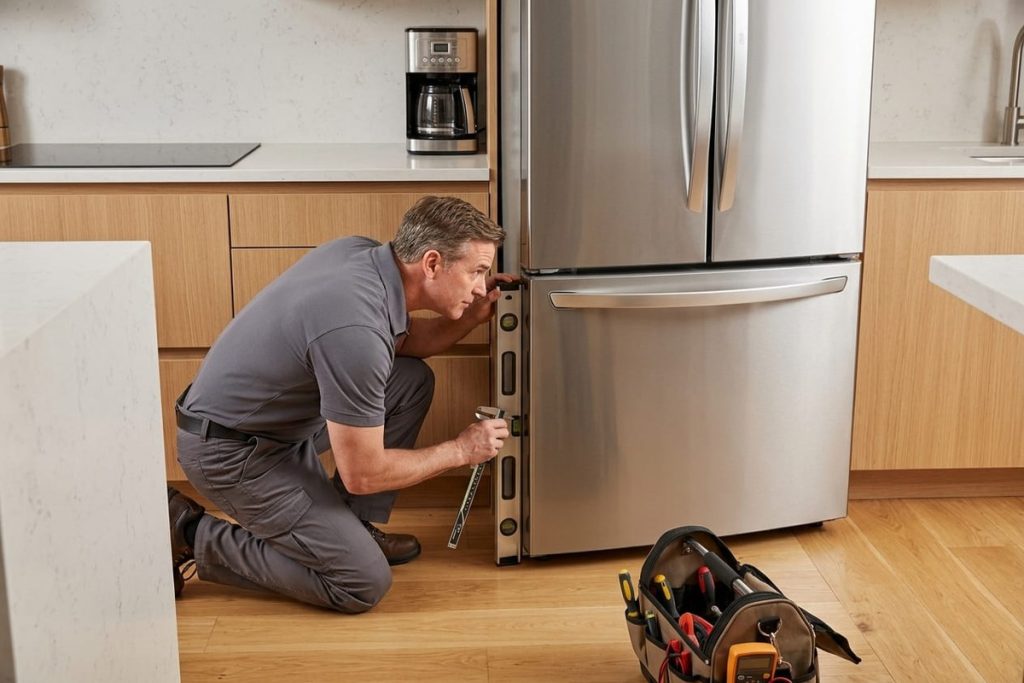
A refrigerator that tilts forward or sideways won’t close right — it’s simple physics. LG’s manual says that if the refrigerator seems unsteady or the doors don’t close easily, you adjust the tilt with the two front leveling legs.
Door not closing? Seal leaking? Center flap not lining up? We repair LG Door-in-Door refrigerators across Metro Atlanta, and most problems are fixed on the first visit.
Signs You Need LG Door-in-Door Refrigerator Repair
Catching these problems early can save you from a bigger repair later. Watch for:
- A door that doesn’t stay closed on its own
- Resistance or grinding when you open it
- Condensation or frost near the gasket
- A popping sound when closing
- An uneven gap between the doors
- The door alarm going off even though the doors look closed — on many LG models it sounds when a door stays open for more than 60 seconds
If you notice one or more of these, it’s time to have a professional take a look.
DIY Tips: How to Fix Minor Door-in-Door Problems
Before you call, there are a few things you can safely check yourself. Some door problems are just small adjustments or maintenance that gets overlooked.
Here’s what you can try:
Check and Clean the Door Gaskets
Use a clean sponge or soft cloth with a mild detergent in warm water, as LG recommends. Run it along the gasket to remove crumbs and sticky residue. Even a thin layer of grease can keep the gasket from sealing.
After cleaning, close the door and use the paper test again. If the paper slips out too easily, the gasket isn’t sealing and may need replacing.
Pro tip: LG’s manual says not to use cleaning waxes, concentrated detergents, bleaches, or cleaners containing petroleum on plastic refrigerator parts — so skip petroleum jelly and oils on the gasket.
Adjust the Leveling Legs
Uneven floors are a quiet culprit. LG’s French door refrigerators have two front leveling legs.
- Turn a leveling leg to the left to raise that side
- Turn it to the right to lower it
It may take several turns. LG says a flare nut wrench works best, but an open-end wrench will do — and not to over-tighten. Then open both doors and check that they close easily. If they don’t, LG’s instruction is to tilt the refrigerator slightly more to the rear by turning both legs to the left the same amount.

Adjust the Door Height
If the gap between the doors is uneven even with the door bins filled, use the wrench that came with your owner’s manual on the adjustable nut at the bottom hinge: turn it to the right to raise the door, to the left to lower it. The method differs by model, so follow your manual. Don’t over-tighten hinge screws — LG doors are carefully balanced.
Check the Center Flap
Make sure the folding center flap on the left door is folded in before you close the door. If it doesn’t fold smoothly, looks bent, or leaves a gap, don’t force it — that’s a job for a technician.
We treat your LG refrigerator as a precision system. Our technicians work on these models regularly and carry common LG door parts.
When to Call Professional LG Door-in-Door Repair
Some jobs cross the line from DIY to “let the experts handle this,” especially when the problem involves electronics, sensors, or the cooling system.
Call a professional when you see:
1. Electrical or Sensor Problems
LG refrigerators use door switches to turn on the lights and trigger the door alarm. If those stop responding, it could be a faulty door switch or a wiring problem. Leave that to a technician — the wiring inside the refrigerator carries line voltage.
2. Center Flap or Gasket Replacement
The center flap is spring-loaded and has to fold at exactly the right moment. If it’s replaced or adjusted incorrectly, the doors may never seal right again. A technician follows LG’s steps and checks the seal after the repair.
3. Refrigerant or Cooling Problems
Sometimes a door problem is only a symptom. If your LG isn’t cooling evenly, there may be a refrigerant leak or a compressor problem — both require EPA 608 certified handling of refrigerant. Keep in mind that LG notes the compressor normally runs about 40 to 80 percent of the time at 70°F, so long running alone isn’t a fault.
We’ve also seen a “door problem” turn out to be a failing evaporator fan or a defrost problem. A trained eye spots that right away.
Call for expert LG Door-in-Door service.
Our Service Advantages
Our technicians work on both older and newer refrigerators, including Door-in-Door models.
EPA 608 Certified Technicians With 15+ Years of Experience
Our team has worked on LG refrigerators for years. We know where these doors tend to wear — and how to fix them without guesswork.
Same- or Next-Day Service and Genuine OEM Parts
Most repairs are finished the same or the next day you call. We use genuine OEM parts for lasting performance — no cheap off-brand seals or hinges.
Full Diagnosis and a Repair Warranty
Every repair starts with a full inspection — we don’t just fix the symptom. You’ll get a clear estimate before work begins, and our repairs come with a warranty of up to six months on parts and labor. Our technicians are background-checked.
LG Door-in-Door Repair Process: Step by Step
Step 1: Scheduling and Inspection
You’ll speak directly with a local team member, and we’ll schedule your visit as soon as possible. Your technician arrives on time and ready to work.
Step 2: Diagnosis and Estimate
We check the doors and the cooling — hinges, closing parts, the center flap, sensors, and seals. You’ll get a clear explanation of the problem and a quote before any work begins.
Step 3: On-Site Repair and Testing
Most parts are replaced on the spot. After the repair, we test the doors, check that the temperature is stable, and make sure each door closes and seals properly.
Step 4: Maintenance Tips Before We Leave
Before leaving, your technician shows you how to keep the doors aligned, how to clean the gaskets, and what early signs of wear to watch for.
Preventive Maintenance Tips for LG Door-in-Door Refrigerators
Clean the Door Gaskets Regularly
Wipe the gaskets with a soft cloth and a mild detergent in warm water, as LG recommends. Avoid bleach, waxes, concentrated detergents, and petroleum-based cleaners.
Check Door Alignment Now and Then
A quick look to make sure the doors line up evenly can prevent hinge wear. If you notice sagging, don’t force it — adjust the door height as your manual describes, or call us for a tune-up before it becomes a bigger repair.
Avoid Overloading the Door Bins
Door bins are strong but not indestructible. Gallons of milk and heavy jars strain the hinges and closing parts.
Keep the Condenser Area Dust-Free
LG says to clean the condenser cover and vents with a vacuum and a brush or crevice attachment — and not to remove the panel covering the condenser coil area.
Why Choose Our LG Refrigerator Repair Service
We’ve built our reputation one kitchen at a time.
Where We Work
From Sandy Springs to Decatur, Marietta to Stone Mountain, we cover the greater Atlanta area.
The Bottom Line
Your LG Door-in-Door refrigerator is one of the smartest appliances in your kitchen, and it needs equally smart care. Whether the problem is a door that won’t close, a worn gasket, or a center flap that won’t fold, our LG refrigerator repair team can fix it quickly and correctly.
Don’t settle for a half-closed fridge or rising energy bills.
FAQ
Why won’t my LG Door-in-Door close properly?
Most often it’s something inside blocking the door, a refrigerator that isn’t level, worn hinge parts, a dirty gasket, or a center flap that isn’t folded in. Clean the gasket, check the leveling, and make sure the flap folds — if the door still pops open, a technician can realign it or replace parts.
How do I level my LG refrigerator so the doors close?
Turn the front leveling legs — to the left to raise that side, to the right to lower it. LG says that if the doors don’t close easily, you tilt the refrigerator slightly more to the rear by turning both legs to the left the same amount.
How do I fix an uneven gap between the doors?
Many LG French door models have an adjustable nut on the bottom hinge. Using the wrench that came with the owner’s manual, turn it to the right to raise the door or to the left to lower it. On some models, the right door is adjusted differently, so follow your manual.
What causes frost or moisture around the door?
Warm, humid air getting past a damaged gasket or a center flap that isn’t sealing. LG also notes that frequent or long door openings and humid weather let in more moisture. Fix the seal or the flap to restore the barrier.
Why does my door alarm keep going off?
On many LG models, the door alarm sounds when a door stays open for more than 60 seconds. If it goes off when the doors look closed, a door may not be sealing fully, or the center flap may be keeping the left door from closing.
Do you use genuine LG parts?
We use genuine OEM parts made for your model, so the gasket, hinge parts, and center flap fit the way they should.
LG and Door-in-Door are trademarks of LG Electronics. We are an independent appliance repair company and are not affiliated with or endorsed by LG.